
In this post, we will discover everything we need to know about the city of Gyeongju, near the south-east coast of South Korea.
Follow us on social media:

Contents:
Practical information
Historically known as Seorabeol (서라벌), it is the second largest city in the province with a population of around 270,000.
Gyeongju was the capital of the ancient kingdom of Silla (57 BC-935 AD), which ruled over two-thirds of the Korean peninsula for almost a thousand years, between the 7th and 9th centuries.
The city preserves a large number of archaeological sites and cultural assets from this period. For this reason, it is known as the ‘museum without walls’.
In particular, the city of Gyeongju was our favourite visit in all of South Korea, and I think we didn’t spend enough time there.
How to get there: The easiest way to get there is by KTX train. Gyeongju Station (Singyeongju until 2023) is about a 40-minute bus ride from the city centre.
You can take buses 50, 51, 60, 70, and 700. The fare is ₩1,650 and can be paid with T-Money.
Getting around: The best way to get around the city is on foot. However, to reach more distant places such as Bulguksa Temple or Seokguram Grotto, it is best to take the bus.
What to see in Gyeongju
First of all, I should mention that at all tourist attractions you will find stamps to stamp a tourist passport that you will find next to them. It’s a silly thing, but I love these details.
01. Bulguksa Temple (불국사)
It is one of the must-see sights in Gyeongju, and I would say in all of South Korea.
Bulguksa was built in 528, a year after the Silla dynasty officially accepted Buddhism during the reign of King Beopheung. It was commissioned by the king to fulfil the wishes of his mother, Lady Yeongje, and his wife, Queen Gi Yun.
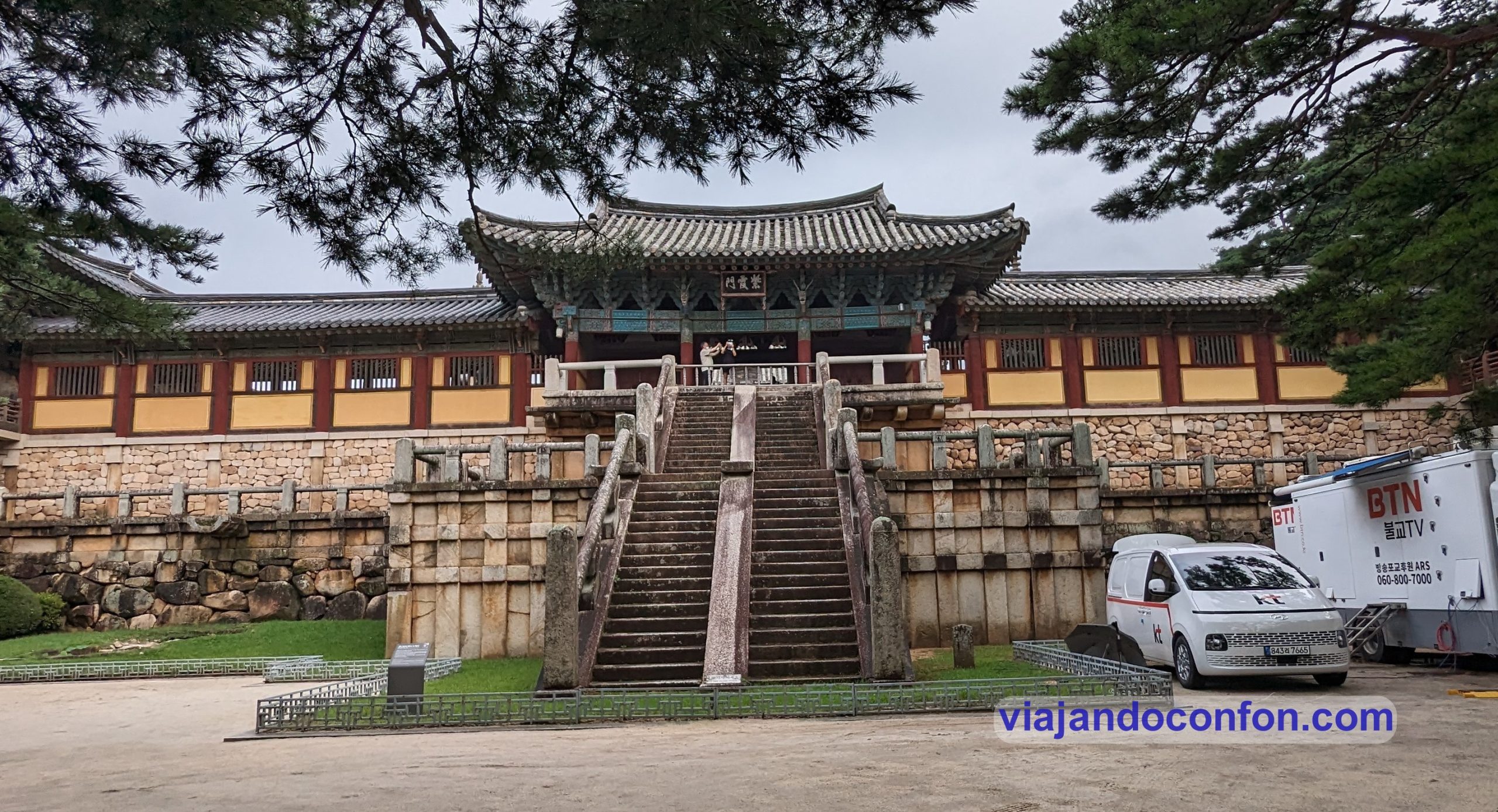
The temple was almost completely destroyed during the Japanese invasion in the 16th century but was rebuilt between 1612 and 1700.
From 1963 to 1973, Mooseoljeon, Gwaneumjeon, Birojeon, and the walkways and corridors were rebuilt, and Daeungjeon, Beomyeongru, Jahamun, and the stone platforms were restored to their current appearance.
In 1995, Bulguksa was designated a UNESCO World Cultural Heritage Site along with Seokguram.
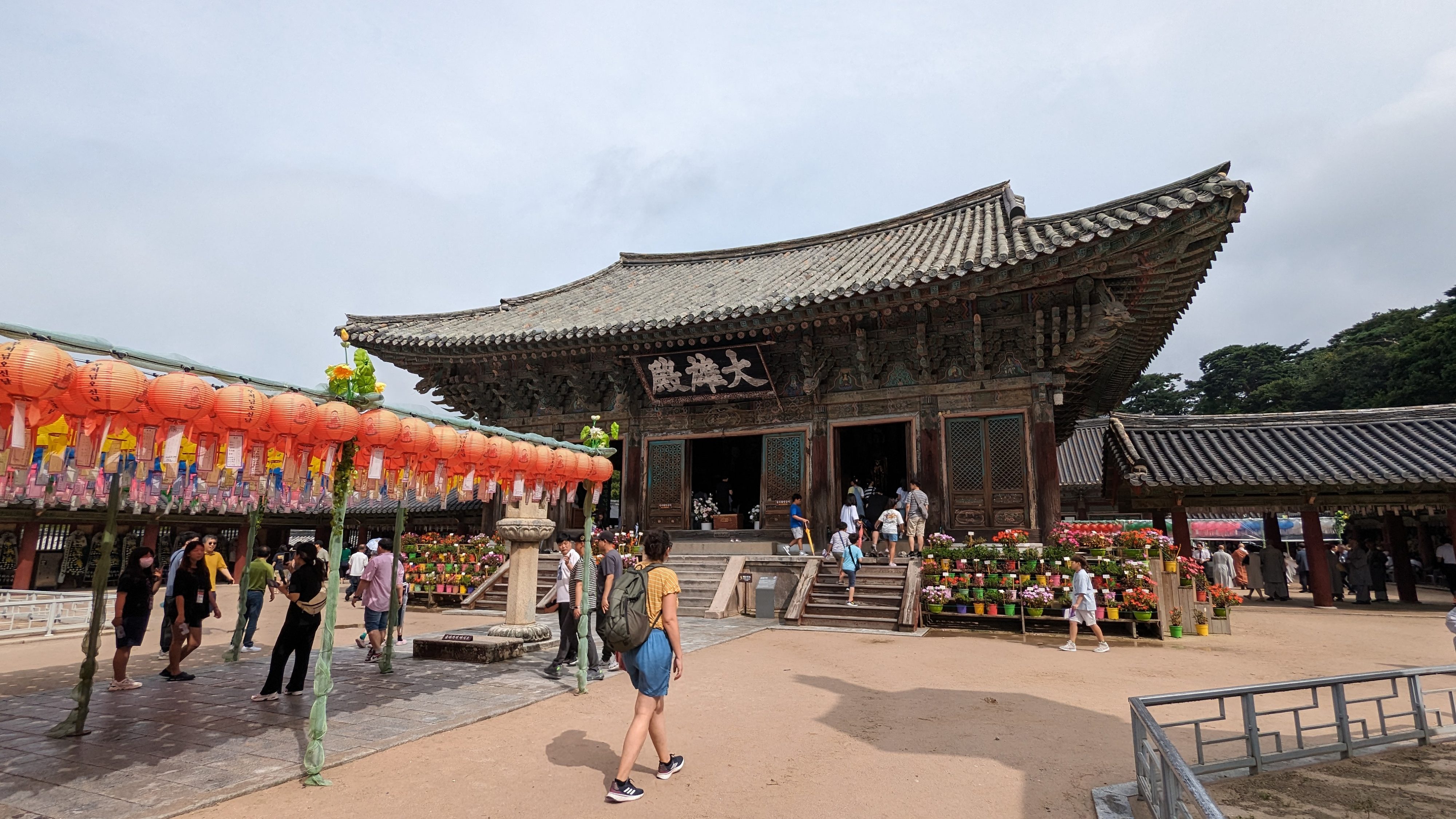
Find more photos and more complete information in our travel diary entry on Korea.
How to get there: Take bus 700 from the city centre. The journey takes about 30 minutes and costs ₩1,650. You can pay with T-Money.
Opening hours: Every day from 9:00 to 17:00.
Price: Free.
02. Visit the most beautiful Buddha in the country at Seokguram Grotto (석굴암)
It is a perfect visit to combine with Bulguksa Temple, as the bus to get there departs from here.
Its original name was Seokbulsa Temple (Stone Buddha Temple). It was built between 772 and 774 by order of Prime Minister Kim Daeseong, who died before its completion. The reason for its construction was to appease Kim’s parents from his previous life.
Inside the grotto is a 3.5-metre-high stone statue of Seokgamoni-bul (the historical Buddha), said to be the most beautiful in Korea.
The statue, with a serene smile, faces the East Sea. It is backed by a statue of Gwanseeum-bosal (The Bodhisattva of Compassion). It is also surrounded on all sides by the Nahan (The historical disciples of Buddha), Buddhas and Bodhisattvas.

After walking along a short, pleasant path through the woods for about five minutes, we reached the entrance to the cave.
The interior is impressive, but photography is strictly prohibited. Not even surreptitiously, as there are security guards everywhere and thousands of cameras inside. So all I have left is the image in my head.
How to get there: take bus 12 from the Bulguksa Temple stop. The journey takes about 10 minutes and costs ₩1,200. You can pay with T-Money.
Price: free.

03. Anapji Pond (안압지)
This is a large pond that was located within the former Donggung Palace complex and Wolji Pond.
Donggung Palace (Crown Prince’s Palace) was one of the main palaces of the Silla Kingdom.
Samguk sagi (History of the Three Kingdoms) states: ‘In the 14th year of King Munmu’s reign (674), a large pond was excavated, flowers were planted, and rare birds and strange animals were raised.’
Wolji was abandoned during the Joseon period. It became known as Anapji because wild geese and ducks used to gather there (Anapi means “wild duck and goose pond”). It was discovered during excavation and dredging work carried out in 1975.
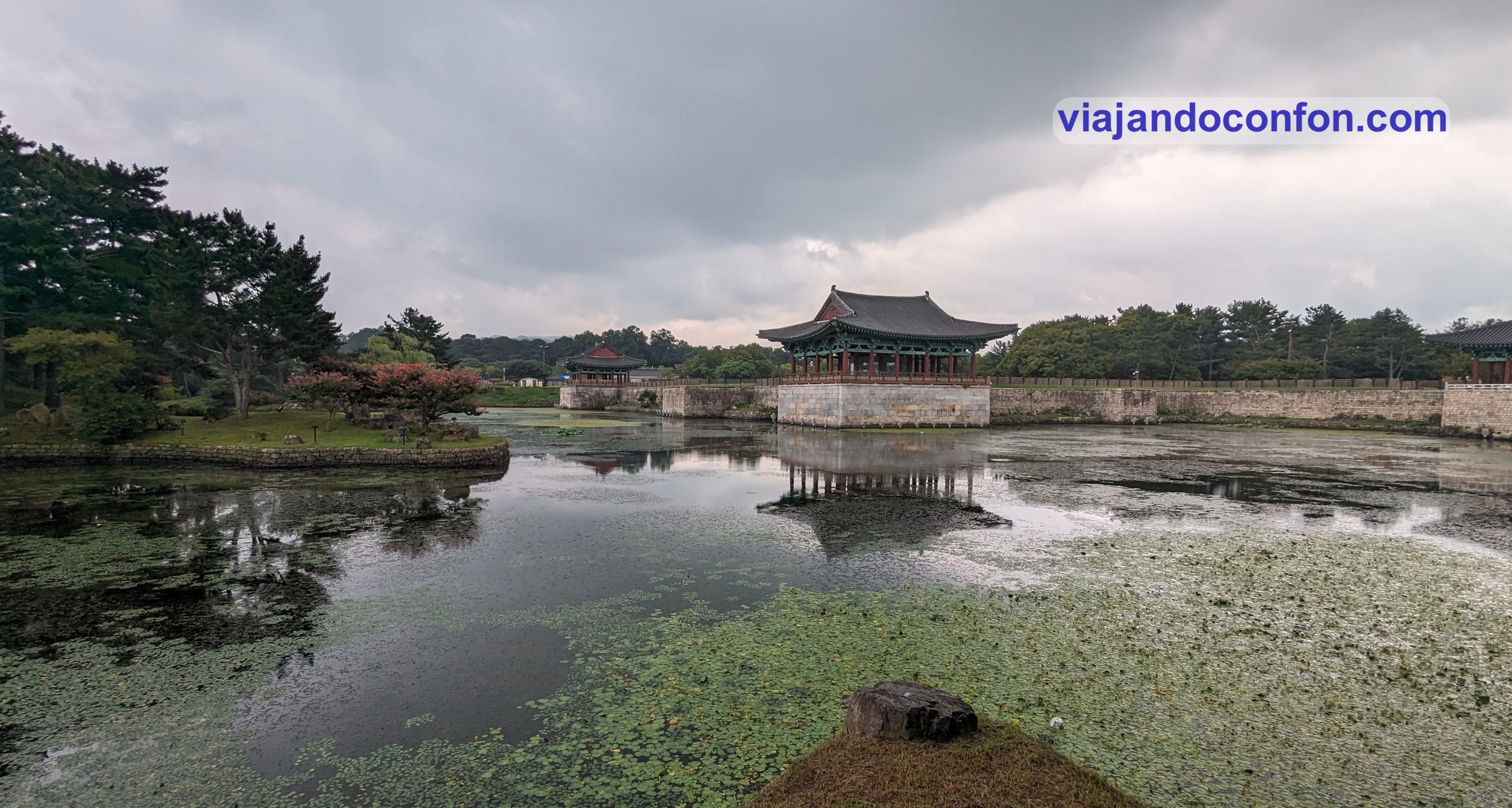
How to get there: combining your visit from Bulguksa Temple, take bus 700.
Opening hours: every day from 9am to 10pm.
Price: 3,000₩.
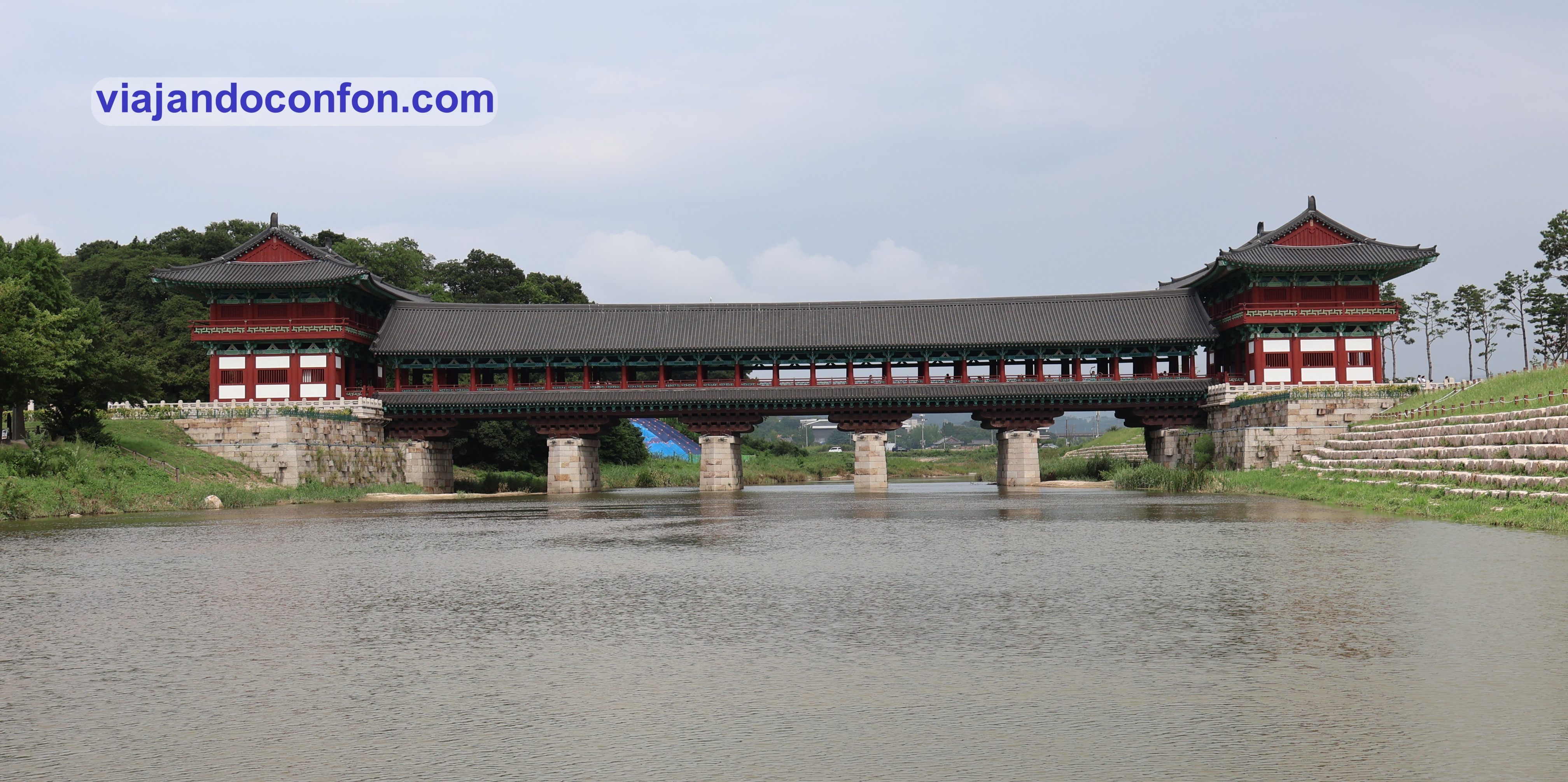
04. Cross the magnificent Woljeong Bridge (경주 월정교)
Woljeong Bridge was built during the Unified Silla period (676-935 AD), but was burned down during the Joseon Dynasty.
It was rebuilt in April 2018 to become the largest wooden bridge in South Korea. If you climb the steep stairs inside, you will find yourself in a small exhibition about the original city.
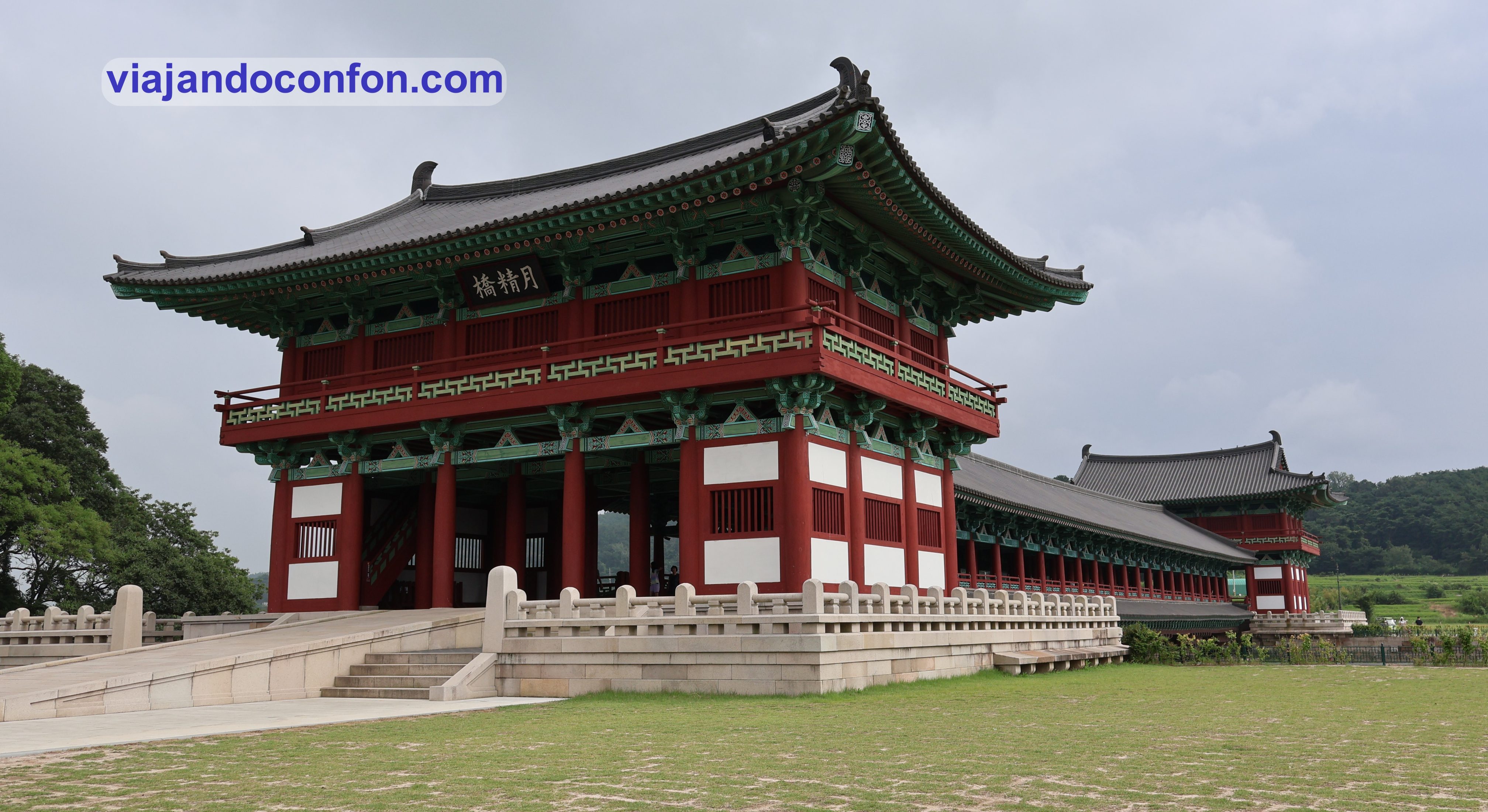
Opening hours: every day from 9am to 10pm.
Price: free.
05. Stroll through the traditional village of Gyeongju Gyochon (경주교촌마을)
The traditional village of Gyeochon is a village of traditional hanok houses that allows visitors to see the life of the famous Choi clan. Visitors can see their house and try Gyeongju’s Beopgju Gyodong liquor.
It is beautiful but completely adapted to tourism. Still, it is worth taking a stroll through it.

06. Gyeongju Eupseong Fortress (경주읍성)
In the centre of the city, we can find the remains of the ancient fortress of the Goryeo and Joseon dynasties.
The date of construction of the original castle is unknown, but its reconstruction in the fourth year of King Woo of Goryeo (1378) is recorded in the Tongyeong Tongji.
After being burned down during the Imjin War (1592), it was rebuilt again in the tenth year of the Joseon Dynasty (1632).
With the urban expansion of Gyeongju, most of the castle was demolished, and today only about 50 metres of the eastern wall remain.

07. Daereungwon Tomb Complex (대릉원)
This is a historic park that houses 23 ancient tombs, both large and small. Each mound in the park is a tomb.
Within the Daereungwon tomb complex is the Cheonmachong tomb, which was excavated in 1973. In addition, the Hwangnamdaechong tomb was excavated between 1973 and 1975 and is a set of twin tombs belonging to a presumed married couple.

Opening hours: every day from 11am to 9pm.
Price: free.
08. Crossing the Moon Bridge (月精橋)
It is a stone bridge for crossing the river. From this bridge, we have a breathtaking view of Woljeong Bridge.

09. Cheomsongdae Observatory (첨성대)
This stone structure is believed to have been built during the reign of Queen Seondeok (632–647).
Its name, Cheomseongdae, means ‘Platform for Viewing the Stars’, and it is widely recognised as the oldest astronomical observatory in Asia.
10. Stroll leisurely along the Welseong moat
This artificial moat protected the north side of the palace, while the Namcheon Stream served as a natural moat along the south side of the palace.
Its name means ‘Moon Fortress’ and it was built in 101 by King Pasa. It was discovered in 1984 through archaeological excavations.

If you prefer comfort, you can book a fabulous guided tour from Busan with Civitatis:
It helps us maintain the blog
Map showing the places visited