

In this entry you will find the most recommended tourist attractions in Seoul.
Content:
Essential visits
01. Gyeongbokgung Palace (경복궁)
Gyeongbokgung was the main palace during the Joseon Dynasty (1392-1910). It was inaugurated in 1395, three years after King Taejo founded the Joseon dynasty. It was built when the capital was moved from Gaeseong to Hanyang (present-day Seoul). Its name means ‘Palace Greatly Blessed by Heaven’.
The complex is over half a million square metres in size and has a rectangular ground plan.

The price is 3,000₩ (€2.10) and is included in the Royal Palace Pass. It’s also free if you’re in traditional dress. In fact, there is an exclusive queue for these people.
The changing of the guard takes place every day (several times) on the central esplanade. But before that, on a small esplanade outside the gate Hyeopsaengmun, a military training simulation is held. The Sumungun military training.
Access to the changing of the guard is free of charge.

How to get there: Gwanghwamun Subway Station, Line 5 // Gyeongbokgung (Government Complex-Seoul) Subway Station, Line 3.
Opening hours: January – February – November – December 9am-5pm // Rest of the year 9am-6pm.
Price: 3,000₩ // under 18 and over 65 free // Royal Palace Pass included.
You can find more detailed information in the diary of our trip to South Korea.
02. Gwanghwamun Gate (경복궁 광화문)
Gwanghwamun Gate, the main gate of the Gyeongbokgung Palace complex.
The king used the central arch, while the crown prince and officials entered through the openings on either side. A bell in the gate pavilion announced the time of day.
During the bombings of the Korean War (1950-1953) the wooden pavilion was destroyed and the stone wall severely damaged. It was rebuilt in 1968 as a concrete structure, but restored to its original form as a wooden and granite structure in 2010.

03. Gwanghwamun Square (광화문광장)
Gwanghwamun Square is the nerve centre of Seoul. You will pass by it a thousand times.
In 1395, King Taejo established the city of Hanyang. In front of the palace, numerous government buildings were built, forming Yukjo Street. Some of these buildings were seriously damaged during the Japanese invasion in 1592.
During the Japanese occupation in the early 20th century, Yukjo Street was renamed Gwanghwamuntong Street. In 1926, the Joseon General Government built the Korean General Government building here and extended the street.
The current square was renovated in 2009.
Follow us on social media:
In the square we will find many remarkable elements. These are the following:
Statue of Admiral Yi Sun Shin
The first thing we come across, at the southern end of the square, is the statue of Admiral Yi Sun Shin. He was a Korean admiral and general who successfully defended his homeland from Japanese raids in 1592. He is also credited with the invention of the turtle ship, although he only modified an existing vessel.

Statue of King Sejong the Great
Located in the centre of the square. Sejong the Great reigned from 1397 to 1450. Among his many achievements was the creation of the Hangul alphabet, today’s Korean alphabet. Until that time only the Chinese alphabet was used. Changing it brought culture closer to the Korean people.
He also contributed to the development of agriculture and science, the systematisation of medical techniques, music and law, and the expansion of the national territory.

At the back of the statue is the entrance to King Sejong’s exhibition hall. There is an exhibition on the achievements of Sejong the Great.
King Sejong is considered the most admired figure by Koreans and his image appears on 10,000₩ banknotes.
Monument to the 40th anniversary of the enthronement of King Gojong
This monument in the form of a traditional pavilion is located at the southwest end of the square across the road.
It commemorates the 40th anniversary of the enthronement of King Gojong, the penultimate emperor of Korea.
National Museum of Korean Contemporary History
It is located across the road to the north of the square.
It was opened in 2012 and is an institution affiliated with the Ministry of Culture, Sports and Tourism of the Republic of Korea, which oversees matters related to the collection, preservation, research, exhibition, education and exchange of modern and contemporary Korean history.

The museum is open from 10.00 to 18.00. Thursdays and Saturdays from 10.00 am to 9.00 pm. Admission is free.
Saheonbu Gate
To the north of the square are the ruins of Saheonbu Gate, found during an excavation in 2021.
How to get to Gwanghwamun Square: Gwanghwamun Subway Station, Line 5.
04. Changdeokgung Palace Complex (창덕궁)
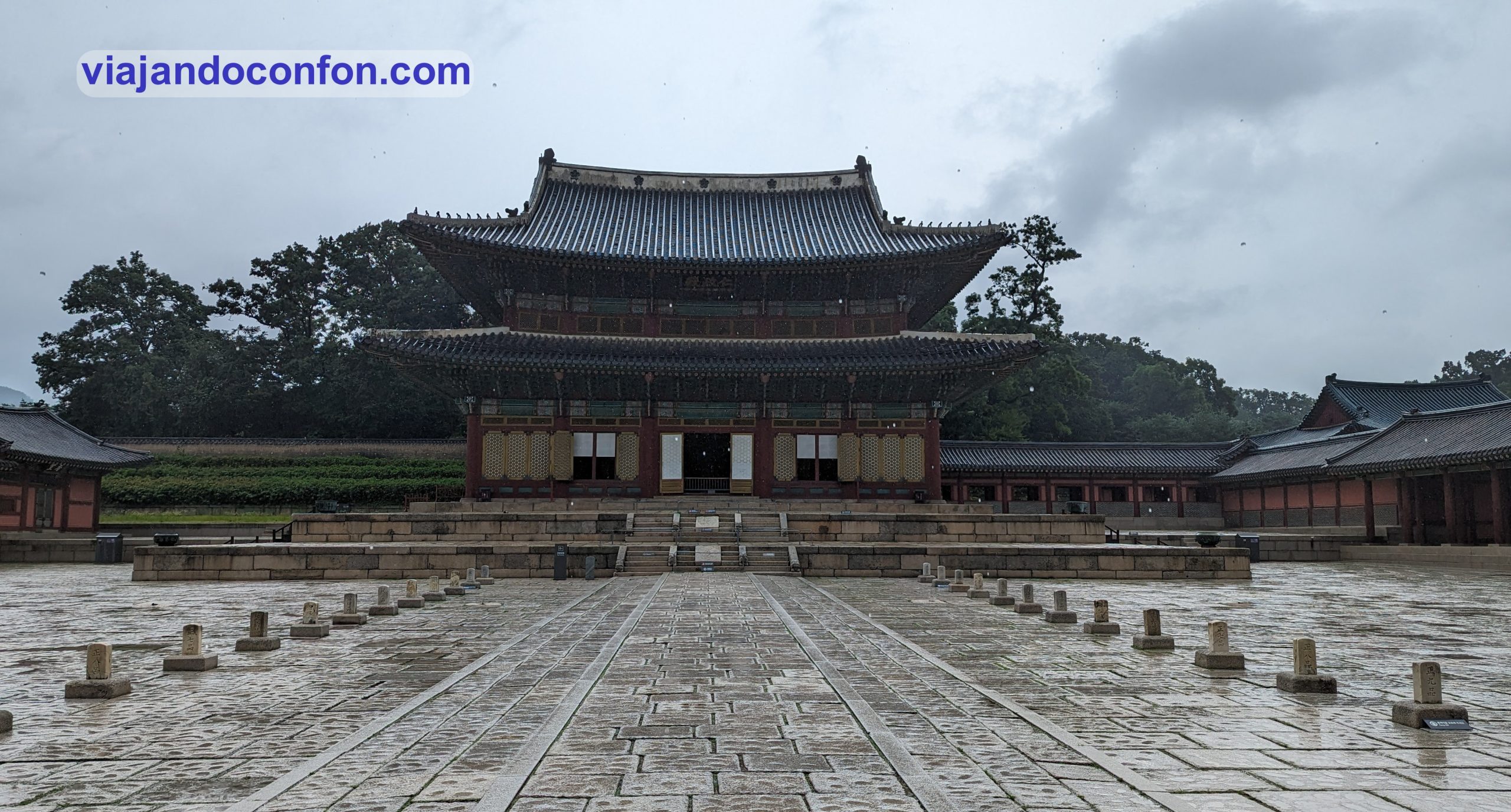
Changdeokgung Palace was a favourite of the kings of the Joseon Dynasty (1392-1910) because of its spacious and beautiful back garden.
It was built as a secondary palace for the Joseons in 1405. After its destruction during the Japanese invasion (1592-1598), it was rebuilt in 1610 and served as the main palace for about 270 years.
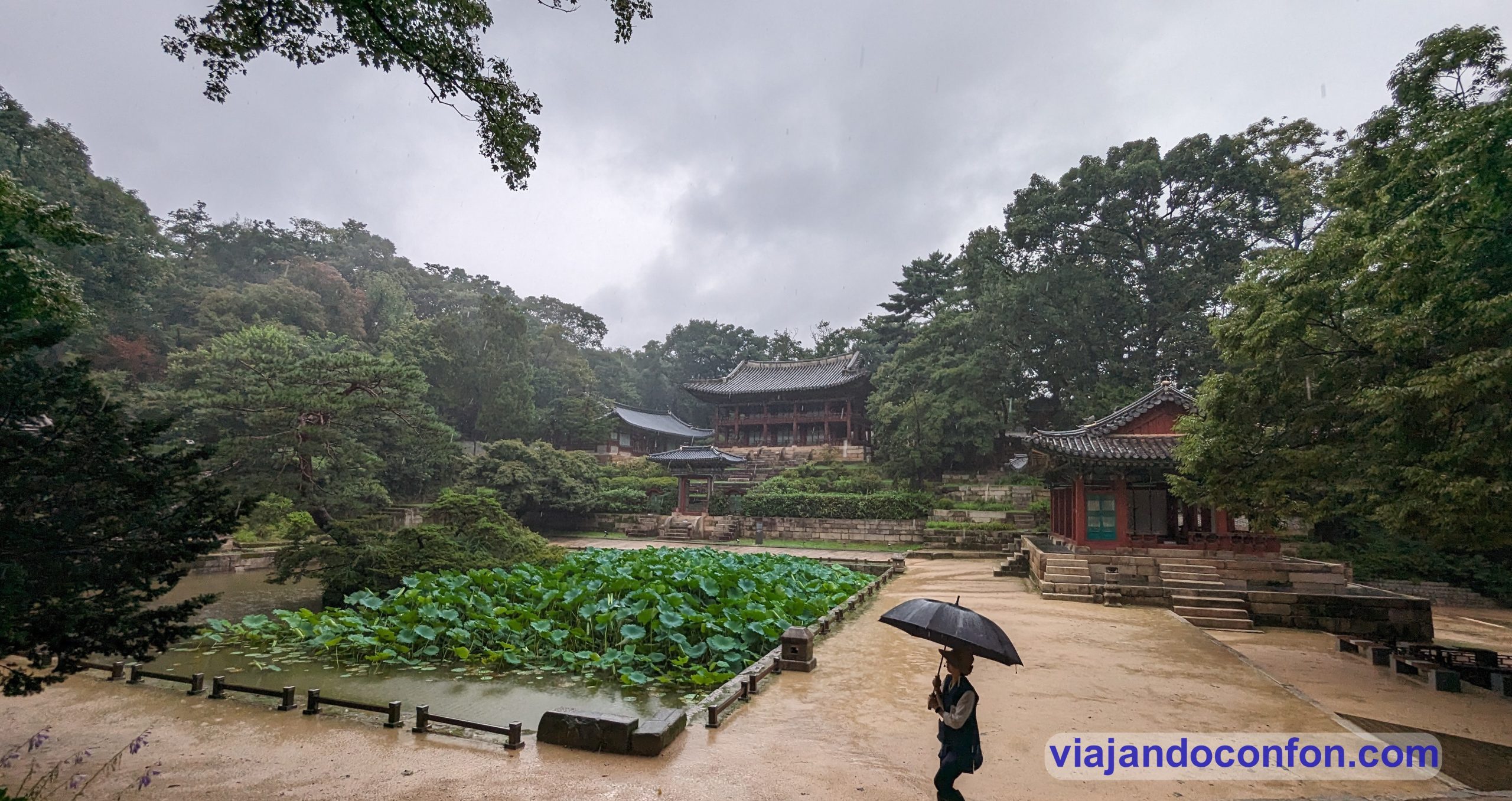
Changdeokgung Secret Garden
Within the palace complex is the Secret Garden. Today the garden can only be visited by guided tours.
The Secret Garden was intended as a place for kings and members of the royal family to relax. But it was also a place for various outdoor activities.
Early Joseon kings participated in military exercises here, and archery competitions were held here. There were also banquets for the queen dowager, prominent relatives of the king and high-ranking ministers.
The Secret Garden occupies almost 60% of the total area of Changdeokgung Palace, and in the old days even tigers occasionally made an appearance.
The spectacular scenery of the Buyongji Pond area is striking. This was not there in the early days of the palace. It was built in 1707. It survived the Japanese colonial period and the Korean War without being demolished.
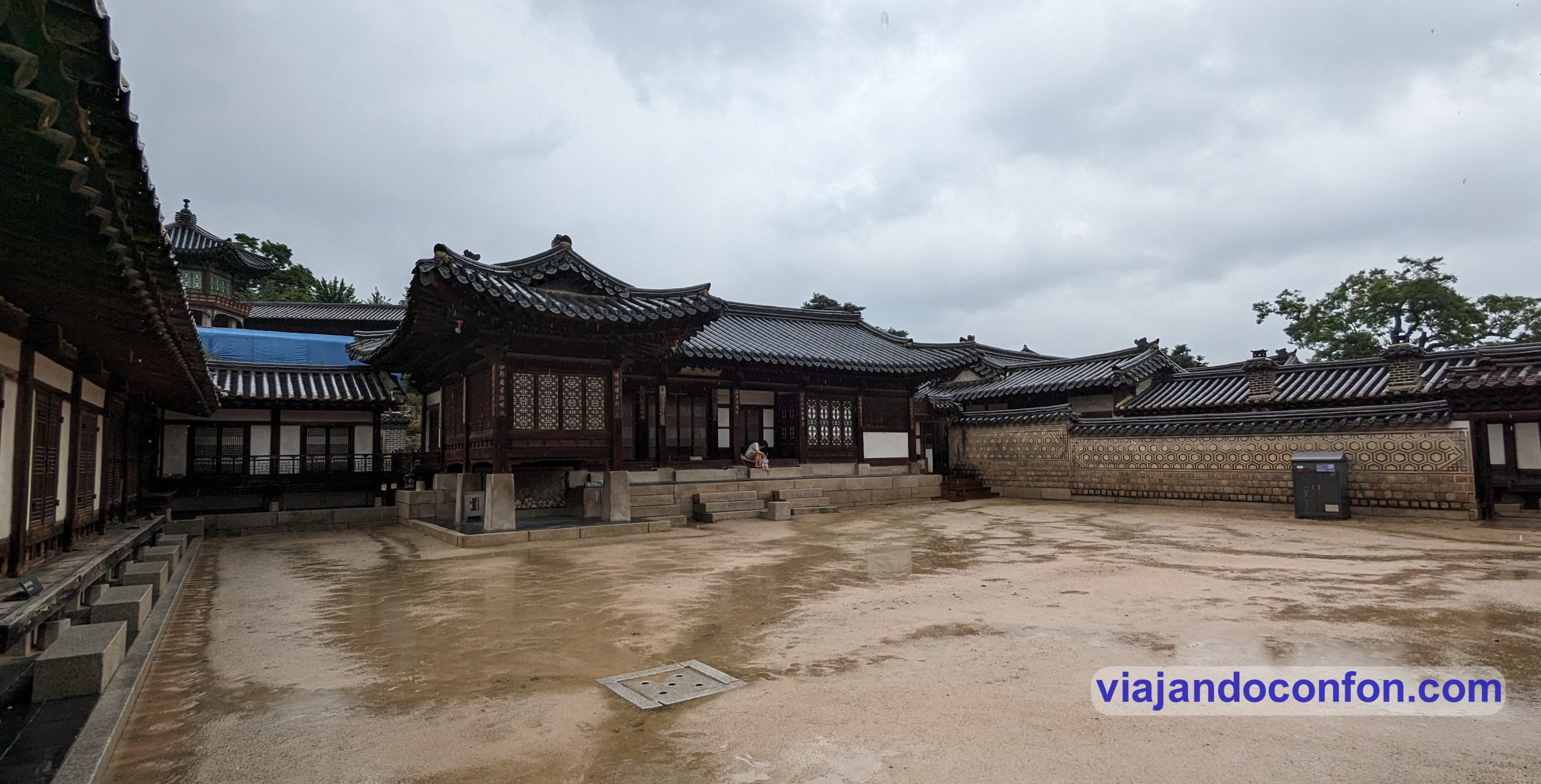
Nakseonjae Hall
This is another building worth noting, especially for its history.
Nakseonjae Hall is the place where King Heonjong, the 24th king of Joseon, built for the concubine he truly loved. It was in 1847.
It is located in the area between Changdeokgung Palace and Changgyeonggung Palace and includes the Seokbokheon and Sugangjae halls, as well as stone stairs decorated with interestingly shaped stones and flowering trees on the gently sloping hills behind the buildings.
After the coup in 1884, Nakseonjae was used as the king’s office for a time.
The last crown prince of the Joseon Dynasty, Yi Eun, lived here from 1963 to 1970. His wife, Yi Bangja, also lived here from 1966 to 1989.
How to get there: Anguk Station (Exit 3) on Subway Line 3. Walk 5 minutes west of the station // Changdeokgung Palace Station. Donhwamun Traditional Theatre by bus, lines 109, 162, 710 and 7025.
Opening hours: Tuesday to Sunday from 9am to 5pm. Closed on Mondays.
Price: 3,000₩ // If you want to visit the Secret Garden (a must-see), you must add a supplement of 5,000₩ // Both are included in the Royal Palace Pass.
05. Changgyeonggung Palace (창경궁)
Changgyeonggung Palace was built in the mid-15th century by King Sejong for his father, Taejong. It was originally called ‘Suganggung,’ but was renovated and expanded in 1483 by King Seongjong, at which time it received its current name.
Many of the buildings were destroyed during the Japanese occupation in 1592. It was rebuilt by successive Joseon kings, but was once again largely destroyed by the Japanese in the early 20th century.

During the Japanese colonial period, the Japanese built a zoo, a botanical garden, and a museum on this site.
After independence in 1945 and the destruction of the Korean War of 1950-1953, the zoo was restocked thanks to donations from wealthy Koreans and gifts from foreign zoos. In 1983, the zoo and botanical garden were moved to the current Seoul Grand Park.
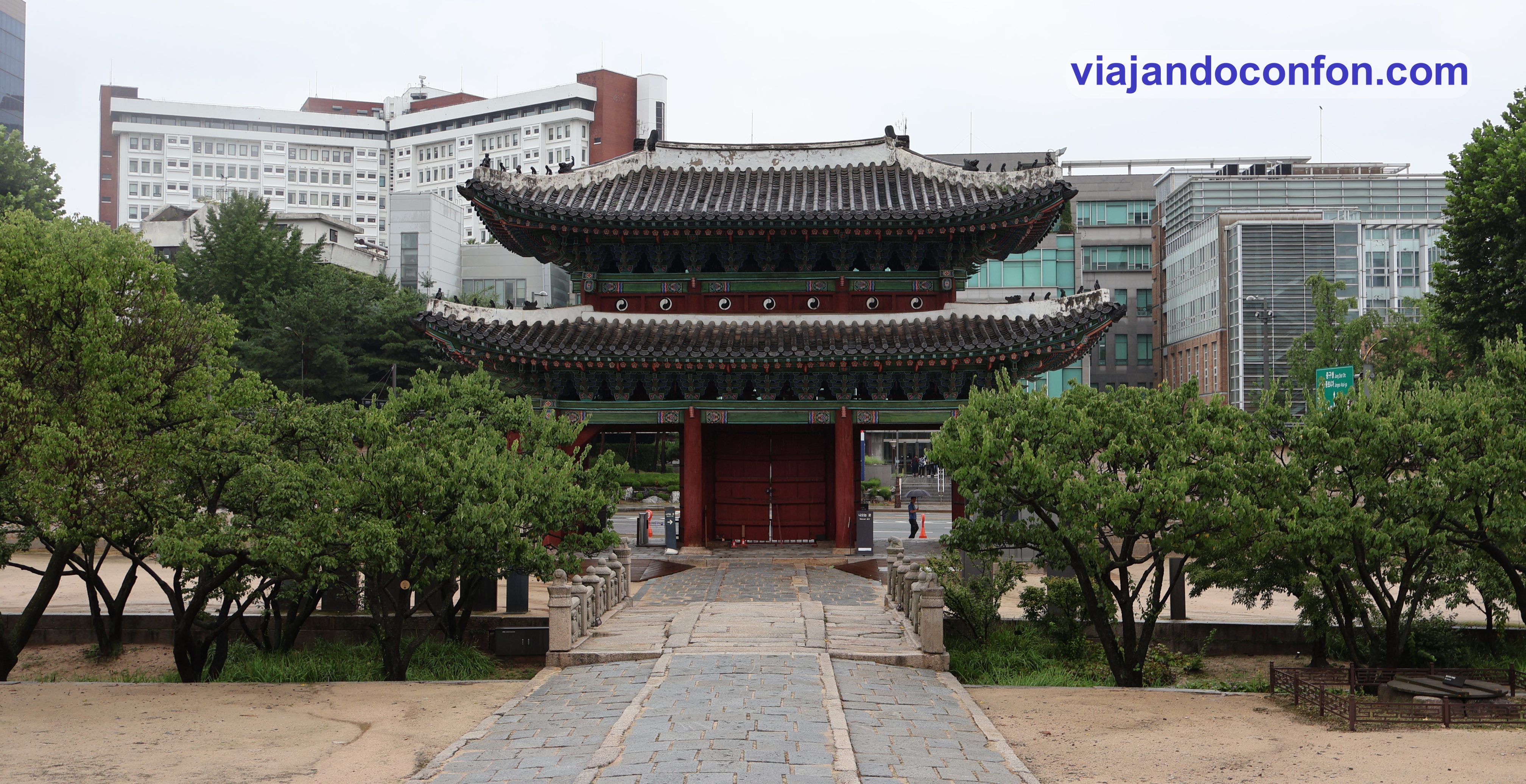
The spectacular Honghwamun Gate, the main gate of the palace, is worth noting. First built in 1484, it was burned down during the Japanese invasion of 1592. It was rebuilt in 1616.
How to get there: You can enter from Changdeokgung Palace or from Changgyeonggung-ro Street on the other side of the complex.
Opening hours: Tuesday to Sunday from 9 a.m. to 9 p.m. Closed on Mondays.
Price: 1,000₩. Included in the Royal Palace Pass.
06. Dancing next to the Gangnam Style sculpture
This sculpture is located in the Gangnam district, one of the most exclusive areas of Seoul.
As we got off the underground and left the station, we came across the monument to the song. Two giant hands representing the dance of the song, with it playing from a screen and always someone underneath making a fool of themselves.
A fool, of course, that we also made of ourselves, but I’m keeping the photos and videos to myself. But if you want to see some, you can check out my Instagram.
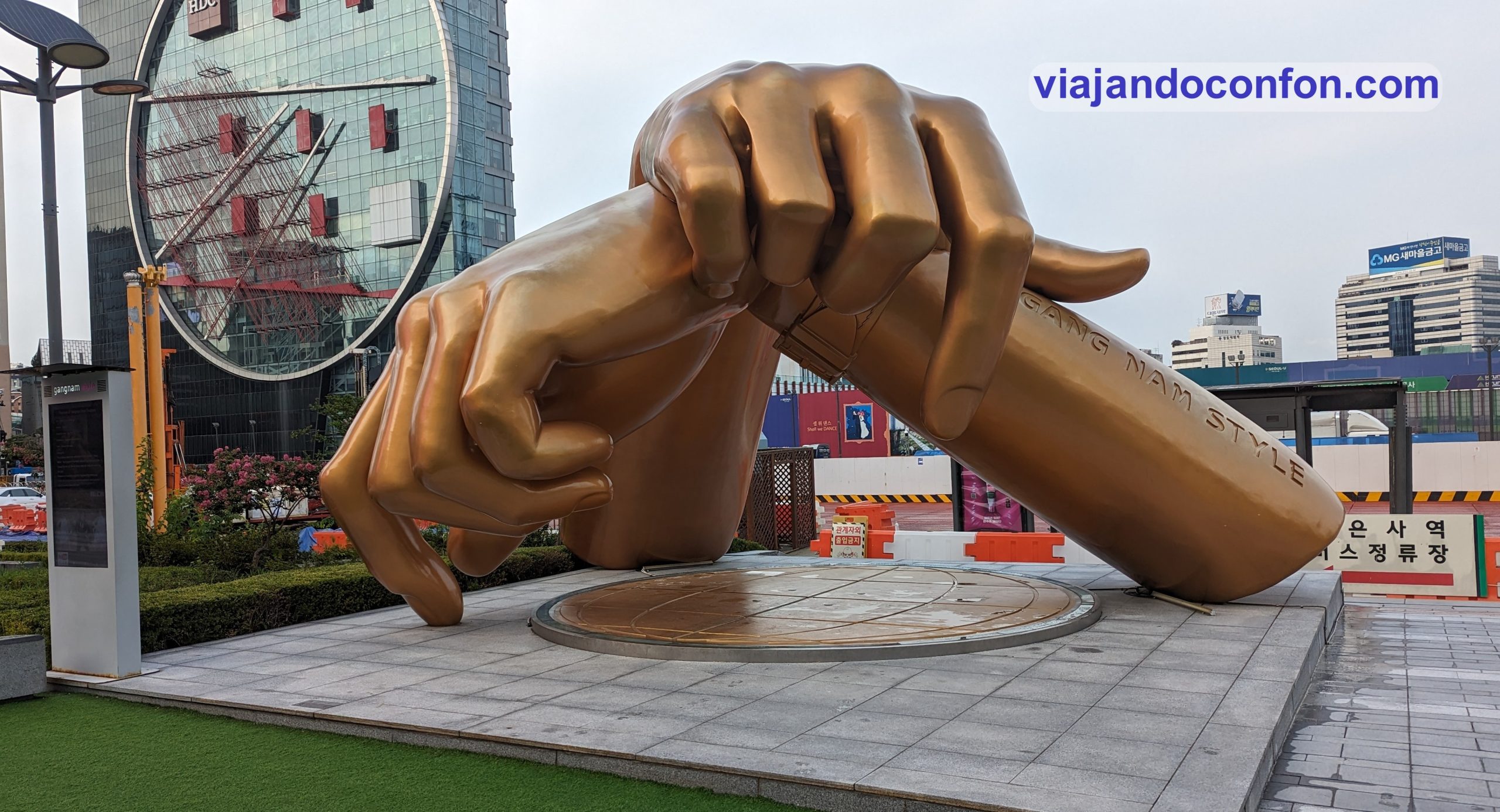
How to get there: Bongeunsa Station, Subway Line 9 // Samseong Station (World Trade Centre Seoul), Subway Line 2.
07. Bongeunsa Temple (봉은사) and the biggest Buddha in Korea
Bongeunsa Temple was founded in 794 by State Preceptor Yeonhoe, then the highest-ranking monk in Silla. Its name at that time was Gyeonseongsa.
During the Joseon Dynasty, Buddhism in Korea was severely suppressed and the temple was destroyed.
The temple became known as Bongeunsa when it was rebuilt in 1498 under the patronage of Queen Jeonghyeon, a queen of Joseon.
The term Bongeunsa means the act of honouring the king, which here can be understood as a prayer for the eternal life of King Seongjong.
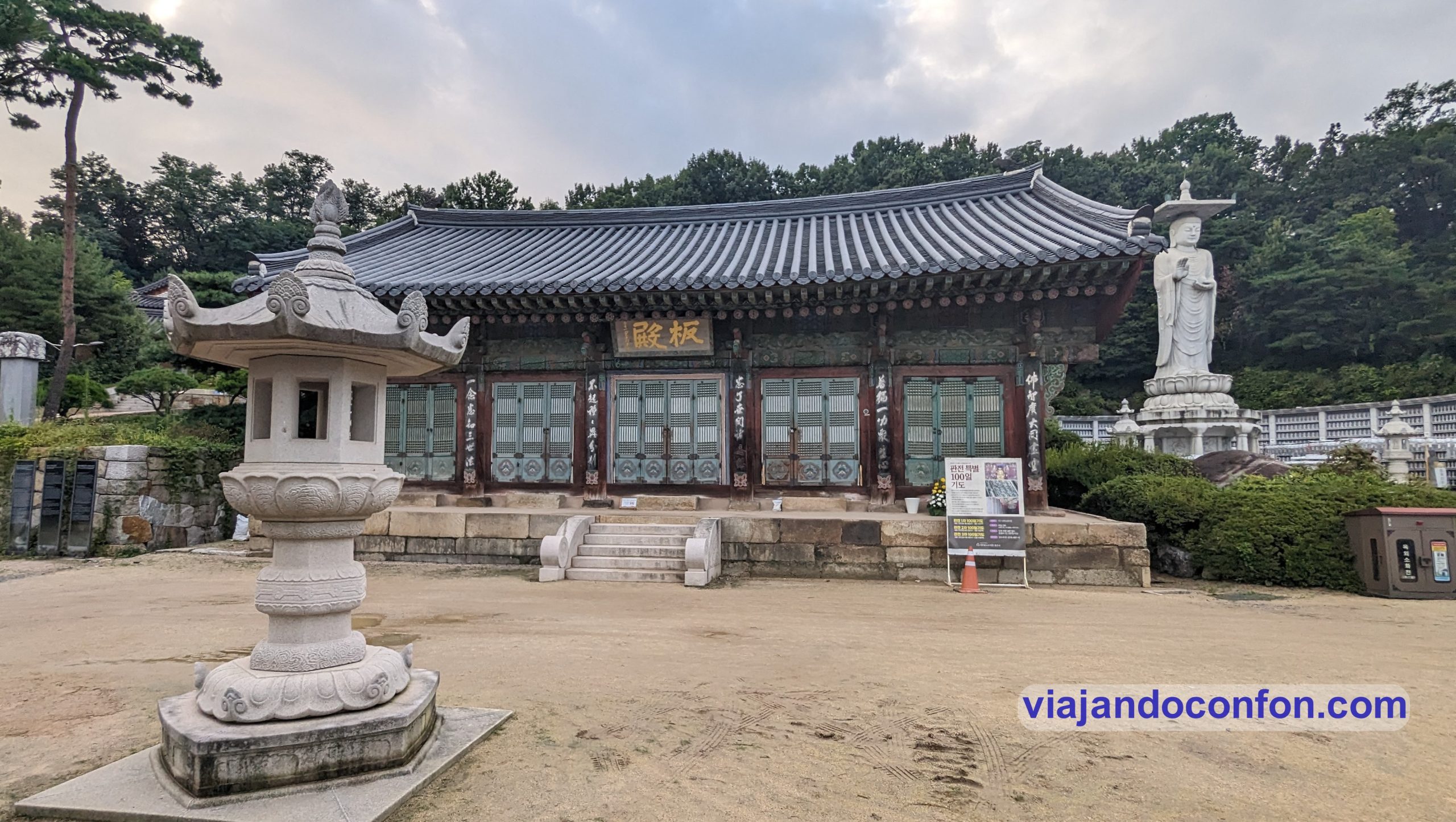
With the support of Queen Munjeong, who revived Buddhism in Korea in the mid-16th century, it became the main temple of the Korean Buddhist Seon (Chan) sect from 1551 to 1936.
The monk Bou was appointed head of the temple in 1548 by Queen Munjeong. He was assassinated shortly afterwards when anti-Buddhist factions regained dominance in Korea towards the end of Queen Munjeong’s reign.
During the Japanese occupation in the 20th century, the temple became the headquarters of 80 smaller Buddhist temples around Seoul. After colonial rule, Bongeunsa became subordinate to the Jogye Order, the largest Buddhist sect in Korea.
A fire in 1939 destroyed most of the buildings, and other parts of the temple were destroyed during the Korean War.
The temple is home to the Bongeunsa Maitreya Buddha, the largest Buddha in Korea at 23 metres high.

The truth is that the temple is a real haven of peace in the middle of bustling Seoul. What’s more, the entrance fee is free.
How to get there: Bongeunsa station (exit 1), metro line 9.
08. Cheong Wa Dae, the Blue House (청와대)
It is the former executive office and official residence of the President of South Korea from 1948 to 2022.
Cheong Wa Dae is a complex of multiple buildings constructed largely in the traditional Korean architectural style with some modern architectural elements and facilities.
It was formerly the site of the Joseon Dynasty’s royal garden dating back to 1426. The complex burned down in 1592 during the Japanese occupation and remained abandoned for 270 years.
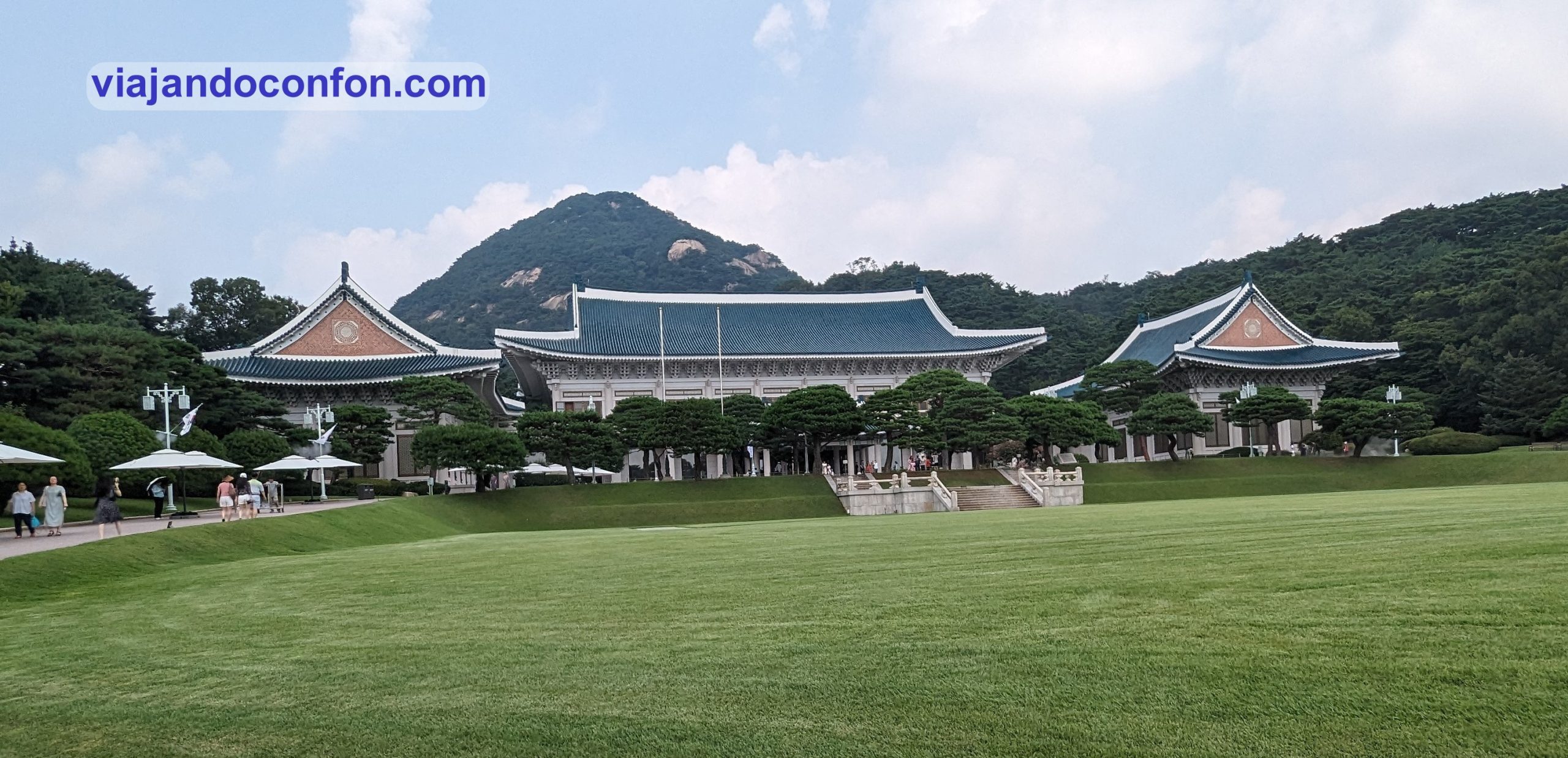
In 1865 Prince Regent Heungseon began reconstruction in the second year of King Gojong’s reign.
During the Japanese occupation in the early 20th century it was used to hold the Joseon Exposition from 1937 to 1939 and later served as a park before the official residence of the Japanese governor general was built on the site.
After registering our passports at the entrance and passing through a strict security check, we enter the grounds.
We pass through another security check into the building and visit the offices and various rooms. They include a collection of objects used by the different presidents and the president of South Korea, portraits of all the presidents and photos of the first ladies.
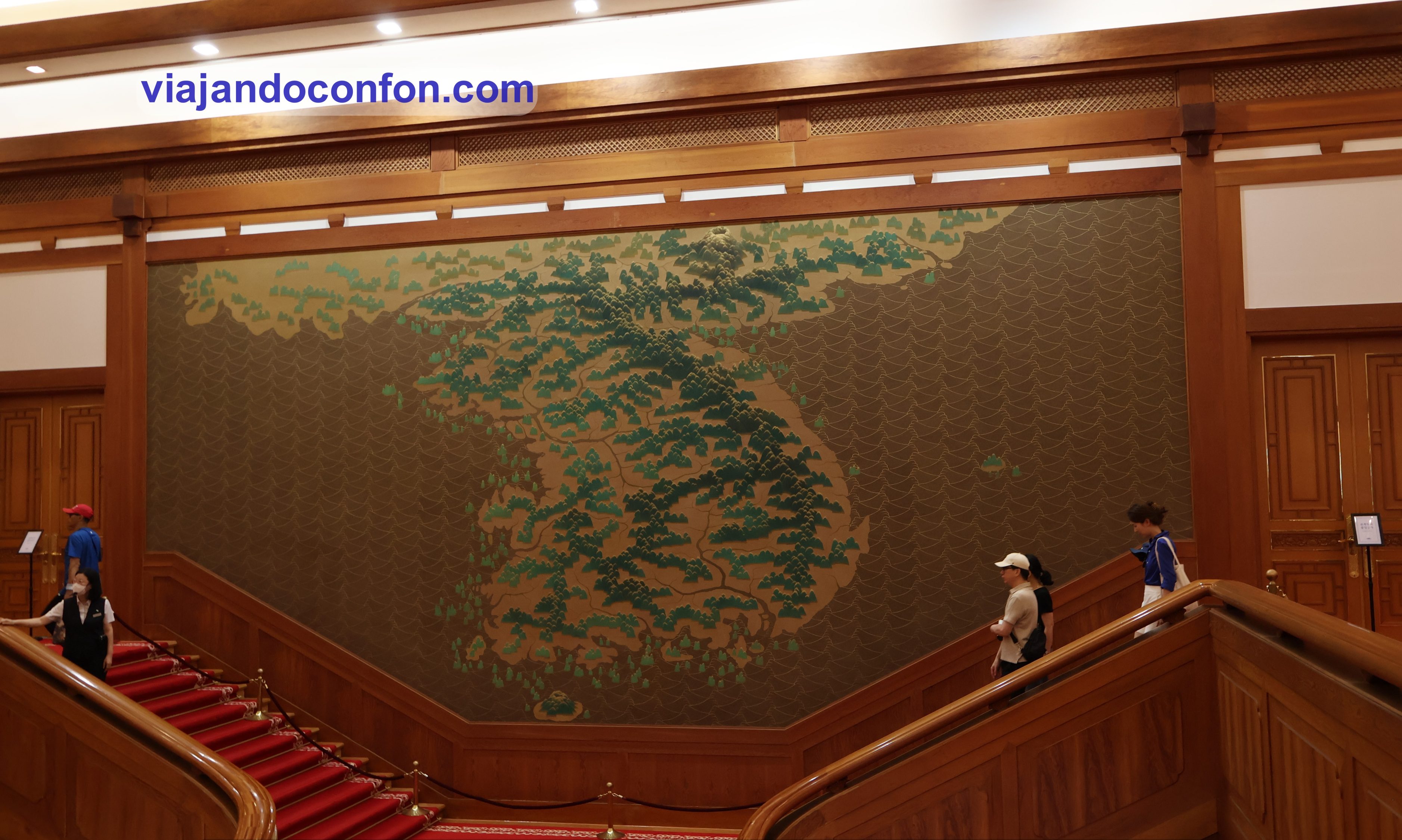
How to get there: Ideally, the visit should be combined with a visit to Gyeongbokgung Palace. From Sinmumun Gate, north of the palace complex, just cross the street.
Opening hours: 9am-6pm. Closed on Tuesdays.
Price: free of charge.
09. Bukchon Hanok Village (북촌 한옥마을)
Bukchon Hanok Village is a neighbourhood that is home to hundreds of traditional houses, called hanok, dating back to the Joseon dynasty.
The name Bukchon, which literally translates as ‘northern village’, came about because the neighbourhood is located north of two important Seoul landmarks, Cheonggyecheon Stream and Jongno.
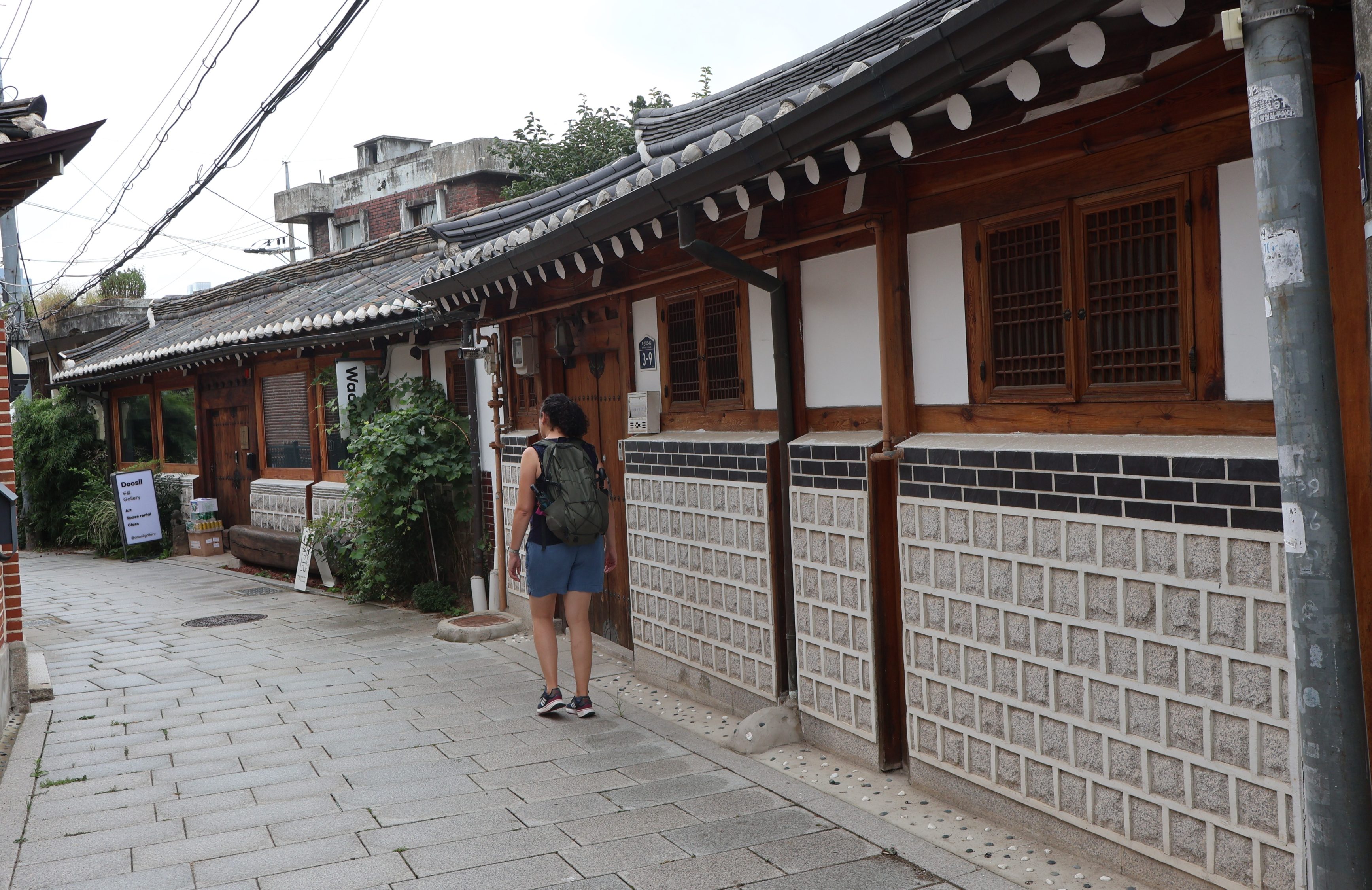
Today, many of these hanok function as cultural centres, guesthouses, restaurants and tea houses.
It should be remembered that it is also a residential neighbourhood. There are many signs in various languages asking for silence, and even people dressed in yellow to make sure everything is quiet.

How to get there: Bukchon Hanok Village Entrance stop, bus 02.
10. Learn the history of the inter-Korean conflict at the Korean War Memorial (전쟁기념관)
The Korean War Memorial exhibits and preserves materials related to the Korean War and serves as a place of national moral education.
It was established by the Korean War Memorial Service Society on June 10, 1994. It was made to commemorate the noble sacrifice of patriotic martyrs.
The museum houses approximately 33,000 artefacts and about 10,000 artefacts are displayed in indoor and outdoor exhibits.

There are six separate interior rooms. They include the Expeditionary Forces Hall, the Patriotic Memorial Hall, the War History Hall, the Korean War 6-25 Hall, the Development Hall and the Large Machinery Hall.
One of the monuments that surprised us the most was the Statue of Brothers (형제의 상), which we were told about during the DMZ tour. Mostly because of the history.
The Brothers Statue is a symbol of the Korean War. It depicts a dramatic moment when a South Korean officer and his younger brother, a North Korean soldier, meet and embrace on the battlefield. The statue expresses reconciliation, love and forgiveness.

How to get there: Samgagji station (exit 14), metro lines 4 and 6.
Opening hours: Tuesday to Sunday 9.30am-6pm. Closed on Mondays.
Price: free of charge.
11. Namsan Mountain Park (남산 공원)
Namsan is a 270-metre high mountain located in the centre of Seoul. It was originally called Inkyongsan. After the capital was moved from Kaesong to Seoul by King Taejo (by Feng Shui), it was called ‘Namsan’. It was because it is a southern mountain.
Everywhere there are a million of those padlocks that are so fashionable, destroying the heritage of the world’s cities. Although here they really sell them to you on purpose to do so. I still think it’s a stupid thing to do.
The best thing about Mount Namsan is the spectacular 360º views of Seoul.
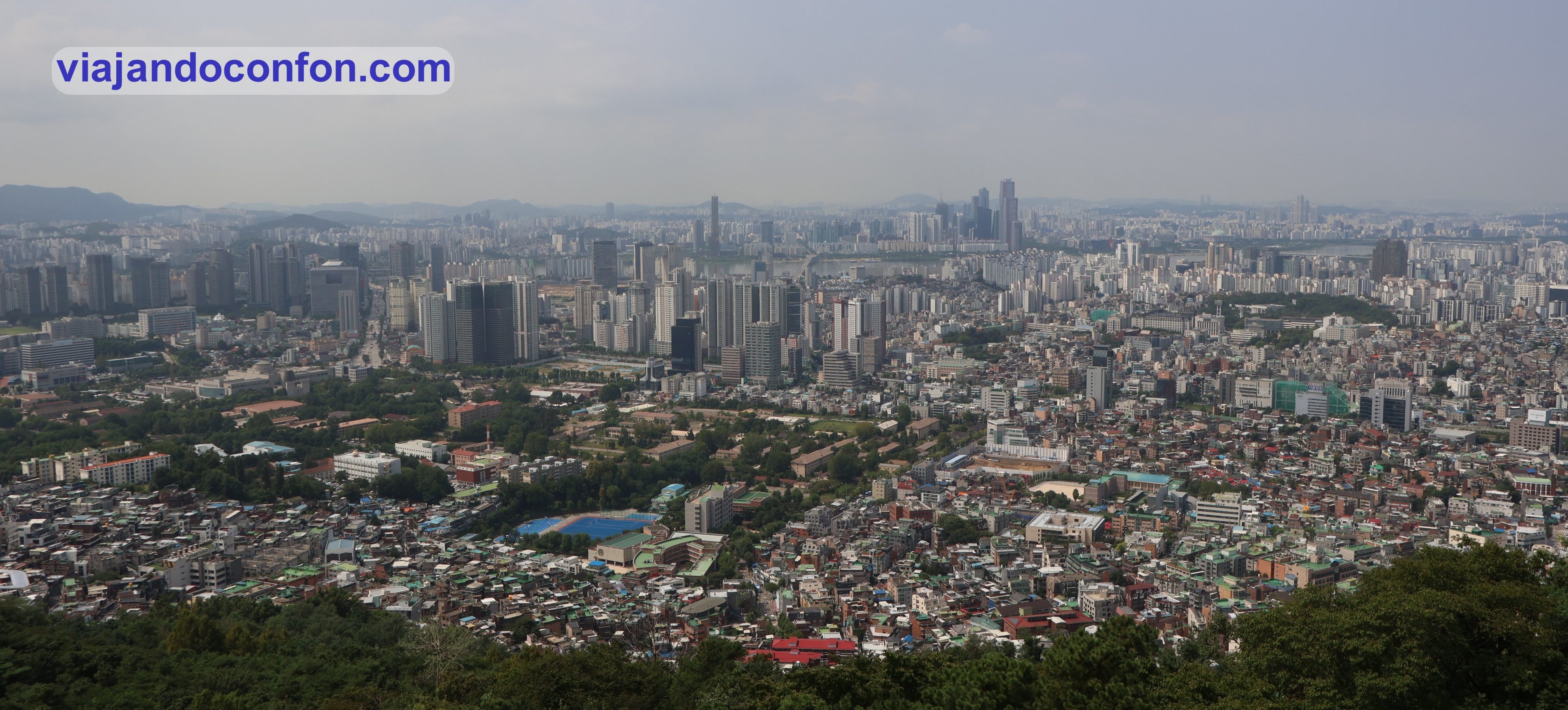
There are several noteworthy features on Mount Namsan.
Namsan Beacon Mound
Namsan Beacon Mound is a Joseon-era guard post. From time to time there is a military re-enactment of the era.
At certain times, there is a sort of changing of the guard, although it is much less spectacular than the one at Gyeongbokgung Palace.
Namsan Palgakjeong, the Octogona Pavilion (남산팔각정)
It was built in 1959 to commemorate former Korean President Rhee Syngman. It was originally called Unamjeong Pavilion.
It was destroyed during the 1960 April Revolution against President Syngman, which led to his resignation. It was rebuilt in 1968.
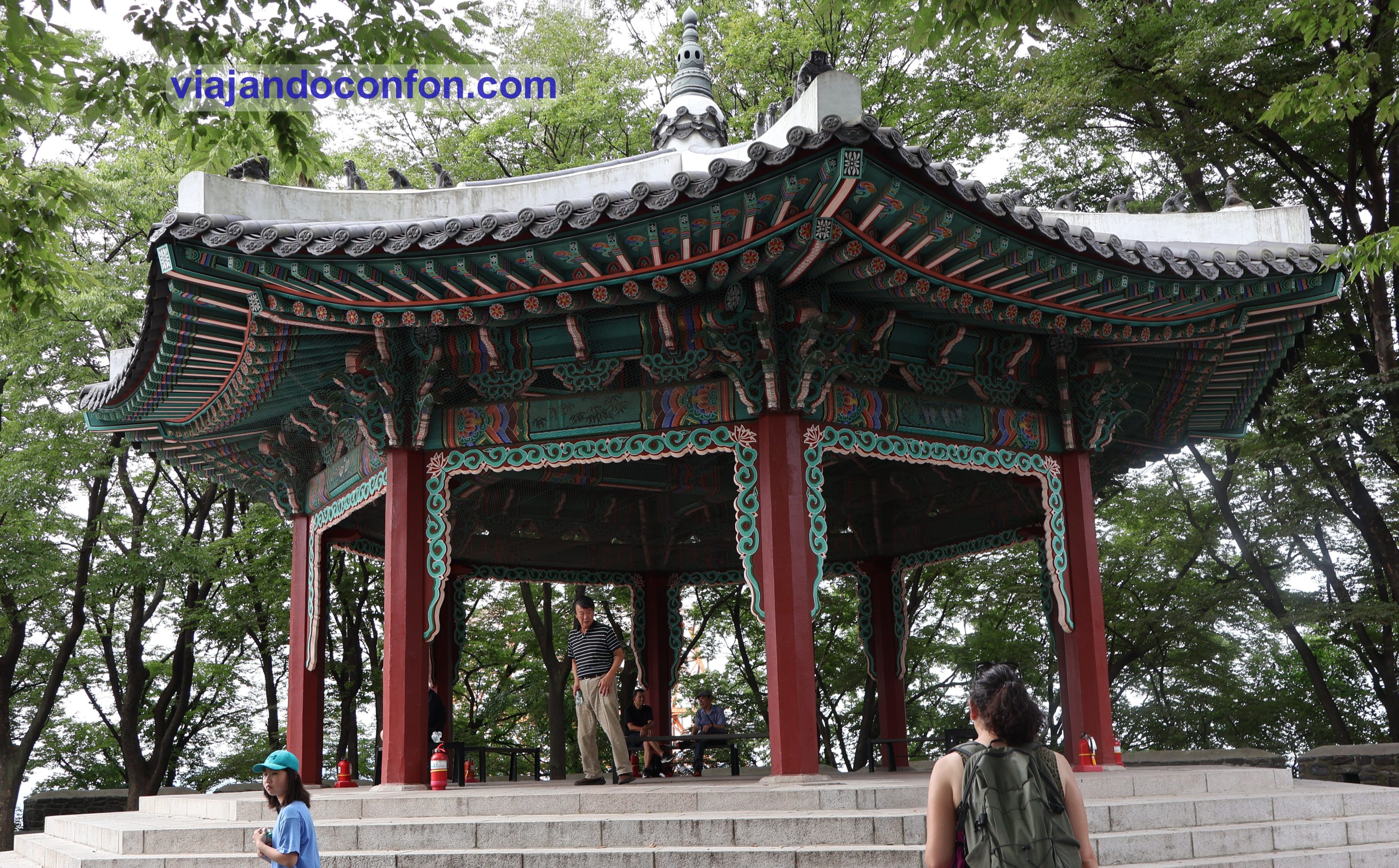
It is especially famous during the New Year when crowds of Koreans go up to watch the first sunrise of the year.
N Seoul Tower (N서울타워)
The star of Mount Namsan. It is a 236-metre high telecommunications tower built in 1969. It was opened to the public in 1980 and has wonderful 360º views of Seoul.
At its base you will find restaurants, cafes and a souvenir shop.
The price for the 5th floor observatory is 21,000₩ (€14.70).

How to get to Mount Namsan: The best way is to take the Namsan cable car. It costs 11,000₩ one way (€7.70) and 14,000₩ return (€9.80).
Tip: The best way to get to the cable car is to take Sogong-ro Avenue and then take the free lift to the cable car. You’ll avoid the steep slopes.
Buy your tickets for the N Seoul Tower at the following link:

*It helps us to maintain the blog
12. Cheonggyecheon
Cheonggyecheon Creek originates from Baekdongcheon Creek in the Inwansang Mountain Valley, northwest of Gyeongbokgung Palace. It runs through the centre of Seoul and is almost 11 km long.
During the Japanese occupation, it was planned to cover the stream, but it was not realised. However, the project was realised between 1958 and 1978.
In 2003, the Metropolitan Government proposed a project to restore the area. In 2005, the restoration work was completed and about 5 km of the creek was repaired, leaving it as it is today.
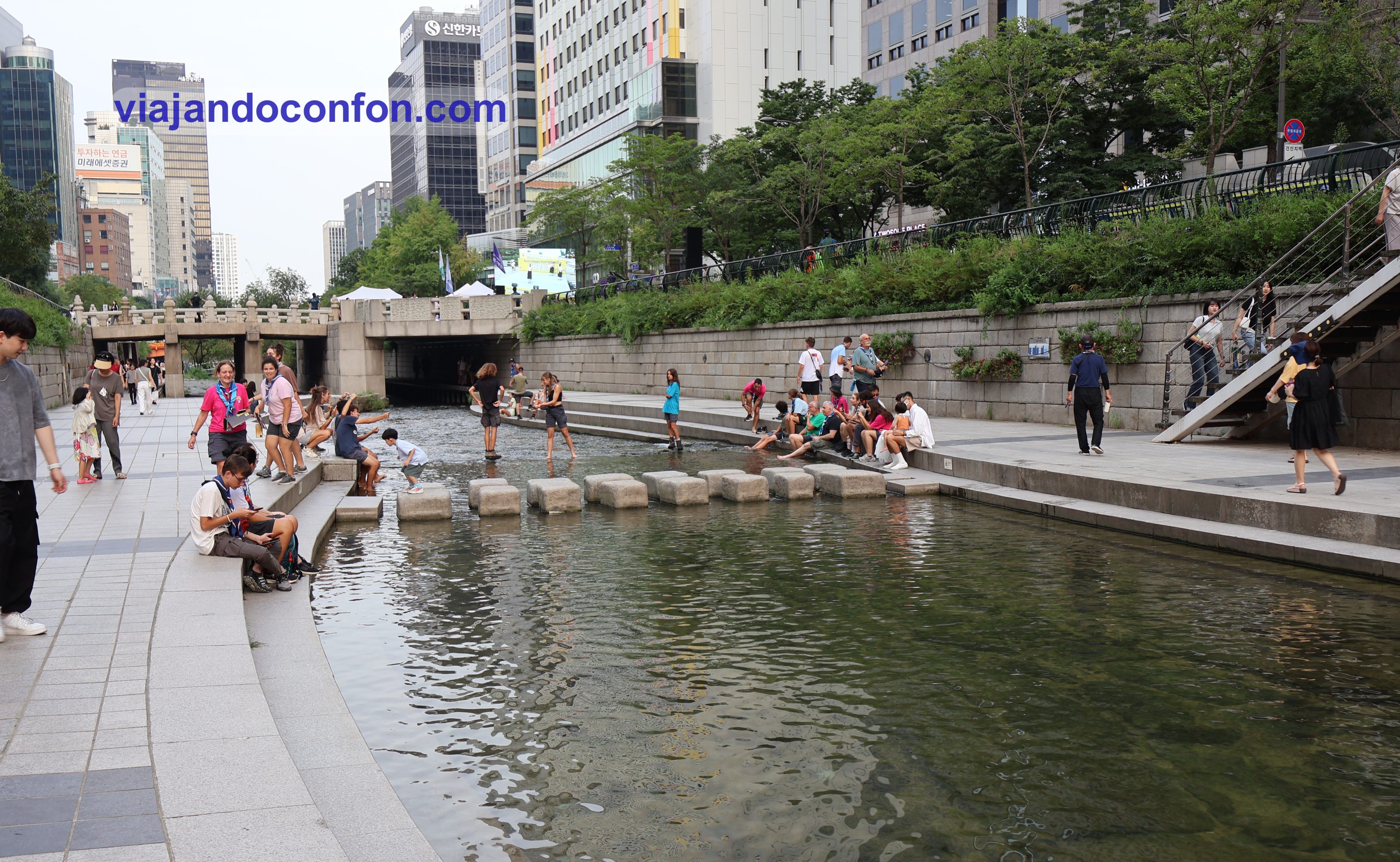
Events such as concerts are held in the surrounding area. In summer, in the heat, you can relax and cool off by sitting with your feet soaking in the stream.
How to get there: City Hall station, underground lines 1 and 2.
13. Learn more about the separation of the two Koreas at the DMZ
The DMZ, the Korean Demilitarised Zone, is a strip of land that crosses the Korean Peninsula near the 38th parallel north, dividing it roughly in half.
It was established to serve as a buffer zone between the countries of North and South Korea under the provisions of the 1953 Korean Armistice Agreement. An agreement between North Korea, China and the United Nations Command.
The DMZ is 250 kilometres long and about 4 kilometres wide and is heavily guarded and mined. For a demilitarised zone, it is the most heavily militarised strip of land in the world.
IMPORTANT: The DMZ is only accessible by guided tour. It is impossible to visit it on your own and there are several strict military checkpoints for access.

In our travel diary you can find more details about the DMZ and what we visited during our tour.
You can take this interesting excursion to the DMZ with Civitatis:

*Helps us to maintain the blog
14. Wearing a Hanbok
Hanbok is the traditional Korean dress and is characterised by bright colours. In the old days, these colours had great social significance. They were used to distinguish the people from the royalty or married women from unmarried women.
Nowadays there are plenty of places where you can rent them for a few hours to walk around historical sites and take some nice pictures.
Rent your Hanbok in Seoul with Civitatis:

*Helps us to maintain the blog
Recommended visits
15. Visiting Deoksugung Palace at night
Deoksugung is one of the ‘Five Great Palaces’ built by the kings of the Joseon dynasty. It was inhabited by the Joseons until the beginning of the Japanese occupation in 1910. Today only 1/3 of the original structures remain.
It was originally the residence of Grand Prince Wolsan, the elder brother of King Seongjong. Deoksugung became a royal residence when the Japanese burned the remaining palaces during their occupation in 1592.

King Gwanghaegun was crowned in this palace in 1608 and renamed it Gyeongun-gung in 1611. After the reconstruction of Changdeokgung, it was converted back into an auxiliary palace in 1618 and renamed Seogung.
In 1907, the palace was renamed Deoksugung, in reference to the emperor’s wish for longevity. Emperor Gojong died in Hamnyeongjeon.
After the last Japanese occupation in 1910, the complex was converted into a park and many buildings were destroyed. Today only 1/3 of the original elements of the complex remain.
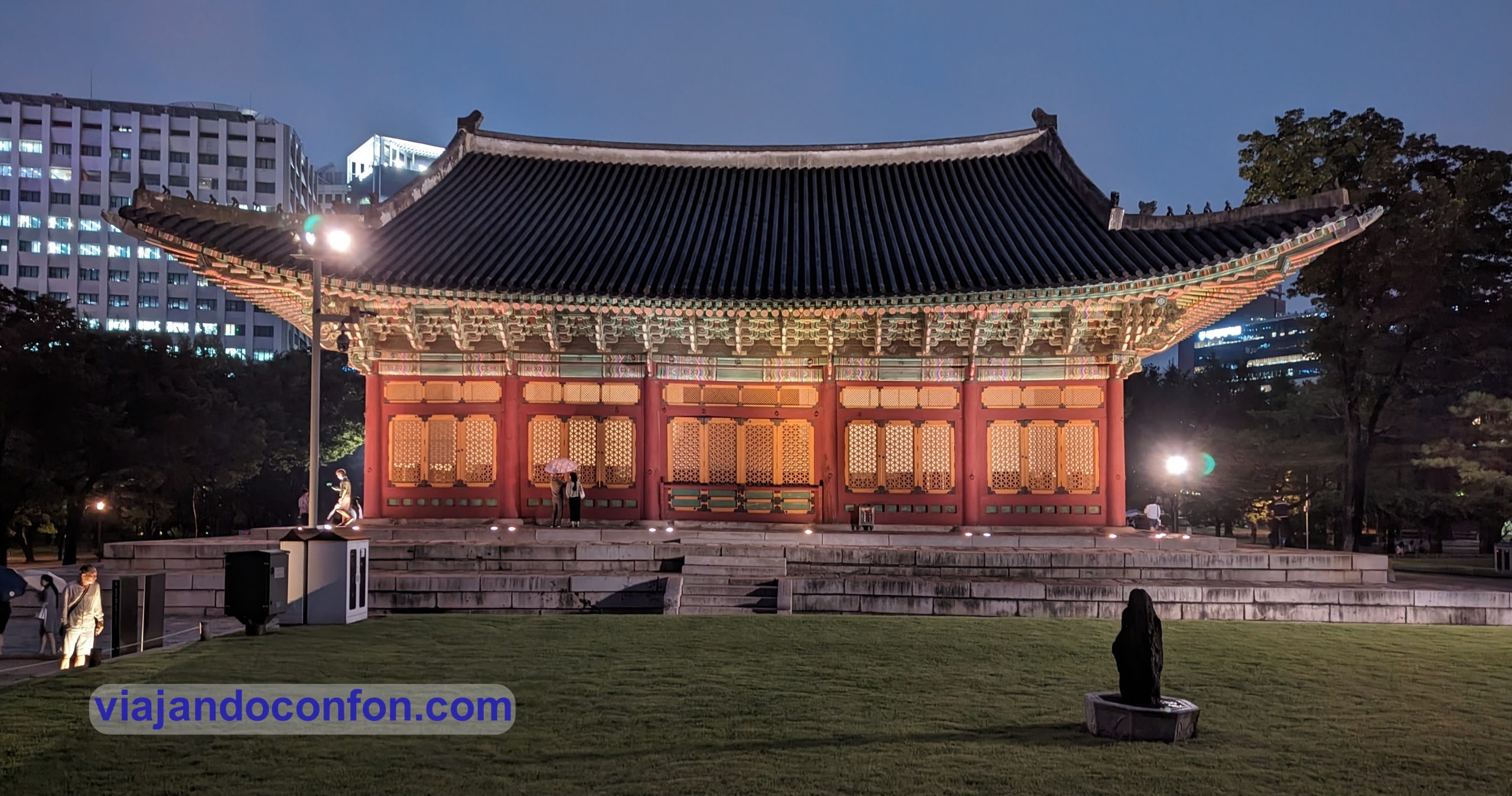
How to get there: City Hall station, underground lines 1 and 2.
Opening hours: daily 9am-9pm.
Price: 1,000₩ (€0.70) // Included in the Royal Palace Pass.
Enjoy a beautiful guided night tour of Deoksugung Palace with Civitatis:

*Helps us to maintain the blog
16. Street food in Myeong-Dong
Myeongdong is the largest shopping district and one of the main tourist destinations in the old centre of Seoul.
Here, apart from shops, there are millions of street stalls selling all kinds of food.
How to get there: Myeongdong Station, underground line 4 // Euljiro 1(il)-ga Station, underground line 2.
17. National Folk Museum of Korea
The National Folk Museum of Korea was founded in 1946 and is a museum representing the daily life and culture of Korea. It is visited by more than two million people every year.
The beautiful building alone is worth a visit. You can also see numerous exhibits in the gardens.
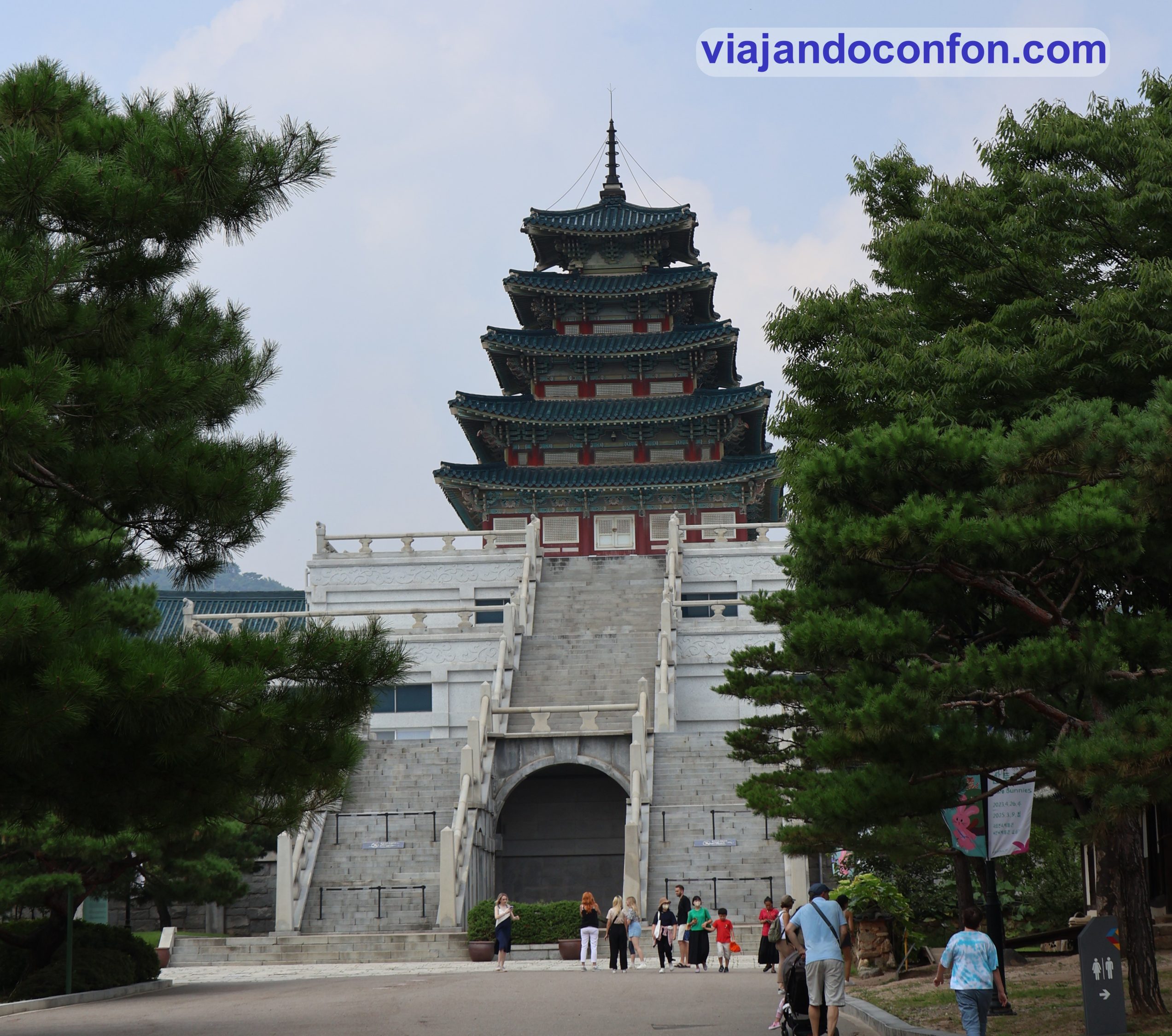
How to get there: we can combine your visit with Gyeongbokgung Palace and the Blue House.
Opening hours: daily from 9.00 am to 6.00 pm. Saturdays from 9.00 am to 8.00 pm.
Price: free of charge.
18. Jogyesa Temple (조계사)
It was built in 1910 and was named Gakhwangsa Temple, after monks who longed for independence from Korean Buddhism.
The name was changed to ‘Taegosa’ during the period of Japanese rule, and then to the current name in 1954.
As soon as we entered, we found a spectacular lotus plantation in front of the main pavilion. It was a real marvel.

In the main courtyard of the temple is the 7-storey stone pagoda, built in 1930. Inside the pagoda are the ashes of Buddha, which were brought here in 1914 by a Sinhalese monk.
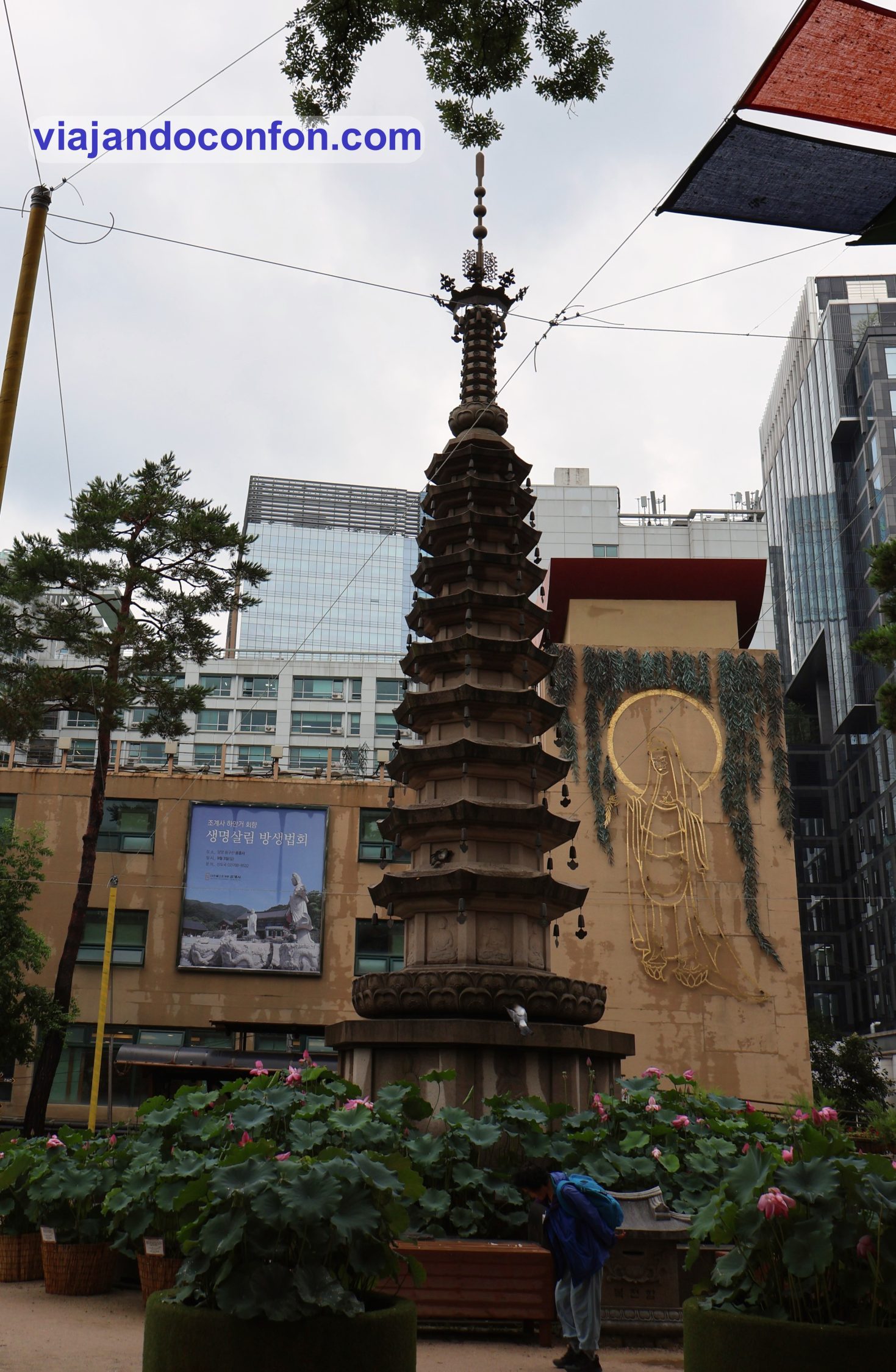
How to get there: Jonggak Station (Exit 2), Metro Line 1 // 6 minutes walk southeast of Anguk Station (Exit 6), Metro Line 3.
Price: free of charge.
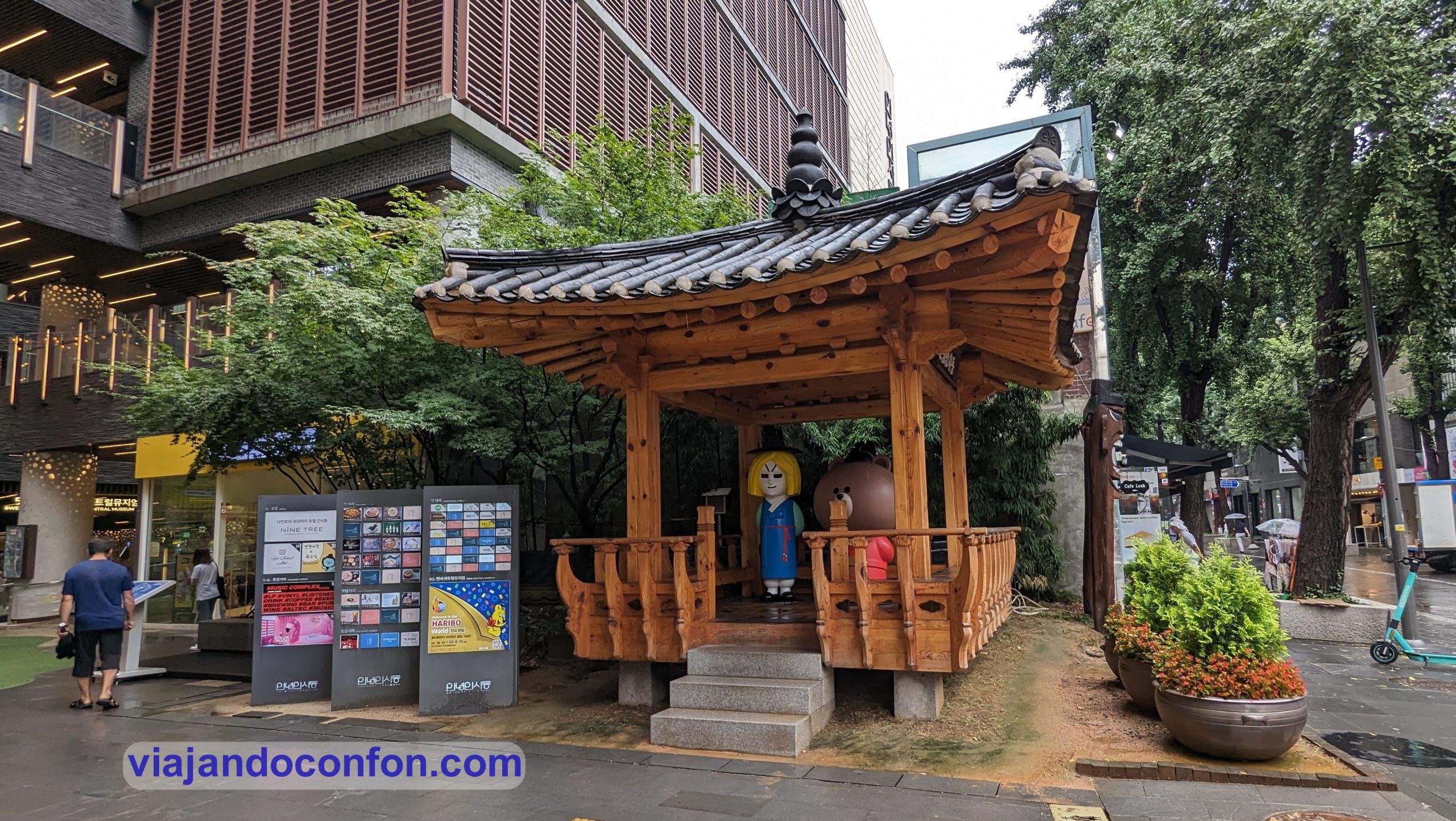
19. Strolling around Insadong
Insadong is a shopping street with numerous shops selling traditional goods, artwork, restaurants and tea houses.
It is really a main street with several small streets branching off along it. It is a great place to buy some souvenirs.
20. Unhyeongung Palace (운현궁)
Unhyeongung Palace was built as the residence of King Gojong, the 26th king of the Joseon Dynasty before he assumed the throne at the age of 12.
During Gojong’s tenure, the regent Heungseon ruled the country for about 10 years, after taking control of state affairs from his son.

In 1864, during the first year of King Gojong, the Nokrakdang and Noandang Halls were built. Five years later, in 1869, the Irodang and Yeongnodang Halls were built.
To facilitate entry and exit from Changdeokgung Palace, Gyeonggeunmun and Gonggeunmun gates were built exclusively for Gojong and the regent Heungseon. However, they are no longer standing.
The palace was purchased in 1993 by the city of Seoul and was reopened in 1996 after extensive restoration.
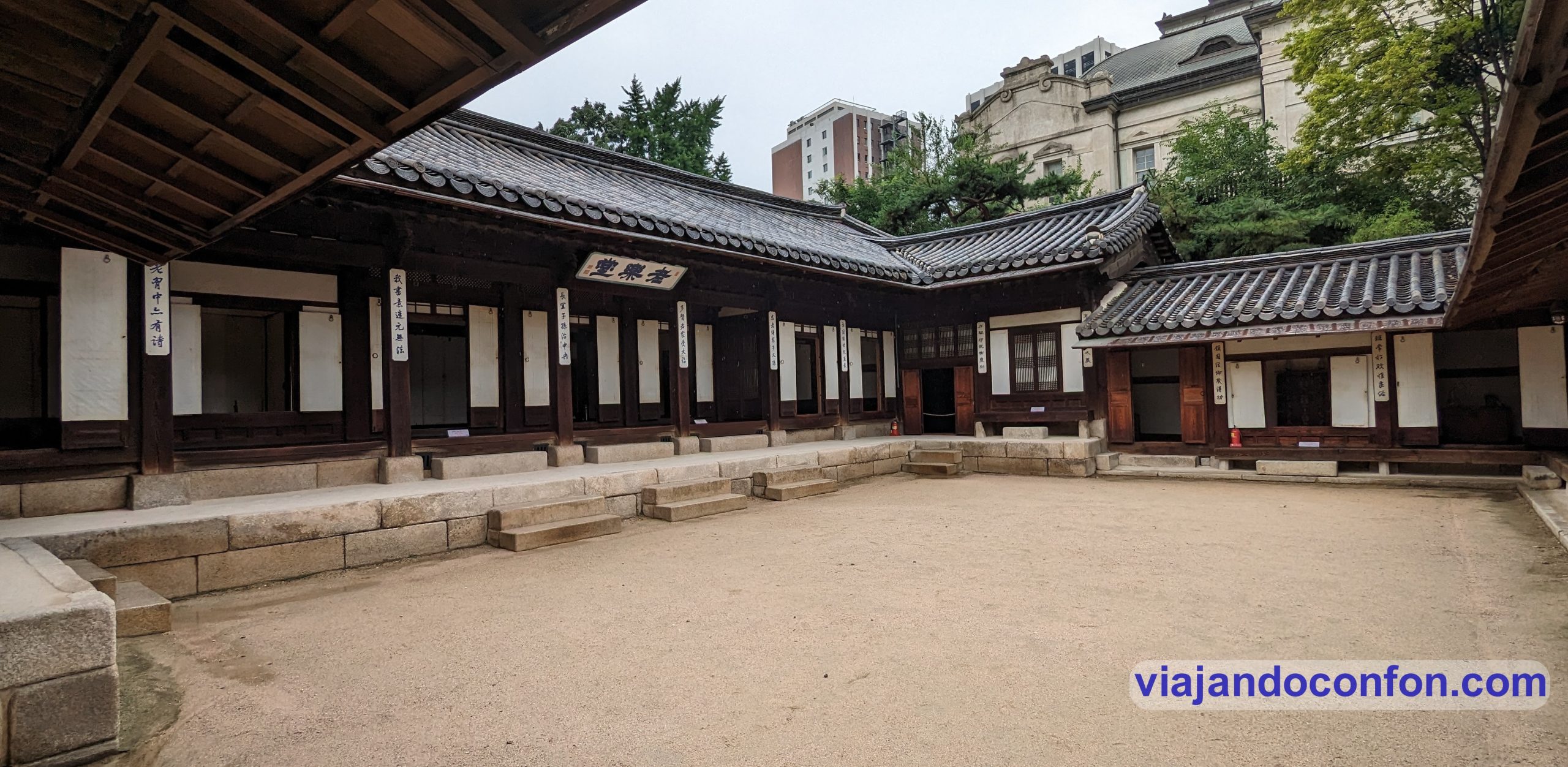
In the various buildings there is an exhibition of how life was lived at the time when the palace was occupied.
How to get there: Anguk station (exit 4), metro line 3.
Opening hours: April to October 9.00 am – 7.00 pm // November to March 9.00 am – 6.00 pm.
Price: free of charge.
21. Namsangol Hanok Village (남산골 한옥마을)
Namsangol Hanok Village simulates a traditional Korean neighbourhood and opened in 1998 on the north side of Namsan Mountain.
It features five restored hanok, a pavilion, a traditional garden, a performing arts stage and a time capsule plaza. The hanok belonged to aristocrats and government officials of the Joseon dynasty who were moved here from other places.

To celebrate the 600th anniversary of the creation of Seoul in 1994, 600 cultural relics representing the appearance of Seoul and the lives of its citizens were buried in capsules.
This capsule will be opened on the city’s 1000th anniversary, 29 November 2394 (if humanity is still alive…).
How to get there: Chungmuro station, underground lines 3 and 4.
Opening hours: April to October 9am-9pm // November to March 9am-8pm // The gardens are open 24 hours a day.
Price: free of charge.
22. Sungnyemun Gate (숭례문)
Sungnyemun Gate is one of the four main gates of the fortress built to protect the city.
It was built between 1396 and 1398 and is the oldest wooden building in Seoul. It was restored between 1961 and 1963.
In 2008 a fire caused severe damage to the entire structure and the destruction of the entire second-floor roof and part of the first-floor roof. It took five years to restore it completely.

How to get there: Seoul Central Station, underground lines 1 and 4 // Hoehyeon Station, underground line 4.
23. Heunginjimun Gate (흥인지문)
Heunginjimun Gate was built in 1396 during the reign of King Taejo, the first king of the Joseon Dynasty. It is the eastern gate of the city’s defensive wall.
The gate has been destroyed and rebuilt several times. The present gate dates from 1869 and has the appearance of the original gate. Its name, Heunginjimun, means ‘Gate of Growing Benevolence’. It is also known as Dongdaemun Gate (Great East Gate).

How to get there: Dongdaemun Station, underground lines 1 and 4.
24. Dongdaemun Design Plaza (DDP)
The futuristic building was built in 2009 to a design by the Anglo-Iraqi architect Zaha Hadid.
It opened in 2014 and is a multi-purpose building that hosts exhibitions, fashion shows and all kinds of cultural events.
When we were there, it was full of old televisions. There was also a room called the Media Art Gallery with giant screens that took up almost the entire room. These share splendid moments drawn by SeouLight, a global festival of media facades.
They were really just showing strange images with a rather soothing music.

There is also a shop and a large space simulating a modern garden with some tables and pouffes where we sat down to rest.
At the back of the room there were some kind of conical stools that, when you sat down, you spun around as if you were going to tip over. It was really fun. We made videos but they were embarrassing, so we kept them to ourselves…
How to get there: Dongdaemun History & Culture Park station, metro lines 2, 4 and 5.
Opening hours: daily from 10.00 to 20.00.
Price: free of charge.
25. Jongmyo Shrine (종묘)
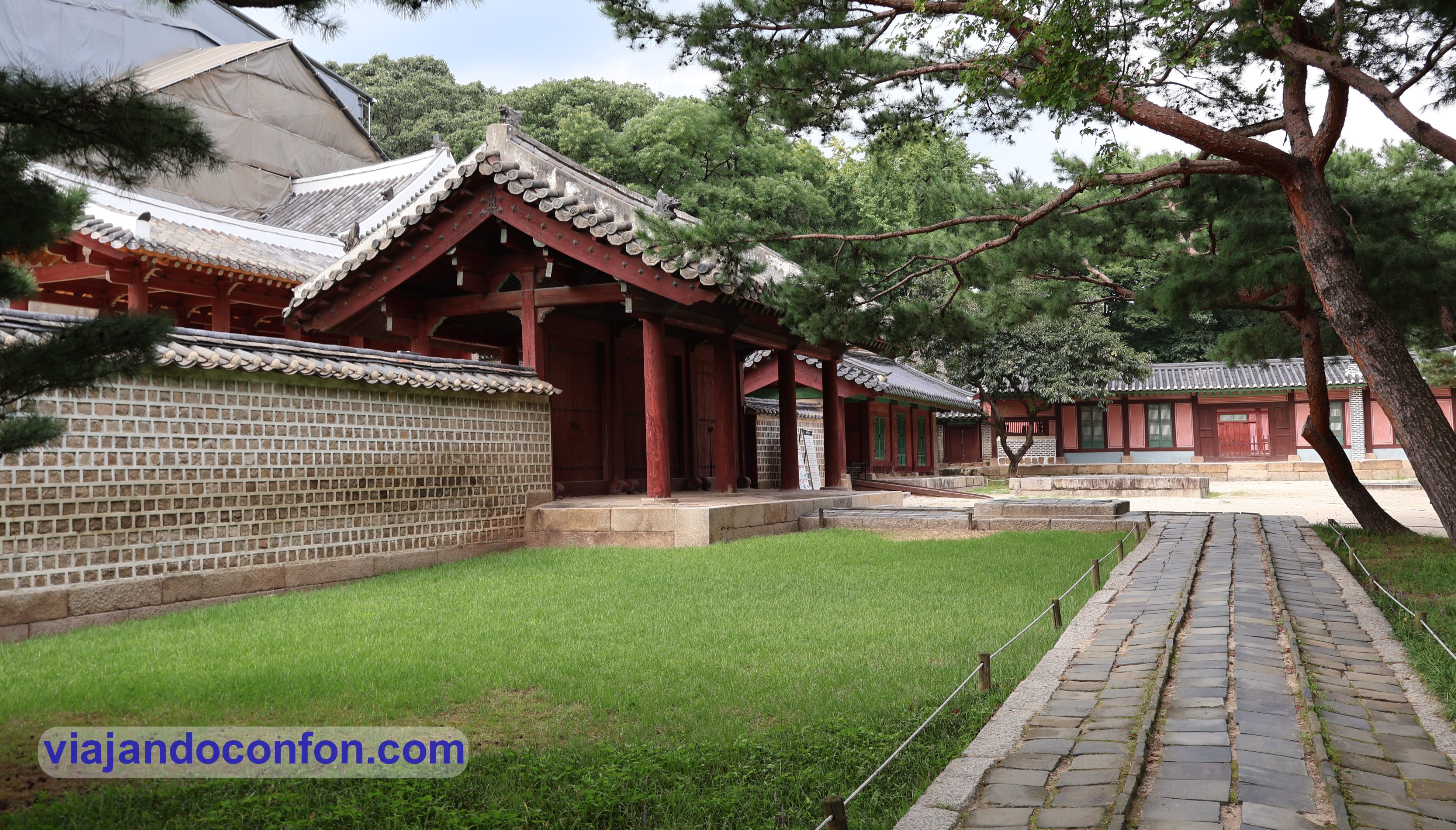
Jongmyo Shrine was the main place of worship for the royal family during the Joseon dynasty. It was built at the same time as Gyeongbokgung Palace, under the orders of King Taejo, the first Joseon king.
The shrine was designated a UNESCO World Heritage Site on 9 December 1995.
How to get there: Jongno 3-ga station, underground lines 1, 3 and 5.
Opening hours: February to May, September and October 9am-6pm // June to August 9am-6.30pm // November to January 9am-5.30pm.
Price: 1,000₩ (€0.70) and is included in the Royal Palace Pass // Free on the last Wednesday of every month.
If you’re short on time, you can book a great guided tour of Seoul with Civitatis:

*Helps us to maintain the blog
If there is time…
26. Banpo Bridge (반포대교)
The Banpo Bridge is one of the most famous bridges across the Han River. Especially for the (supposed) light and water show with its 10,000 LED light bulbs that made it into the Guinness Book of Records.
As it happened to us in Japan the two times we tried to see the lights of the Rainbow Bridge… they cheated us. No lights, no fountains, no nothing.
Although in summer, it’s really nice in the evening. Many Koreans come to picnic at their base on the banks of the Han River.
How to get there: Express Bus Terminal station (exit 8-1), metro lines 3, 7 and 9.
27. Tapgol Park (탑골공원)
It is a small park located in the centre of Seoul, between Gwanghwamun Square and Jongmyo Shrine. It is home to several notable features.
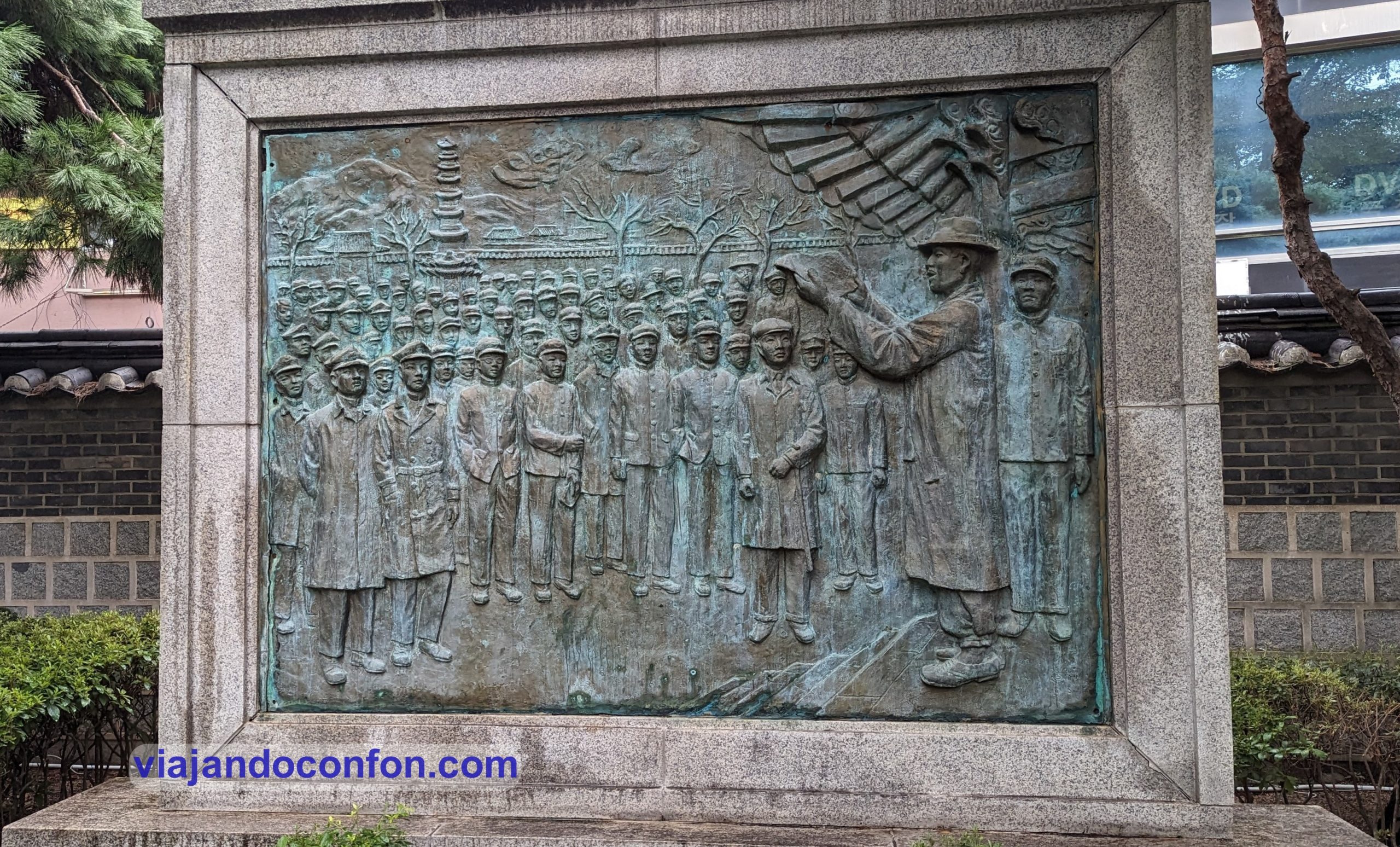
Tapgol Park is historically important as the birthplace of the March 1st Movement of 1919. It was the first place where the Proclamation of Independence was read. There are several statues with bas-reliefs to attest to the fact.
Wongaksa Pagoda
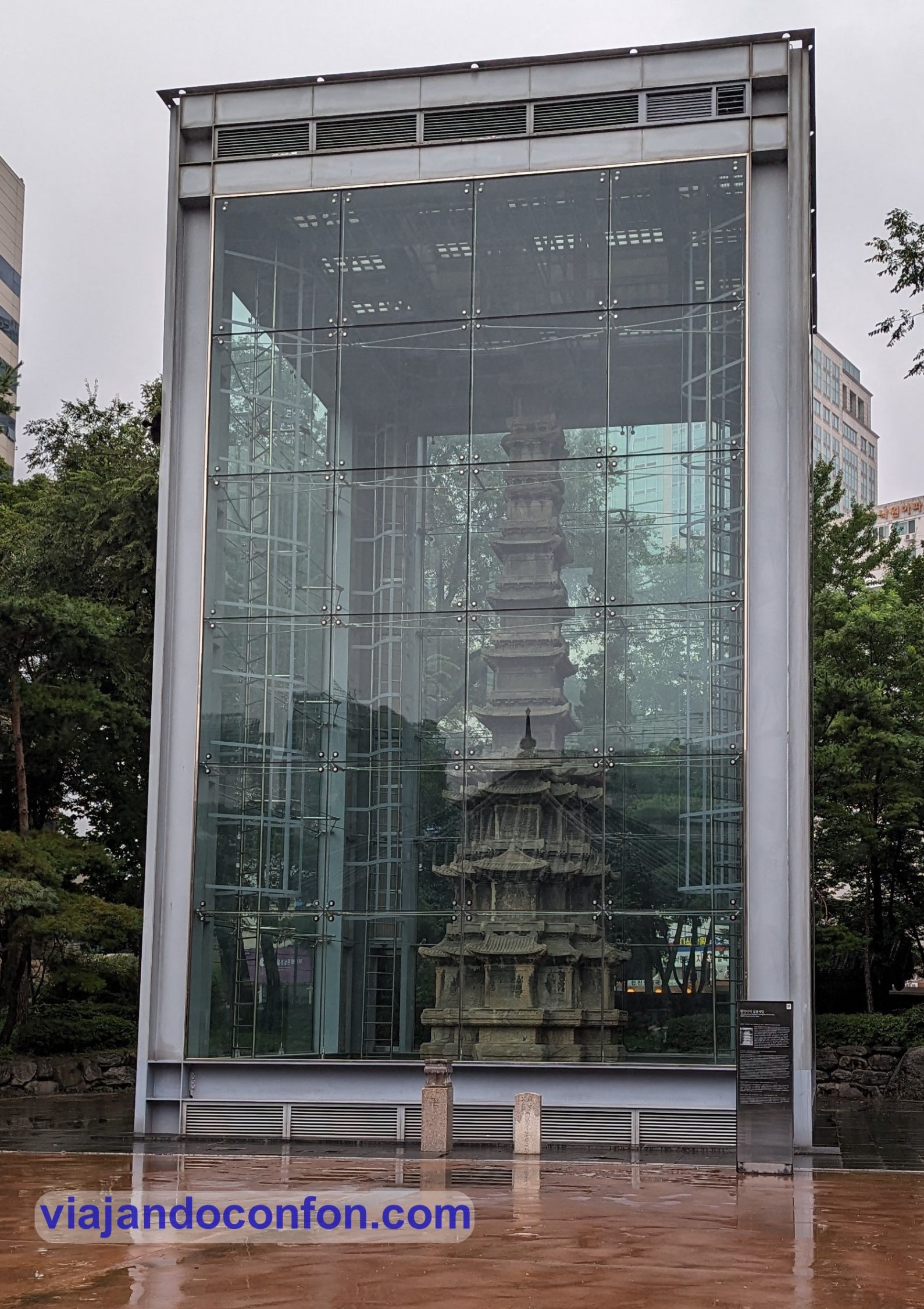
This is a 10-storey, 12-metre-high stone pagoda built in 1467. It stands on the site of the former Wongaksa Temple. The temple was built in 1465 by King Sejo and was the head temple of the Jogye Order.
Records indicate that the pagoda originally had 13 stories. It was built to house the Sarira and the Wongakgyeong (Wongak Sutras), which had recently been translated at that time.
Wongaksa Monument
The Wongaksa Monument, built in 1471, was erected to record the founding of Wongaksa Temple.
On the front is an inscription composed by Kim Suon with calligraphy by Seong Im. On the reverse is an inscription composed by Seo Geo Jeong with calligraphy by Jeong Nam Jong.
How to get there: Jongno 3-ga Station (Exit 1), underground lines 1, 3 and 5 // Jong-Gag Station (Exit 7), underground line 1.
28. Bosingak (보신각)
Bosingak is a huge bell pavilion that gives its name to the avenue where it is located: Jongno. It literally means Bell Street.
It was originally built in 1395, but after multiple destructions, the present one was built in 1895. The bell was installed in the palace during the Joseon rule and is now only rung at midnight on New Year’s Eve.

How to get there: Jong-Gag Station (Exit 4), Metro Line 1.
29. Seoul City Hall
Seoul City Hall consists of two buildings. The original was built in 1925 during the Japanese occupation. It served as the city hall from the liberation of Korea in 1945 until 2008. It now houses the Seoul Metropolitan Library. Behind it is the current modern building, which was opened in 2012.
Various events are held in the town hall square throughout the year.
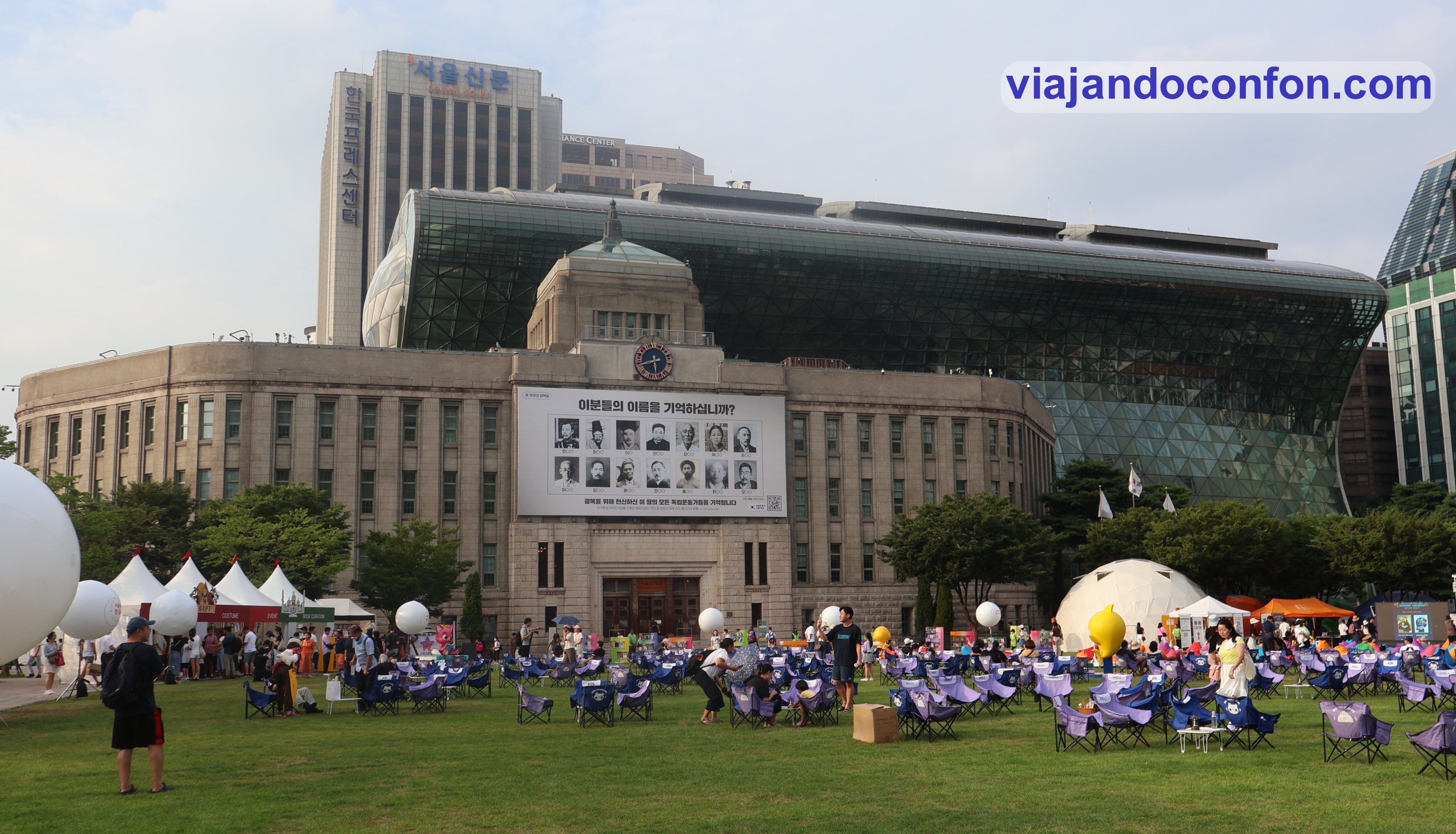
In one corner of the square there is also a memorial stand for the victims of the stampede on 29 October 2022 during Seoul’s Halloween celebrations. On that day, 152 people died.
How to get there: City Hall Station, underground lines 1 and 2.
30. Igansumun, the water door
Igansumun was the water gate of the Namsomundongcheon Stream originating from Namsan Mountain, which flowed from Hanyangdoseong, the city wall of Seoul in the Joseon Dynasty.
In addition to releasing the flow of water, it had a defensive function and was guarded by soldiers who guarded the gate.
It was buried during the Japanese occupation and was found and restored in 2009 during the construction of the Dongdaemun Historical and Cultural Park.

How to get there: located in the outer precinct of Dongdaemun Design Plaza (DDP). Dongdaemun History & Culture Park Station, underground lines 2, 4 and 5.
Discover the best activities and tours in Seoul with Civitatis:

*Helps us to maintain the blog
Here you will find a map with all the places marked: