Continuamos nuestro periplo por España. Seguimos tras los pasos del hidalgo Don Quijote de La Mancha.
Como siempre, recomendamos viajar con un buen seguro de viajes. IATI es especialista en seguros de viaje y, por ser nuestro lector, tienes un 5% de descuento.
Iati seguros*Nos ayuda a mantener el blog
18 de septiembre
Hoy si nos levantamos un poco más temprano. Como hoy no tenemos desayuno en el hotel, nos vamos en busca de alguna cafetería cercana.
Desayunamos en un sitio llamado Café Fortaleza. Los bizcochos caseros que tenía estaban espectaculares. Tanto que nos llevamos para la merienda. Además, la chica que atendía era muy simpática a pesar de la cantidad de trabajo que tenía.
Tras el desayuno nos pusimos en marcha al siguiente destino: Madrigal de las Altas Torres.
Madrigal de las Altas Torres
Se trata de un municipio perteneciente a la provincia de Ávila, en Castilla y León. Es conocido por ser el lugar de nacimiento de la reina Isabel I de Castilla, Isabel la Católica. Nació aquí el 22 de abril de 1451.
Cerramos el ciclo ya que en 2021 visitamos el lugar de nacimiento de su marido Fernando II de Aragón, Sos del Rey Católico. Puedes verlo en el siguiente enlace.

Un poco de historia
En sus orígenes era una aldea perteneciente a la tierra de Arévalo. En 1017 se independizó gracias al fuero dado por el por el obispo de Burgos. Aunque no fue reconocida hasta 1168 por el rey Alfonso VIII.
En 1302 volvería a la jurisdicción de Arévalo y en 1311 Fernando IV lo otorga en señorío a su madre María de Molina.
Visitando Madrigal de las Altas Torres
Aparcamos nada mas entrar al pueblo y nos vamos a visitarlo. Empezamos por la Puerta de Arévalo, que es por la que accedimos al pueblo.
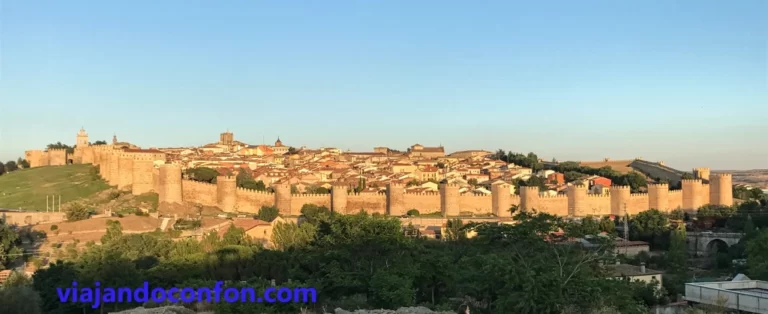
La Puerta de Arévalo es una de las cuatro puertas de la muralla defensiva de la ciudad. No se sabe la construcción exacta de la muralla aunque ya aquí había una fortificación en el siglo X.
La muralla actual se construyó durante el reinado de Alfonso VIII (1158 – 1214). En 1302 los nobles de Arévalo consiguiero un permiso de demolición aunque esta nunca se llevó a cabo.
Las murallas fueron declaradas Monumento Nacional en 1931 y restauradas en 1979.

Desde aquí entramos a la ciudad y nos fuimos dando un paseo hasta el Convento de Nuestra Señora de Gracia.
En sus orígenes era el Palacio de Juan II y data del siglo XV. Esta era la residencia veraniega del rey Juan II de Castilla y su primera esposa María de Aragón. Aquí se realizó la primera convocatoria a Cortes del monarca en 1438.
El palacio fue donado en 1535 por el emperador Carlos V a su tía María de Aragón, hija de Fernando el Católico. Esta era priora de la comunidad de religiosas agustinas de Madrigal. En las décadas siguientes se fue reformando poco a poco para adaptarlo al uso conventual.
Fue lugar de retiro de muchas de las infantas entre los siglos XVI y XVII. Con lo que se aseguró una buena economía para el convento.
En este convento nació la reina Isabel I de Castilla, Isabel la Católica, en la alcoba real. Suena pomposo pero realmente era una pequeña habitación de reducidas dimensiones.

Frente al convento se encuentra el Real Hospital de la Purísima Concepción, construido en 1443. Este albergó a pobres y a enfermos desamparados.
Cinco siglos después, en 1943 cesó su actividad como hospital y en 1953 se habilitó como comedor de niños pobres.
A mediado de los años 80 del siglo XX se reconvierte para múltiples usos. Entre ellos se encuentran salón de actos, biblioteca y el museo de vasco de Quiroga.
Fue declarado monumento historio artístico el 23 de febrero de 1983.

Las vallas de la imagen se debe a que el pueblo estaba en fiestas y es el pasillo que recorren los toros en su camino a la improvisada plaza. La plaza provisional la montan en la cercana Plaza del Cristo.
Al sur de la plaza se encuentran los restos de la Puerta de Peñaranda o de San Hilario, otra de las cuatro puertas de la muralla medieval.

Desde aquí nos damos un paseo por la Ronda de Santa María, que discurre paralela a la muralla medieval. Me llamó mucho la atención como se ha aprovechado la muralla como pared para la construcción de edificios adosados a esta.

Paseando por la ronda llegamos hasta la parte alta del pueblo. Aquí se encuentra la iglesia de Santa María del Castillo.
Fue construida en el siglo XIII en estilos mudéjar. Se encuentra en lo alto de una loma desde la que se divisa una gran extensión de terreno. Durante el siglo XVIII se acometió una pequeña remodelación en estilo barroco.

La iglesia se encontraba cerrada. No se si permanentemente. Pero la verdad es que da la sensación de estar abandonada a su suerte.
Desde la cara sur de la iglesia se divisan unas vistas preciosas. Desde aquí se ven con claridad las ruinas del Convento Agustino de Extramuros. Se trata de una edificación de estilo escurialense construida entre los siglos XIV y XVI.
Fue Casa Capitular de la provincia de Castilla. Además, allí vivió hasta su muerte en 1591 Fray Luis de León. Tán sólo 9 días después de su traslado.
En 1844 es vendido en subasta y, desde ese momento, comienza su abandono y decadencia. Hoy en día es de propiedad particular y se ha estado usando como silo de grano.

Muy cerquita, un pomo más abajo en la colina, se encuentra la iglesia de San Nicolás de Bari. Fue construida en estilo mudéjar entre los siglos XIII y XIV.
Su interior incorpora diferentes estilos arquitectónicos. Entre ellos se encuentran el gótico y el renacentista.

Aquí damos por finalizada la visita a la ciudad. Pero antes de irnos, nos tomamos un refrigerio en uno de los bares de la plaza.
Ya descansados, no ponemos en camino a nuestro siguiente destino. También sería el lugar donde pasaríamos la noche: el Castillo del Buen Amor, en Salamanca.
Ya en las cercanías del castillo, como estaba aislado, decidimos buscar algún sitio para comer en el pueblo más cercano. Vimos en maps que habían varios restaurantes… todos cerrados, así que al hotel.
Síguenos en Redes Sociales:
Castillo del Buen Amor
El castillo de Villanueva del Cañedo se encuentra en el municipio de Topas. Se trata de un castillo de estilo renacentista del siglo XV. Aunque realmente contiene restos del siglo XI.
Su construcció fue bajo el permiso del rey Juan II de Castilla por petición de las Casa de Alba. En 1475 se entrega la localidad a los reyes católicos. En el castillo del siglo XI se aloja Fernando II de Aragón en su camino hacia la batalla de Toro.
Dos años despuésn el 1477 pasó a ser propiedad de Alonso Ulloa de Fonseca Quijada, obispo de Ávila. Este reconstruye el castillo a su aspecto actual. La constancia del obispo en el amor hizo que fuera conocido como Castillo del Buen Amor.

El castillo fue declarado Monumento Nacional en 1931. Entre 1958 y 1960 fue restaurado por sus actuales propietarios, la familia Fernández de Trocóniz, la cual ha convertido al castillo, desde el 18 de julio de 2003, en un hotel con 41 habitaciones de lujo.
A parte de alojarte, también se puede visitar libremente parte del castillo, sin necesidad de tener que pasar la noche aquí.
Esta vez decidimos darnos un lujo y contratamos la Suite Paso de Guardia. Nos costó 171€ la noche y consistia en un salón, baño y un dormitorio que para llegar, había que bajar unas escaleras originales de la muralla que eran un tanto… complicadas. Sobre todo si a la noche te daban ganas de ir al baño.
Si deseas alojarte en este impresionante hotel, puedes contratarlo con Agoda:
*Nos ayuda a mantener el blog
Llegamos al flamante hotel, hacemos el check-in y nos bajamos a la cafetería a comer algo. La comida estaba muy buena pero fue un sablazo. Un plato de huevos estrellados con foie, un bocata de pollo, algo pequeño, un agua y un refresco: 40€.
Tras la comida descansamos un poco y nos vamos a dar un paseo por Salamanca.
Salamanca
Con unos 160.000 habitantes, Salamnca es la capital de la provincia homónima, en Castilla y León.
La ciudad alberga la universidad en activo más antigua de España. Fue fundada en 1218 por el rey Alfonso IX de León. También fue la primera universidad de Europa que ostentó el título de universidad por real cédula de Alfonso X el Sabio, con fecha de 9 de noviembre de 1252. Y también por la licentia ubique docendi del papa Alejandro IV de 1255.
Un poco de historia
Sus orígenes se remontan más de 2.700 años atrás, en la Edad de Bronce. Entonces lo primeros pobladores se asentaron en el cerro de San Vicente.
Con la caída del imperio romano pasa a formar parte de los alanos, que se establecen en la provincia de Lusitania. Más tarde los visigodos conquistan la ciudad. Estos amplian la muralla y construyen en ella torres defensivas.
En el año 712 Musa ibn Nusair conquista la ciudad. Aunque durante la Alta Edad Media, la zona queda establecida como tierra de nadie. Entonces Salamanca queda practicamente en ruinas, carente de importancia y casi despoblada.
Su repoblación comienza tras las Batalla de Simancas en el 939 siendo confirmada tras la conquista de Toledo en 1085.
En 1218, Alfonso IX de León otorga fueros que atraen a nuevos pobladores. Se concede a las escuelas catedralicias el rango de estudio general que, en 1254, se convertiría en Universidad de Salamanca por real cédula de Alfonso X. Posteriormente ratificada por el papa Alejandro IV en 1255.

Con el auge del Concejo de la Mesta en 1273, Salamanca adquiere importancia como centro de manufacturas pañeras y como exportador de lana.
El siglo XVI fue la época de mayor esplendor de la ciudad, tanto en la demografía como en la vida universitaria, gracias al prestigio de sus profesores, con la llamada Escuela de Salamanca.
En el siglo XVII se une a la decadencia generalizada de las ciudades de la Corona de Castilla en la meseta norte. Pero en el siglo XVIII tuvo un importante renacimiento económico y cultural, momento en el que se construye la impresionante Catedral Nueva.
Hoy en día sigue siendo un referente como ciudad universitaria con casi 30.000 estudiantes. Y también turístico gracias a su hermoso casco antiguo.
Visitando Salamanca
Aparcamos donde encontramos y nos dirigimos al centro de la ciudad. Lo primero que nos encontramos es la Iglesia del Corpus Christi.
La iglesia pertenecía al desaparecido convento de monjas franciscanas de Santa Clara, fundado en 1554. La iglesia ha sufrido numerosas alteraciones, sobre todo en el siglo XVIII.

Un poco más al sur llegamos a la Plaza de los Bandos. Su nombre viene del siglo XV. Entonces familias de la nobleza se disputaban el derecho a gobernar la ciudad y que fue pacificado por San Juan de Sahagún. Este conflicto se conoce como Guerra de los Bandos.
Aquí encontramos algunos edificios reseñables. Siendo uno de ellos el Palacio de los Solís. Este fue construido en estilo en 1477 por orden de Alonso Solís. Aquí se celebró la boda de Felipe II y María Manuela de Portugal en 1543.
El edificio actual fue construido en 1903 en estilo plateresco para albergar la sede de la empresa Telefónica. Del original se conserva la portada principal y uno de los balcones (el de la calle Concejo).

También encontramos la Antigua Sede de la Seguridad social, edificio neoplateresco de principios del siglo XX. Hoy reconvertido en la sede el Centro Documental de la Memoria Histórica.
A su lado, Iglesia de Nuestra Señora del Carmen consagrada en 1703. Perteneció al convento de San Elías, de Carmelitas Descalzos. El convento se convirtió en espacio público tras la desamortización de 1838.

Otro de los edificios reseñables de la plaza es el Antigua sede del Banco de España. Construido a principios del siglo XX, hoy es sede del Centro Internacional de Referencia del Español.

Seguimos nuestro paseo hasta llegar a la Plaza Mayor. Fue construida entre 1729 y 1756 en estilo barroco. El diseño es del arquitecto Alberto Churriguera.
A mediados del siglo XX fue poco a poco desprovista de algunos de sus elementos. Como el quiosco de música, los jardines y los urinarios públicos.
Como muchas otras plazas mayores empezó siendo un descampado donde se comerciaba. Se encontraba junto a la Puerta del Sol de la muralla medieval. Desde el siglo XV fue conocida como plaza de San Martín. Entonces aquí se encontraba la iglesia de San Martín. De ahí su nombre.
Su tamaño era tan grande que era conocida como la plaza más grande de la cristiandad.

En la plaza encontramos muchas bares y terrazas, además de la cafetería más antigua de la ciudad, el centenario café Novelty. Inaugurado en 1905 ha sido punto de encuentro habitual de los literatos y artistas de la ciudad.
Al este de la plaza se encuentra el Mercado de Central, el mercado más antiguo de la ciudad. Fue construido en 1916 por el arquitecto Joaquín de Vargas Aguirre.

Al sur de la plaza se encuentra la Iglesia de San Martín de Tours. Fue construida en estilo románico en el año 1103. Se hizo por orden del conde Martín Fernández sobre una antigua ermita dedicada a San Pedro.
Desde el principio la iglesia tuvo problemas de estabilidad. En el siglo XIII hay constancia de que se llevaron a cabo obras de consolidación y reforma. Más tarde, en el siglo XVIII, hubo un derrumbe de gran parte de las bóvedas de la nave central.
En 1772, ante su posible hundimiento, el arquitecto Jerónimo García de Quiñones sustituyó las bóvedas de la nave central por otras de ladrillo enyesado bastante más ligeras.


Seguimos nuestro paseo en dirección sur hasta llegar al Palacio de la Salina. Fue construido en estilo plateresco en 1538 por orden de Rodrigo de Messía Carrillo, Señor de La Guardia. Por esto también es conocido como Palacio de don Rodrigo de Messía o de Fonseca.
Debe su nombre a haber sido sede del estanco de la sal hasta 1870. Desde 1884 es sede de la Diputación Provincial. La institución lo compró en 1881.

Sobre el palacio existe una leyenda que dice así:
El arzobispo Alonso de Fonseca fue a Salamanca a un concilio diocesano. Fue acompañado de su amante gallega Juana Pimentel “La Salina”.
El obispo trató de que las diferentes familias nobles de la ciudad le ofrecieran cobijo durante su estancia. Pero las de los apellidos relevantes le negaron la entrada en sus casas, por su compañía.
El arzobispo se enfadó tanto que decidió hacer construir el Palacio de la Salina con una decoración interior que representara a los principales nobles de Salamanca de forma monstruosa.
Sin embargo Alonso de Fonseca murió en 1534, cuatro años antes de edificarse el palacio y el verdadero dueño era el Juan Alonso de Fonseca mentado, y del parecido de nombres ha nacido la leyenda.

En la calle paralela, la Rua Mayor, de camino a la catedral, pasamos por un edificio en ruinas que me llamó la atención. Se trata del Edificio de las Tres Culturas. Fue construido a finales del siglo XIX siguiendo la corriente neo-medieval de la época. Constituye una muestra del historicismo eclecticista de estilo neo-árabe.
En su fachada destacan los arcos de herradura en la planta baja. Un balcón decorado con círculos con la estrella de David en la primera planta. Y también una galería de vanos apuntados en la parte superior.
El edificio, en estado ruinoso, se encuentra incluído en la Lista Roja de Patrimonio. Es debido al peligro que supone su progresivo estado de ruina, deterioro de la fachada y la balconada junto con el resto del edificio.

Muy cerca se encuentra uno de los edificios más icónicos de la ciudad: la Casa de las Conchas. Es un antiguo palacio construido entre 1493 y 1517. Su estilo principal es gótico pero tiene elementos platerescos. También encontramos elementos renacentistas y mudéjares
El edificio se construye por encargo de Rodrigo Maldonado de Talavera, caballero de la Orden de Santiago, catedrático de Derecho en la Universidad y miembro del Consejo Real de Castilla.
Lo más destacable sin duda es su fachada decorada con más de 300 conchas y múltiples blasones y escudos.

En el interior destacan el patio con arcos mixtilíneos, la escalera y el artesonado. El edificio alberga hoy día la Biblioteca Pública de Salamanca.

Justo enfrente de la Casa de las Conchas se encuentra La Clerecía. Se trata del antiguo Real Colegio del Espíritu Santo de la Compañía de Jesús. Fue construido en estilo barroco entre los siglos XVII y XVIII.

Seguimos nuestro camino hacia el sur y llegamos a la plaza Anaya. Allí encontramos el Palacio de los Anaya, construido en estilo neoclásico en 1760.
Debe su nombre a Diego de Anaya Maldonado, fundador del Colegio de San Bartolomé en 1401. Este palacio sustituye al anterior edificio del Colegio Mayor de San Bartolomé. El original quedó terriblemente dañado en el terremoto de Lisboa de 1755.

El Palacio de Anaya alberga actualmente la Facultad de Filología de la Universidad de Salamanca.
Justo enfrente se encuentra la hermosa Catedral Nueva de Salamanca. Aunque de ella hablaremos más tarde, ya que la visitaríamos al día siguiente.
Desde aquí pusimos camino de vuelta hacia el coche pasando aún por algunos edificios icónicos de la ciudad.
Como por ejemplo la Casa de las Muertes, construida en 1500 por el arquitecto Juan de Álava. En su fachada se encuentran cuatro calaveras talladas en piedra. A modo de ménsula, parecen colgar de las jambas de las dos ventanas superiores. Esta característica ornamental, unida a un asesinato de cuatro habitantes acaecido a comienzos del siglo XIX, le dio como nombre popular: “Casa de las Muertes”.


Antes de volver al hotel queríamos cenar algo, ya que el almuerzo allí no había sido demasiado bueno. Pues la cena… tampoco demasiado.
Cenamos en un sitio llamado Café Sol y Sombra. La comida no era nada del otro mundo pero estaba bastante buena. Ahora el servicio bastante regulero.
Nos comimos unos montaditos variados, que varios estaban realmente buenos. Pero, a la hora de pagar, nos damos cuenta de que se habían olvidado de cobrarnos uno. Somos honrados y se lo decimos al muchacho, al que le cuesta entender lo que le estamos diciendo. Pues después de pagarlo, ni un gracias ni ningún tipo de expresión.
Como dueño de un pequeño negocio, se lo que puede doler olvidarte de cobrar algo y, si me pasa, me deshago en agradecimientos al que me lo dice. También cuando cobro de más, pido disculpas mil.
En fin. Todo nos costó 24€.

Ahora si, volvemos a nuestro castillo a descansar. En la siguiente entrada volvemos a Salamanca, para que esta no se haga demasiado larga.
Encuentra las mejores actividades y tours en Salamanca con Civitatis:

*Nos ayuda a mantener el blog