France 2020: Route from Nantes to Mont Saint Michel

This time we return to France to visit Mont Saint Michel, which we couldn’t visit on our 2015 trip because we didn’t have time.

March 6th

The night before we went to bed with the uncertainty caused by a strike by air traffic controllers at French airports. But in principle, both on the Easyjet website and on the Aena website, it seems that it is on time. And without imagining that it would be the last plane trip we would take in a long time due to the Covid-19 pandemic that would be declared just a week later.

First of all, do not forget your travel insurance, for what may happen. We recommend IATI, specialists in travel insurance. Also, for being our reader, you will get a 5% discount on your insurance

We arrived at the airport and, indeed, boarded on time. But being already seated, they warn that we will be delayed an hour.

EasyJet

We took off about 50 minutes late. Nantes welcomes us with rain and 2ºc. We’re going to be cold.

We go straight for the car, a citroen cactus, uglier than a pain inside and out. The car cost us a total of €64.94 ($78) for three days.

We left the airport and soon… traffic jam. Works on a bridge on the Nantes ring road. But hey, it’s relatively light.

We passed the traffic jam and about 20 km further on, PAM!, another traffic jam. This fatter and slower. More road works.

We passed the drink and about halfway between Nantes and Rennes we stopped to eat something.

I didn’t remember from the previous time, but the coffee in France is really bad. So few more coffees we were going to drink.

We continue on our way. About an hour and a half later we arrived at the medieval town of Dinan.

Dinan

Dinan is founded in the 11th century. Around the year 1283 the wall was built and in 1364 the castle. The city prospered in the 16th century thanks to crafts and the port on the Rance River. In the 18th century, commercial activity was stimulated by the installation of numerous looms that supplied sails and fabrics to the ships of Saint Malo.

There are many car parks in the town, but since we are in low season, those in the center of town have free spaces.

We parked in the one in the market square and they charged us €2.40 ($2.90) per hour and a half. From here we begin to walk through the medieval quarter. The first stop is the Église Saint-Malo de Dinan.

Built during the 15th century, Duke Francis II, fearing the capture of Dinan, ordered the destruction of the first church of Saint-Malo shortly after. Between the end of the 15th century and the 16th century it was rebuilt and gradually enlarged.

Dinan
Église Saint-Malo
Dinan
Église Saint-Malo

We continue walking and a little further down we reach the Les Cordeliers convent. Built in 1251 under the patronage of Notre Dame des Vertus for the Franciscan monks, today converted into a secondary education institute. The downside is that visitors are not allowed.

Dinan
 Les Cordeliers
Dinan
 Les Cordeliers

We continue down walking through the beautiful old town of Dinan until we reach the Tour de l’Horloge, a bell tower built in the fifteenth century. You can go up to the bell tower by paying €4 ($4.80).

Dinan
Tour de l’Horloge
Dinan

Nearby is the Basilique Saint-Sauveur de Dinan. It is one of two Catholic parish churches in Dinan along with the Église Saint-Malo. The oldest parts of the building were built in the 12th century and are Romanesque and Gothic in style.

Dinan
Église Saint-Malo

We continue walking and arrive at the Château de Dinan. Built in 1384, it was declared a historical monument in 1886. It belongs to the commune and houses a municipal museum. With this visit we finish with Dinan.

Dinan
Château de Dinan

Around 5:30 p.m. we set off for Saint Malo. About half an hour later we arrived in the city and left the car in one of the intramural parking lots.

Saint Malo

Sain Malo is a historic French port in Ille-et-Vilaine, Brittany, on the English Channel coast. It was founded by the roosters in the 1st century BC. such as the Roman Reginca or Aletum.

At the end of the fourth century AD. C., the district of Saint-Servan was the site of an important promontory of the Saxon coast that protected the estuary of the Rance from maritime invaders from beyond the borders.

During the decline of the Western Roman Empire, Armorica (modern Britain) rebelled against Roman rule under the Bagaudae and in the 5th and 6th centuries received many Celtic Britons fleeing instability across the Channel.

Modern Saint-Malo traces its origins to a monastic settlement founded by Saint Aaron and Saint Brendan in the early 6th century.

On March 11, 1590, Saint-Malo proclaimed its independence from the Kingdom of France and became the Republic of Saint-Malo, taking the motto “not French, not Breton, but Malouine”. The republic comes to an end on December 5, 1594 with the conversion to Catholicism of King Henry IV.

After the definitive annexation of the Duchy of Brittany to France, and with the discovery of America and the development of overseas trade, Saint-Malo became an economic emporium. This economic development slowed down due to the French Revolution. The most traumatic episode was the shooting of 60 «counter-revolutionaries» in the dunes of the Vendean Armada in December 1793. The youngest was 16 years old, the oldest 19 .

Saint Malo
Porte de Dinan

We went up the wall to walk around it and enjoy the views. It was a wind that literally took you away from the rain at times. There was even a moment when sleet fell on us.

The truth is that it was worth it. The views of both the coast and the city are incredible. The pity is that at high tide it was not possible to reach the Petit and Grand Bé islands.

Saint Malo
Petit and Grand Bé islands
Saint Malo
Fort National

We walked along the wall and went down to the height of the town hall. The wind and the rain had been with us.

We went through the door of San Vicente and next to it we sat down in a creperie called La duchesse Anne to have a drink and, of course, to eat a crepe while it was pouring with rain.

Saint Malo
Door of San Vicente
Saint Malo
Town Hall

After replenishing our strength, we went for a night walk to the cathedral.

The town at night was completely deserted and with little lighting so we decided to return to the car that we were 45 km from the hotel. Parking cost us only €0.60 ($0.70) for almost two hours. I guess in high season it will be more expensive.

It took us almost an hour to get to the hotel. It was raining buckets and nothing could be seen, apart from the fact that we got lost along the way.

The chosen hotel was the Ibis Portonson Baie du Mont Saint Michel. A newly built hotel, so much so that on google maps the location appears in the middle of a fence. The hotel was very good, the classic cut of all ibis. Also very cheap, €57 ($68.44) per night with breakfast included.

Find the best hotel at the best price in France near Mont Saint Michel with Agoda:

Hotels in France

For dinner, as it was getting late, we decided to have it at the hotel restaurant, which specialized in grilled meat. The menu was only in French so after a while we played it safe and ordered some hamburgers that were really good. The only downside was the slow slow service.

After dinner, to bed, you had to get up very early.

March 7th

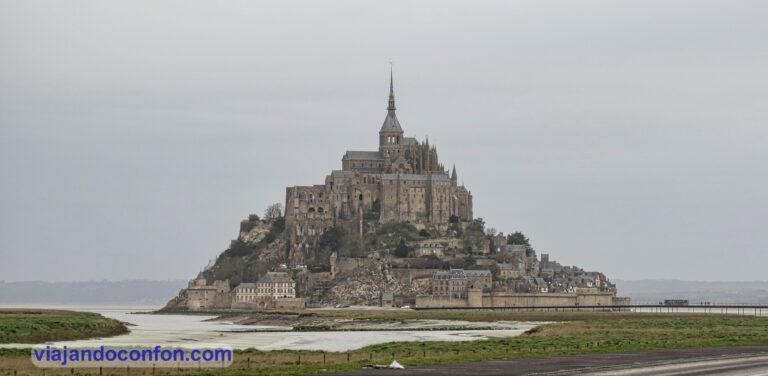
We get up very early. Today it was time to visit the site that was the reason for the trip: Mont Saint Michel.

Mont Saint Michel

Mont Saint Michel is located on a rocky tidal island (an island connected to land through a sand bar), although during prehistory it was on dry land.

Mont Saint-Michel was used in the 6th and 7th centuries as a bastion of Armorica until it was sacked by the Franks. Between the 5th and 8th centuries, Mont Saint Michel belonged to the territory of Neustria and, at the beginning of the 9th century, it was an important place in the Neustrian marches.

Until the 8th century the island was called Mont Tombe (Latin for tomb). According to a legend, the archangel Michael appeared in the year 708 to Aubert de Avranches, bishop of Avranches, and instructed him to build a church on the islet.

Through the Treaty of Compiègne in the year 867, the king of the Franks grants the Cotentin peninsula and the Avranchin, including Mont Saint Michel, to the Bretons.

In the year 933 William I Longsword annexed the Cotentin Peninsula of the weakened Duchy of Brittany to Normandy.

In 1067, the Mont Saint-Michel monastery supported William the Conqueror in his claim to the throne of England.

During the Hundred Years’ War, the Kingdom of England made repeated assaults on the island, but were unable to take it due to the improvement of the abbey’s fortifications.

We had breakfast quietly, throwing away half a coffee that looked like it was dog, undrinkable.

We set off and by 9 in the morning we were out of the car. We left it in one of the 13 car parks. In summer it has to be tremendous what people gather. There is a free bus that takes you from the car parks to the gate of the enclosure but we decided to do it on foot enjoying the views.

Supposedly it takes about 35 minutes but, between photos and selfies, it takes about 45.

Mont Saint Michel

As we crossed the bridge, a regular bus arrived from the nearby town of Portonson. The truth is that while I was preparing the trip I didn’t see him anywhere.

Mont Saint Michel

The town is very pretty, we climbed past a multitude of restaurants, hotels and gift shops on both sides until we reached, after about a million steps, the abbey.

Mont Saint Michel
Mont Saint Michel

The entrance fee is €11 ($13.21) and, apart from that, we rented an audio guide for an additional €3 ($3.60), which was very good because since we didn’t have headphones we could share it.

The abbey is truly spectacular, with a very, very rich history. It is a totally essential visit.

Mont Saint Michel
Mont Saint Michel

During the entire visit we were accompanied by a South Korean television crew who looked like they were recording a documentary.

Mont Saint Michel
Mont Saint Michel

At the end of the visit, the next step was to visit Fougères. We thought to eat there but we were separated by 50 minutes by car in the end we decided to look for something on the outskirts of the mountain. To return we took the free bus to the first stop it made.

Bus to Mont Saint Michel

You can hire a fabulous guided tour to discover the history and secrets of Mont Saint Michel with Civitatis:

There were many restaurants but some were closed. We assume that they will be seasonal and only open in summer.

In the end we decided on one that had very good reviews on the internet: Restaurant La Ferme Saint Michel, with typical French food.

We ate exaggeratedly well although somewhat expensive, but it is the tonic in France. We ate 2 menus, one for €24 ($28.80) and another for €29 ($34.80). Both consisted of a starter, main course and dessert, all to choose from several options. The truth is that it is highly recommended.

With a full belly, we returned to the parking lot and paid the €9.10 ($11) that it cost in low season and headed for the medieval village of Fougères.

Fougères

Fougères is a French commune and sub-prefecture of Ille-et-Vilaine, in the Brittany region. The presence of numerous megalithic monuments, particularly in the Fougères forest, suggests that the region was already inhabited in Neolithic times.

The creation of Fougères dates back to the Middle Ages. We find the first mention of the Château de Fougères towards the end of the 10th century, when it was then a simple wooden fortification situated on a rocky promontory, whose position advantageously dominated the Nançon valley and the surrounding marshes.

Fougères

From the twelfth century the population moved away from the banks of the Nançon and the city grew upwards, divided into two parishes: Saint-Sulpice for the lower city and Saint-Léonard for the upper city. The economy then is based on the tanneries, weavers and drapers.

In the 16th century the city lost its defensive role. The craft continues to develop, particularly pewter work. During the Wars of Religion, the city remained Catholic while Vitré was affected by clashes with the Huguenots.

At the beginning of the 20th century, industry gradually replaced craftsmanship and the manufacture of footwear grew little by little.

During the Oil Crisis of 1973, shoe factories gradually closed. From here the industry diversified: agri-food, furniture, mechanics, glass, electronics, computing and robotics. Fougères also organizes an important cattle market. Beginning in the 2000s, the city became more open to tourism, thanks to the development of its medieval castle and historic quarters.

A little less than an hour after leaving we were parking in one of the car parks in the town that was free, at least at this time.

As soon as we leave the car park, we find ourselves in front of the Château de Fougères.

Fougères

The Château de Fougères, was built in the 10th century and destroyed in 1166, what we can now see is a reconstruction that spans from the 12th to the 15th century. It can be visited by paying €8.50 ($10.25).

Next to the Château de Fougères is the Église Saint-Sulpice de Fougères. Built between the moats of the castle and the old course of the river Nançon, in the medieval quarter of the tanners between the 12th and 16th centuries, it constitutes the heart of the bourg-vieil (ville-basse).

Nearby there was a path that was supposed to lead to a viewpoint called Butte à Bigot. Do not go. You don’t see a shit.

We get off the trickster and we walk through the medieval quarter until we reach the public garden.

Fougères

We climb the hills of the public garden until we reach the Eglise Saint-Léonard. From there we can admire magnificent views.

Fougères

The Eglise Saint-Léonard was built in the 12th century by the monks of Pontlevoy on the plateau overlooking the castle of Ferns.

Since it was too late, we decided to cancel the visit to Vitré and go directly to Rennes, where we have the hotel for the night.

Fougères
Fougères

About 40 minutes after leaving, we arrived at the hotel. We chose the Novotel Rennes Alma. Well located for us since it was next to the exit of the ring road that headed straight for Nantes so as not to lose time the next day. The bad thing is that, to get to the center of Rennes, you have to use public transport.

Find the best hotel at the best price in Rennes with Agoda:

Hotels in France

The hotel surprised us but not for the better. There was no elevator. It only has two floors but climbing the stairs loaded with suitcases is a chore. Also, he looked quite old. The room was very spacious and we had free teas and instant coffees in the room.

Rennes

Rennes is the capital of the Bretagne region and capital of the Ille-et-Vilaine department. It was founded between the 2nd and 1st centuries b.C. as the capital of the Gallic tribe of the redons, then called Condate. During the Roman Empire it became an important urban nucleus.

The city became one of the most important towns in the border region of the Duchy of Bretagne during the Middle Ages with the arrival of the Breton peoples.

Following the annexation of the Duchy of Bretagne to the Kingdom of France, it becomes a provincial capital and hosts the Parliament of Bretagne.

We left the hotel and went to the subway, which was about 15 minutes from the hotel. We took line A for €1.50 ($1.80) each ticket, which is valid for one hour, and went to République station.

We exit the metro and find ourselves next to the Palais du Commerce. Built in the late 19th and early 20th centuries, it is an old stock exchange. The building housed the library, the Regional School of Fine Arts or the National Conservatory of Music. A post office and the Café de la Paix have been present in the building since the first inauguration.

Rennes

We go for a walk to the center of the city. Very close we reach the Place de la Mairie. In it we can find the Hôtel de Ville and the Opéra de Rennes.

The Hôtel de Ville was built between 1734 and 1743 by Ange-Jacques Gabriel after the great fire of Rennes in 1720, while Toussaint-François Rallier du Baty was mayor. It housed in its north wing the faculties of law and science from 1840. The chemistry cabinet, occupied in particular by professor Faustino Malaguti until 1855, was in the current mayor’s office.

Rennes

The Opéra de Rennes is an Italian-style hall designed by Charles Millardet and built by Pierre Louise in the 19th century. Today, the building mainly houses lyrical art and hosts some local events, such as the open-air opera.

Rennes

Nearby is the Palace of the Parliament of Bretagne. It is a building of classical architecture built in the 17th century and was the seat of the Parliament of Bretagne from its construction until its dissolution by the French Revolution in February 1790. The building became the Rennes Court of Appeal in 1804. This monument it was completely restored after the fire of February 5, 1994, as a result of an incident related to the violent demonstrations of fishermen.

Rennes

We continue walking through the beautiful medieval center of Rennes until we reach the Basilique Saint-Aubin in Notre-Dame de Bonne-Nouvelle. It is a minor Catholic basilica located on the Place Sainte-Anne. Its construction began in 1884 and to this day it remains unfinished. Apart from that, they are fixing the surroundings so the compound is closed and full of construction materials.

Rennes

To one side is the Le Couvent des Jacobins – Center des Congrès de Rennes Métropole. It is an old religious building and a former barracks built in 1369. It includes an abbey, a cloister and convent buildings. In 2018, the building became the Rennes Métropole convention center.

For dinner, while walking, we booked a hamburger place with a very good aspect. It’s called Back to the 60’s and as it indicates, it’s set in the United States of the 60’s. Since it closed late and it was full, we continued walking.

After a while we came back and it was still full but we still went in. We waited 20 minutes and got a table. It must be said that, indeed, they were a scandal and it was not too expensive. All the burgers were around €15 ($18.15) and came with a bunch of fries and a little bit of salad.

After dinner we returned to the subway to go to the hotel to rest. Taking out the ticket, a girl who had just gotten off arrived and gave us her ticket, which was still valid. She explained to us that it is standard practice to leave them on top of the machine for people to use. There we realized that there were quite a few bills in all of them. In fact, there were signs saying that it was prohibited. When we got to our stop, we did the same thing. Wherever you go, do what you see…

March 8th

We get up early with a bit of rain and we set off for Nantes. At first we were going to separate an hour and a half but the surroundings of the hotel were all cut off by a popular race for Women’s Day.

Nantes

Nantes is the capital of the Loire-Atlantique Department and is located on the banks of the homonymous river.

It is believed that during Roman times its name was Condevicnum and it was the capital of a town called “Namnetes” and was part of the Lugdunense province (whose capital was Lugdunum, present-day Lyon).

Imperial rule over Nantes ended at the beginning of the 5th century, and the city was successively part of the Kingdom of Clovis, the Frankish Kingdom of Neustria, and the Carolingian Empire.

In the year 843, the Vikings invaded Nantes for the first time. They settled on an island in the area and over almost 100 years they made several attempts to conquer it. They were definitively expelled in 937 by the Breton duke Alain Barbetorte, who made the city his capital. But, after his death, the dukedom passed to the counts of Rennes.

Nantes

In the middle of the 11th century, Count Hoel de Cornouaille inherited the County of Nantes and married the heir to the Duchy of Brittany. During the Hundred Years’ War, Nantes was besieged by the English in 1343, attacked by the Earl of Buckingham, and subsequently liberated by Olivier de Clisson in 1380.

It was besieged again in 1491 by the King of France, Charles VIII, to whom it was delivered for treason, marrying Duchess Anne of Brittany to legitimize the rights he had just acquired over Anne’s inheritance.

As a result of these marriages, Brittany, as well as the city of Nantes, was officially incorporated into France in 1532. Nantes ceased to be the capital of Brittany, becoming Rennes.

Between the 15th and 19th centuries it was the most important Atlantic slave trading port in all of France.

After a thousand turns and on the verge of desperation, we managed to reach the back of the hotel where the parking entrance was.

The hotel we chose was the Ibis Nantes center Gare Sud. Right in the center of Nantes but easy to get to by car in normal conditions, in fact, leaving the city was not difficult at all. Parking cost us €13 ($15.73) extra.

Find the best hotel at the best price in Nantes and France with Agoda:

Hotels in Nantes

We left things in storage because it was early and we are going to see Nantes.

Right next to the hotel is La Tour Lu. The tower belongs to the old LU (biscuit) factory opened in 1895. Two corner towers were built in 1909 but were damaged by bombing during World War II. Today only one of them remains, which was restored to its original state by the architect Jean-Marie Lépinay at the end of the 1990s.

Nantes

From here we cross a bridge to the outside of the Château des ducs de Bretagne, the castle of the Dukes of Bretagne. It served as the center of the historic province of Brittany until its separation in 1956.

It is located on the right bank of the Loire river, which previously fed its ditches. It was the residence of the dukes of Bretagne between the 13th and 16th centuries, later becoming the Breton residence of the French monarchy. Today the castle houses the Nantes History Museum.

Nantes

Next to the castle is the tourist office. We go in for a bit of information. The girl who attended us had a terrible time the poor thing because she spoke little english.

We entered the castle since walking along the top of the wall is free. Despite the rain and the cold, walking the walls is very good, you enjoy good views of the surroundings.

Nantes

On one of the sides, there was a very long slide that went to the pit but it only opens in summer if the weather allows it. Now, it’s really ugly.

From here we went for a walk in the rain to the Cathédrale Saint-Pierre-et-Saint-Paul, the cathedral of the Diocese of Nantes and seat of the Bishop of Nantes. Its construction spanned 457 years, from 1434 to 1891, but these delays in no way affect the quality or consistency of its Gothic style. It has been classified as a historical monument since 1862.

Nantes

Inside you can admire the tomb and effigies of Duke Francis II of Bretagne and his wife Margaret of Foix (parents of Anne of Bretagne). This marble tomb, which Michel Colombe took five years to complete (1502-1507), is decorated with the twelve apostles and four women who represent strength, prudence, temperance and justice. It was installed in the cathedral in 1817.

Nantes

The building also houses the cenotaph of General de Lamoricière, a monument erected in 1878 in papal tribute to the services rendered by this son of Nantes.

Nantes
Nantes

Leaving the cathedral, we noticed that there was a green line on the ground. It turns out that they have marked the tourist tours of the city. In addition, at certain points there is an eye drawn, a perfect point to contemplate the monument.

We were already a little hungry but it was early. Next to the cathedral there was a pastry bakery where there was a long queue that stretched down the street. This has to be very tasty, so we got in line.

The site is called La Boulangerie d’Antan. It had a million kinds of bread, cakes and sandwiches. We bought some typical sweets from Nantes called bottereaux, which are like a kind of small square donuts, and also a brioche I don’t know which was very good.

Very close we passed in front of a starbucks. Although we don’t like it very much, we decided to go in to see if, being a franchise, the coffee was less bad. I ordered a warm matchalatte and Sara ordered a coffee that was less bad but not good.

With our bodies warm, we approach the nearby Place Royale. It was designed in 1786 by the architect Mathurin Crucy and built in 1790 after the destruction of the medieval walls. The fountain was built in 1865.

Next to the fountain there was a group of people making a claim for Women’s Day.

Nantes

Behind the Place Royale is the Basilique Saint-Nicolas. It is a neo-gothic style basilica. The current building was built between 1844 and 1869, although as early as 1186 there are signs of a religious building.

Nantes

Nearby is also the Passage Pommeraye, a market gallery built from the end of 1840. Its construction led to the ruin of its promoter, Louis Pommeraye.

The passage, considered an architectural success, was still a flourishing place of commerce. It has benefited from a renovation completed in 2015. The site is certainly gorgeous.

Nantes

A little further on we come to Place Graslin. This is one of the main squares in the city center of which the most significant monument is the Graslin Theater, which is Nantes’ opera house built at the end of the 17th century.

Nantes

While we are on our way to Les Machines de l’Île, we are looking for somewhere to eat, but nothing is open. On a Sunday at noon all restaurants closed? live to see.

Arriving at the esplanade where the Les Machines de l’Île site is located, we see that there is a small cafeteria called Café de la Branche, so we go in to look. They had sandwiches and sandwiches so we ate au gratin sandwiches that came on a plate with salad that was very good and cost €7.50 ($9.07).

Nantes

After eating, the first tour of the Grand Éléphant began, the star of the Les Machines de l’Île exhibition.

Les Machines de l’île is an exhibition and entertainment space created by François Delarozière and Pierre Orefice that is located on the Ile de Nantes, in the Parc des Chantiers, on the site of former shipyards now in disuse. The island’s machines are at the crossroads of Jules Verne’s “invented worlds”, the mechanical universe of Leonardo da Vinci and the industrial history of Nantes.

Les Machines de l’Île

We made a long queue to be able to buy the ticket. The price of admission to the exhibition is €8.50 ($10.30). With this same ticket you get a discount of €1.60 ($1.94) if you want to get on the Carrousel des Mondes Marins. But if instead of riding the carousel you just want to see it, they charge you €6.30 ($7.60). Good business. The ride on the Grand Éléphant costs another €8.50 ($10.30).

The exhibition is pretty cool. It consists of various machines in the shape of animals imitating their movements where they tell you various stories about them. The explanations are in French but in many places you have QR codes with which you download an application where they are also given in various languages. You also have access to the workshops in which they show an explanatory video of how everything has been assembled. It is in french but subtitled in english.

Les Machines de l’Île

On leaving, we approached the Carrousel des Mondes Marins but since they put many images in the explanatory video, we didn’t pay the 6€ since we weren’t going to get on.

From here we went for a walk along the banks of the Loire River to the hotel to check-in and rest a bit.

The walk along the riverbank had been recommended to us by the girl at the information office, but the truth is that there is nothing remarkable about it.

The hotel follows the same line as the Ibis. The room was a bit small, but having stayed twice in tiny Japanese hotel rooms, we don’t mind too much. The best thing is that it has great views of the Château des Ducs de Bretagne and the cathedral.

Nantes
Views from the room

After the break we go out again for a walk. We walked through Les cours Saint-Pierre et Saint-André, which are two boulevards that run behind the cathedral and are separated by a square where there is a column that pays homage to Louis XVI.

Nantes
Nymphea

We reached the nearby Eglise Saint Clément and retraced our steps. We pass by the Erdre river canal, where they show a video of a girl’s face in the water. Silly but curious. It’s called Nymphea.

From here we went to the old town to find somewhere to have dinner. We walked around the castle and followed one of the green tourist lines. The line took us to the Place du Buffau, where there is a curious sculpture of a guy with one foot outside the pedestal with which we were fooling around for a while.

We followed the green line back to the center and reached the Église Sainte-Croix de Nantes where it entered a closed shopping gallery.

We continued walking and when we arrived at the Hôtel de Ville it started to rain. We decided to go somewhere for dinner. With the pints we had we got into a very fine and modern place called Le cochon qui fume. We ate very well despite the sablazo and we went to rest at the hotel.

March 9th

Last hours in France. We got up early and went to the bakery the day before to buy some sandwiches to eat on the plane and some sweets. Back to the hotel we did it walking. We returned to the castle to enjoy it for a little while without rain.

Nantes

It was very sad to leave because today it was sunny and the sky was completely clear. We went back to the hotel, took the car and went to the airport. At 11.50 the flight to Granada left on time, where we arrived about 20 minutes early after a quiet flight.

Find the best activities and tours in Nantes and France with Civitatis:

A very intense and well-used three-day trip. Once again, France surprises us with its landscapes, its towns and its people. The truth is that it was well worth it and it will surely not be the last time we visit it.

NEXT ENTRY

Lituania 2012 (II): visitamos Klaipėda y las dunas gigantes de Neringa

En nuestro periplo por tierras Lituanas hoy mudamos el campamento y nos vamos hasta Klaipeda.

Klaipėda es la tercera ciudad más poblada de Lituania y el principal puerto marítimo del país, situado en la costa del mar Báltico.

Como siempre, recomendamos el seguro de viaje de IATI, especialistas en seguros de vieja. Además, por ser nuestro lector, obtendrás un 5% de descuento en la contratación de tu seguro:

Iati seguros

Breve historia de Klaipėda

La ciudad se funda en 1252 por la Órden Teutónica. Entonces es llamada Castrum Memele (en alemán Memelburg) y siendo cristianizada toda el área.

La Paz del Mar Melno en 1422 fijó la hermandad entre la provincia de Prusia y Lituania. Memel se incluyó en Prusia y la frontera permaneció inalterada hasta 1919. Fue una de las fronteras más largas sin cambios en Europa.

A comienzos de 1474 Memel fue gobernada por la Ley Culm de las ciudades prusianas.

En 1525, el Ducado de Memel adoptó el luteranismo bajo el reinado de Alberto de Prusia. Fue el comienzo de un largo periodo de prosperidad para la ciudad y el puerto. Ya que el Ducado de Prusia fue un feudo polaco y más tarde parte de la Comunidad de naciones Polaco-Lituana. Esa prosperidad llegó a su final cuando, entre 1629 y 1635, Memel fue atacada y ocupada por Suecia.

Con la creación del Estado unificado alemán en 1871, Memel se convirtió en la ciudad más al noreste de Alemania. Tras el Tratado de Versalles el territorio que rodeaba a Memel es separado de Alemania y recibe una autonomía bajo ocupación francesa.

En 1923 tropas lituanas bajo el mando del coronel Budrys atacaron la ciudad y los franceses se retiraron.

Laguna de Curlandia

Memel fue reabsorbida por el Reich alemán el 22 de marzo de 1939, tras la anexión de Austria, los Sudetes y Checoslovaquia. En enero de 1945 la ciudad es capturada por el Ejército Rojo y entregada a Lituania.

1 de agosto

A las 11.35 salió el bus desde la estación de Vilnius. Durante el trayecto sucedió algo que me dejo impresionado. En cierto momento por la autopista, adelantamos a un viejo coche que iba remolcado por un seat Ibiza medienta una cuerda normal y corriente, atada al parachoques. Esto en España te pillan y te meten un paquete que te cagas.

Algo menos de 4 horas más tarde llegábamos a la estación de Klaipėda. Desde aquí nos fuimos dando un paseo hasta nuestro hotel, el National Hotel. Un hotel de 4 estrellas muy céntrico y bastante barato.

Encuentra el mejor hotel al mejor precio en Klaipeda con Agoda:

hoteles en Klaipeda

Dejamos las cosas y nos fuimos a dar un paseo por el casco antiguo de la ciudad. La parte central del barrio parece un típico pueblecito alemán. ¿Habremos cambiado de país sin darnos cuenta?

El sitio más céntrico es Teatro Aikštė, la Plaza del Teatro. Esta es la plaza central del casco antiguo de Klaipeda.

En un principio aquí se encontraba parte de los fosos del castillo. Tras ser rellenado en 1819, se abre un mercado en este lugar. Este mercado va evolucionando y creciendo a medida que pasan los años.

El edificio más reseñable de la plaza es (obviamente) es el teatro. Se desconoce el momento de la construcción del primer edificio. Según unos planos de la ciudad del siglo XVIII, aquí se encontraba un edificio de planta cuadrada llamado “Komedijų namais” (Casa de la Comedia). Anteriormente era un edificio militar.

El nuevo auge de la vida teatral en Klaipėda comenzó después de 1818, cuando llegó aquí el alemán Ulbrich. Una empresa de comercio forestal le permitió el uso gratuito de un edificio temporal de madera, donde instaló una sala de 200 asientos y abrió un teatro.

Teatro Aikštė
Teatro Aikštė

A fines del siglo XIX, se completó la construcción de un nuevo teatro. Era de ladrillo de estilo clasicista de dos plantas con buhardilla en el sitio del teatro actual. En 1854 el teatro se quema durante un incendio en la ciudad pero se reconstruye en 1857.

Para 1935 se traslada a Klaipeda el Teatro Šiauliai, una ciudad a 170 km al oeste. Funciona como Teatro Estatal de Klaipeda hasta 1939.

Por desgracia, durante nuestra visita estaba totalmente tapado. Estaban realizando obras de restauración y no pudimos contemplarlo.

Otro elemento reseñable de la plaza es el monumento a Simon Dach. Poeta nacido en 1605 en Klaipeda cuando oficialmente se llamaba Memel y pertenecía a Alemania. Se trata de una fuente instalada en 1912 cuya escultura representa a la joven descalza. Es uno de los personajes creado por el poeta.

En 1939 la escultura fue retirada de la plaza y se dice que la idea era sustituirla por una de Adolf Hitler. Para 1989 se vuelve a instalar una réplica de la escultura original.

monumento a Simon Dach

Desde aquí nos fuimos a la ribera del río Danés. Cruzamos el río por el puente Biržos. Hasta el siglo XVIII, el entonces puente de madera, además de para cruzarlo, servía para cobrar tributo a todos los barcos que quisieran pasar elevándolo.

En 1877 se inicia la construcción de un nuvo puente de acero diseñado por el ingeniero Bernstein de Wiesbaden. Se inaugura en 1879.

Para 1904 se rediseñó la parte superior para que pudieran circular por el los nuevos tranvías de la ciudad. En dicha reconstrucción el puente fue decorado con dos portales Art Nouveau calados de metal a los que se adosaron farolas.

Destruido durante la Segunda Guerra Mundial, se reconstruyó con el mismo diseño en 1948. La última restauración es de 2007.

Biržos tiltas
Biržos tiltas

La ciudad debía estar en fiestas. En el parque junto al río habían varios puestecillos de comida y artesanía. Allí nos sentamos a tomar unos refrescos y comer kepta duona. Es una especie de tiras de pan frito con queso, que está buenísimo (Receta aquí).

Junto al puente encontramos Arka, un monumento construido por el escultor Arūnas Sakalauskas en 2003. Fue para conmemorar el 85 aniversario de la Ley de Tilsit y el 80 aniversario de la revuelta de Klaipėda.

La columna roja más pequeña está hecha de granito rojo y simboliza Lituania Menor y su herencia cultural. Mientras que la parte gris simboliza la Lituania propiamente dicha. La parte gris en la parte superior parece haberse roto y representa el Óblast de Kaliningrado, actualmente parte de Rusia.

La inscripción de la parte superior que dice: “Esame viena tauta, viena žemė, viena Lietuva” (“Somos una nación, una tierra, una Lituania”) son unas palabras de la escritora lituana Ieva Simonaitytė.

Klaipeda

Desde aquí nos fuimos a descansar un poco pero, de camino, pasamos por un supermercado para comprar algo de cenar. Por 18.84 Litas (5.45€) compramos un montón de cosas.

Tras el descanso dimos un pequeño paseo nocturno pero nos fuimos temprano a la cama que había que madrugar muchísimo. El día siguiente iba a ser duro, muy duro.

2 de agosto

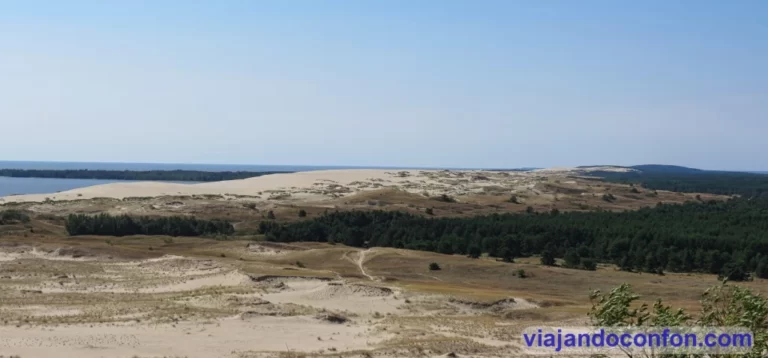
Madrugamos mucho no, muchísimo. Hoy visitamos el istmo de Curlandia, un istmo de arena que separa el mar Báltico de la Laguna de Curlandia. Tiene una longitud de 98 km de los cuales 52 pertenecen a Lituania y el resto al Oblast de Kaliningrado en Rusia.

Según la mitología báltica, el istmo fue formado por una chica muy fuerte llamada Neringa que estaba jugando en la playa.

Laguna de Curlandia
Laguna de Curlandia

Toda la parte lituana pertenece al municipio de Neringa. Hasta la reforma del municipio lituano de 2000, se conocía como la ciudad de Neringa, aunque nunca hubo allí una verdadera “ciudad”. Se convirtió en una ciudad en la Unión Soviética en 1961 al combinar formalmente 4 asentamientos en una unidad administrativa.

A las 7.20 de la mañana estábamos tomando el transbordador de Klaipeda a Smiltynés. El trayecto nos costó 2.90 Litas (0.85€) y tarda unos 20 minutos en cruzar la laguna. Desde aquí nos subimos un bus que nos llevó hasta Nida. El trayecto nos costó 11 Litas (3.20€) y dura algo más de una hora.

Nida es la capital administrativa del municipio de Neringa y es muy conocido como destino turístico y por la colonia de artistas de Nida. Fue un movimiento artístico importante en Prusia Oriental que comenzó alrededor de 1890 y finalizó con el comienzo de la Segunda Guerra Mundial.

Nida es es el punto más occidental de Lituania y los estados bálticos. Está cerca de la frontera con el enclave ruso del Oblast de Kaliningrado y cuenta con unos 2.300 habitantes.

Nida
Nida

Aquí compramos un snack para el camino y nos fuimos hacia un punto de alquiler de bicicletas que tenía ya fichado. Las bicis nos costaron 30 Litas (8.70€) cada una y podíamos devolverlas en cualquiera de los puntos que tenían a lo largo de todo el istmo.

Con las bicis nos dirigimos al primer punto que queríamos ver, la Parnidžio kopa, la duna Parnidis o la Gran Duna de Nida. Una duna de arena en movimiento de 52 metros de altura y se cree que su nombre, Parnidis, proviene de la frase cuyo significado es “pasó por Nida” porque esta duna arrastrada por el viento ha pasado varias veces por el pueblo de Nida.

Se puede subir a lo alto pero solo por los caminos marcados. Está estrictamente prohibido salirse de éstos para asegurar su conservación.

Parnidžio kopa, la duna Parnidis o la Gran Duna de Nida

Aparcamos las bicis y subimos las escaleras por medio del frondoso bosque que lleva a lo alto y podemos admirar las impresionantes vistas.

Parnidžio kopa, la duna Parnidis o la Gran Duna de Nida

En lo alto de la duna se encuentra Saulės laikrodis, un reloj de sol de granito construido en 1995. En 2011 tuvo que ser restaurado ya que fue destruido durante una tormenta. El reloj de sol es un pilar de piedra de 13,8 metros de altura y un peso de 36 toneladas. Desde el punto de vista astronómico, la duna de Parnidis es un lugar ideal para el reloj de sol en Lituania.

Saulės laikrodis
Saulės laikrodis

Después de admirar las espectaculares vistas nos pusimos en camino, dirección norte, hacia donde se encontraba el ferry, aunque no íbamos a llegar tan lejos. Prácticamente todo el camino lo pudimos hacer a través de carril bici. Es una maravilla ya que no te encuentras con tráfico y no te pones en peligro

La siguiente parada fue Vecekrugo kopa, la duna Vecekrugo a unos 8 km de Nida. Esta es la duna más alta de todo el istmo de Curlandia con 67 metros de altura. A ella se puede subir también por el camino marcado para admirar las vistas. Pero la verdad es que son menos impresionantes que las de la Duna Parnidis.

Vecekrugo kopa
Vecekrugo kopa

Aquí aprovechamos para descansar un poco a la sombrita y comernos lo que habíamos comprado en Nida. Tras el descanso volvimos al camino. Tras kilómetros de un paisaje espectacular combinando bosque y costa, llegamos a la ciudad de Pervalka, a unos 8 km de Vecekrugo kopa.

Pervalka es una (muy) pequeña población de unos 200 habitantes. La mayoría de casas son pequeñas construcciones de pescadores de finales del siglo XIX y principios del XX y la mayoría se encuentran a ambos lados de la calle principal a lo largo de las orillas de la laguna de Curlandia.

La verdad es que el pueblo es encantador. Si un día me toca la lotería, me compro una casita de veraneo aquí.

Pervalka

Aquí compramos en una tiendecilla algo para comer, ligerito para seguir dando a los pedales. Seguimos paseando hasta llegar a la costa del mar Báltico. Concretamente a Juodkrantės bendras paplūdimys, la playa de Juodkrantės, a unos 17 km de Pervalka. Una espectacular playa de arena fina y blanca en la que daba unas ganas tremendas de despelotarse y meterse en el mar, que hacía mucho calor aquel día.

Juodkrantės bendras paplūdimy

Ya desde aquí nos dirigimos a Juodkrantė (literalmente costa negra), un pueblo turístico con unos 700 habitantes. Situado en el territorio de la antigua Prusia, fue durante siglos un pueblo de pescadores llamado Schwarzort, que experimentó un auge turístico a finales del siglo XIX y principios del XX.

Aquí devolvimos las bicis, en el muelle del pueblo y allí mismo nos subimos al bus para ir hasta el ferry. Llegamos al hotel sobre las 7 de la tarde y descansamos un poco antes de ir a por algo de cena.

Klaipeda

El descanso se nos fue un poco de las manos y se nos hizo algo tarde.

Por internet había fichado un sitio para cenar y nos pusimos en camino. Tras caminar largo rato llegamos a la Klaipeda soviética: anchas avenidas y bloques enormes de viviendas. Por ese camino no había nada y la iluminación no daba para mucho. Como no encontrábamos el sitio decidimos darnos la vuelta y buscar algo en el casco antiguo. Con tan mala suerte que se había hecho demasiado tarde y ya no nos dejaron entrar a ningún restaurante (cierran a las 22.00). Así que decidimos comprar algo de comida preparada en un supermercado y comerlo tranquilamente en el hotel.

3 de agosto

Últimas horas en Klaipeda. Dimos un paseo por el casco antigo hasta llegar a las ruinas del castillo, Klaipėdos Pilis. El castillo de Klaipeda también conocido como Memelburg o Castillo de Memel fue construido por los Caballeros Teutónicos . Se desconoce el año de su construcción pero fue mencionado por primera vez en fuentes escritas en 1252 y sufrió numerosas destrucciones y reconstrucciones en los siglos siguientes.

Durante el siglo XIX, habiendo perdido su importancia estratégica, el castillo fue demolido. Se realizaron trabajos arqueológicos en el sitio durante el siglo XX, y en 2002 se estableció un museo debajo de uno de sus baluartes. Actualmente, el castillo está siendo restaurado.

Hay que decir que no nos dio tiempo de visitar el museo.

Klaipėdos Pilis
Restos de la muralla del castillo.

En el muelle se encuentra la escultura más… extraña o perturbadora que recuerdo haber visto: Klaipėdos Juodasis vaiduoklis o el fantasma negro de Klaipeda, una figura fantasmal encapuchada trepa desde el agua, sosteniendo una linterna en su mano.

Tan perturbadora escultura está relacionada con una leyenda que se remonta a 1595 cuando Hans von Heidi, uno de los guardias del castillo de Klaipėda, hacía sus rondas nocturnas cerca del puerto.

De la nada, una figura encapuchada apareció cerca de la orilla del agua. En lugar de atacar al guardia sobresaltado, le preguntó cómo estaban resistiendo los suministros de grano y madera de la ciudad. Von Heidi le informó al fantasma que la ciudad tenía suficientes suministros, pero el fantasma le advirtió que no sería suficiente. En ese momento, la aparición se desvaneció.

En los viejos tiempos, por supuesto, la gente se inclinaba a creer las palabras de fantasmas, brujas, duendes y gigantes. Y así, Hans von Heidi informó obedientemente a sus superiores de su encuentro fantasmal, y la ciudad se dispuso a aumentar sus suministros de madera y grano. Luego siguieron unos años sombríos de hambre y escasez, a los que la gente de Klaipėda solo sobrevivió gracias a la advertencia del fantasma.

En 2010 se instaló la escultura, obra Svajunas Jurkus y Sergejus Plotnikovas y y rinde homenaje al fantasma salvador de la ciudad.

Klaipėdos Juodasis vaiduoklis

Aquí damos por finalizada nuestra visita a Klaipeda y Neringa. Tocaba volver a la estación a tomar el bus a un nuevo destino: Kaunas.

Aquí les dejamos un mapa con los puntos visitados en este viaje:

Encuentra actividades interesantes para hacer en Klaipeda y Neringa con Civitatis:

ENTRADA SIGUIENTE

Lituania 2012 (I): visitamos Vilnius y Trakai

Este año buscábamos un destino “exótico”, un destino poco visitado por españoles y lo conseguimos. Viajamos a Lituania, empezando por su capital: Vilnius.

29 de Julio

Para ello tuvimos que ir a Málaga, donde tomamos un vuelo con Ryan Air hasta Barcelona.

Despegamos puntuales a las 8.50 de la mañana. En algo menos de 2 horas ya estábamos en el aeropuerto del Prat. Paseo por aquí, bocata por allá y cambio de moneda por otro lado. A las 16.30 despegábamos rumbo de Vilnius, la capital de Lituania.

Iati seguros

*Nos ayuda a mantener el blog

Cabe reseñar que hasta 2015 funcionó su moneda nacional: el Litas. Fue a partir de ahí que empezó a circular el Euro.

A las 21.05 aterrizábamos en Vilnius. Salimos del aeropuerto y tomamos el tren hasta la estación central. Desde aquí nos separaban unos 10 minutos hasta el hotel.

Elegimos el Europa Royale Vilnius, un hotel bastante céntrico de 4 estrellas que nos costó 66€ la noche con desayuno.

Encuentra el mejor hotel al mejor precio en Vilnius con Agoda.

hoteles en Vilna

*Nos ayuda a mantener el blog

Cenamos algo en una pizzeria cercana: Charlie Pizza, que es una cadena, y nos fuimos a descansar para madrugar.

30 de Julio

Madrugamos, desayunamos y nos fuimos a conocer la ciudad. De momento llueve a ratos.

Muy cerca del hotel, de camino al centro, llegamos primero a la Plaza del Ayuntamiento (Rotušės aikštė). En ella encontramos (lógicamente) el edificio del ayuntamiento (Vilniaus rotušė). El ayuntamiento de Vilnius se mencionó por primera vez en 1432. Inicialmente era un edificio de estilo gótico y desde entonces ha sido reconstruido muchas veces.

El edificio actual data de 1799. Está construido en estilo Neoclásico según planos del arquitecto lituano Laurynas Gucevičius, aunque aún se conservan las bodegas góticas más antiguas.

Ayuntamiento de Vilnius

Seguimos bajando dirección catedral. A pocos metros de la plaza del ayuntamiento nos encontramos con la iglesia ortodoxa Šv. kankinės Paraskevės cerkvė (Mártir Paraskevės). Es la iglesia ortodoxa oriental más antigua del país y una de las dos únicas iglesias ortodoxas que hablan en lituano.

La primera iglesia se construyó donde se encontraba un templo pagano a petición de María Yaroslavna de Vitebsk. Fue la primera esposa del Gran Duque Algirdas y fue enterrada aquí tras su muerte en 1346.

La iglesia quedó completamente destruida por un incendio en 1557. Se reconstruyó tres años después, pero se incendió nuevamente en 1611. Estando en ruinas, fue entregada a los católicos orientales locales. En 1655, fue devuelta a la Iglesia Ortodoxa y renovada.

Durante la Gran Guerra del Norte, en 1705, con Vilna invadida y saqueada por el ejército moscovita, la iglesia fue visitada por el zar ruso Pedro el Grande, quien rezó allí por la victoria militar.

Šv. kankinės Paraskevės cerkvė

En 1748, el edificio quedó nuevamente destruido por un incendio y reconstruido en 1795. Sin embargo, permaneció cerrado durante los siguientes cuarenta años, cayendo lentamente en decadencia. En 1864, por orden del gobierno local ruso, Nikolay Chagin la reconstruyó en estilo neobizantino.

Durante la Segunda Guerra Mundial volvió a quedar destruida. Se reconstruyó rápidamente pero el gobierno Stalinista prohibió que se celebraran los cultos ortodoxos. Entonces se convirtió en una galería de arte hasta que en 1990 fue devuelta a la iglesia ortodoxa.

Aquí empieza (o mejor dicho acaba) Pilies Gatvé (calle Pillies) una de las calles principales del casco antiguo de Vilnius. Es una calle muy animada llena de restaurantes, terrazas y tiendas. El sitio ideal para comprar tus recuerdos.

Pilies Gatvé
Torre Gediminas desde Pillies Gatvé

Recorremos toda Pillies y llegamos hasta la Plaza de la Catedral (Katedros aikštė). Aquí encontramos varios elementos destacables, empezando por la Catedral de Vilnius (Vilniaus katedra).

Catedral de Vilnius (Vilniaus katedra)
Catedral de Vilnius.

La Catedral de San Estanislao y San Ladislao es la principal catedral católica romana de Lituania.

Fue el Rey Mindaugas quien ordenó su construcción en el año 1251. En este lugar se adoraba en época precristiana al dios pagano báltico Perkūnas. Es el dios del trueno, la lluvia, las montañas, los robles y el cielo.

Tras la muerte de Mindaugas en 1263, el templo volvió a ser un lugar de culto a Perkūnas.

En 1387, año en que Lituania se convierte oficialmente al cristianismo, empieza la construcción de una segunda catedral gótica. Es devorada por un incendio en 1419.

Durante los preparativos para su coronación como rey de Lituania en 1429, Vytautas construye otra catedral gótica más grande en su lugar. Aunque dicha coronación nunca tuvo lugar, aun se conservan los muros y los pilares.

En 1522, se renovó la catedral y se construyó un campanario sobre la torre defensiva del Castillo Inferior.

Tras otro incendio en 1530, se reconstruyó de nuevo y entre 1534 y 1557 se añadieron más capillas y criptas. La catedral adquirió rasgos arquitectónicos asociados al Renacimiento.

Catedral de Vilnius (Vilniaus katedra)

El edificio actual se construyó en estilo neoclásico entre 1779 y 1783 según el diseño del arquiteco lituano Laurynas Gucevičius.

Durante el régimen soviético, la catedral se convirtió en un almacén. En 1988 se volvieron a celebrar misas.

Encuentra multitud de actividades y tours en Vilnius y Lituania en Civitatis.

que hacer en Vilnius

*Nos ayuda a mantener el blog

Lo que más nos llamó la atención fue el campanario, separado del resto del edificio. Se construyó en el siglo XIII y era originalmente una torre defensiva del castillo medieval. Su imagen actual se debe a principios del siglo XIX y alberga el reloj más antiguo de Lituania.

En la plaza también encontramos el monumento al Gran Duque Gediminas, construido en 1996 por Vytautas Kašuba.

Gediminas gobernó entre 1315 y 1341 el Gran Ducado de Lituania. Hoy ocuparia Lituania, Bielorrusia, Ucrania y Moldavia, así como Podlaquia en Polonia y Smolensk, Briansk y Kursk hoy en Rusia.

monumento al Gran Duque Gediminas

Tras la catedral se encuentra el Palacio de los Grandes Duques de Lituania. Construido en el siglo XV para los gobernantes del Gran Ducado de Lituania y los futuros reyes de Polonia. Se construyó en el castillo inferior de Vilnius. Fue reformado y ampliado durante los siglos XVI y mediados del XVII.

Tras la invasión rusa de 1655 el palacio quedó gravemente dañado y sus tesoros y objetos de valor saqueados. Después de la reconquista de la ciudad en 1661 el palacio quedó abandonado durante 150 años.

Lo poco que quedaba del palacio se destruyó en 1801. Fue tras la incorporación del Gran Ducado de Lituania al Imperio Ruso.

El edificio actual es una reconstrucción igual al original llevada a cabo entre el año 2000 y 2013. Aunque se inauguró oficialmente en 2009. Por lo que no era visitable cuando nosotros estuvimos.

Hoy en día alberga el Museo Nacional de Lituania.

Palacio de los Grandes Duques de Lituania
Palacio de los Grandes Duques de Lituania.

Frente a la fachada principal de la Catedral, encontramos la baldosa que dice Stebuklas (“milagro” en lituano) también conocido como Ladrillo Mágico. Se colocó para conmemorar la cadena humana que recorrió las tres repúblicas bálticas en 1990. Fue para pedir la independencia de la URSS.

Desde su colocación se convirtió en una atracción para los transeúntes.

Durante un tiempo después fue posible observar formas alternativas de interpretarla. La gente pensó que la baldosa era un lugar para formular deseos, pero no sabían lo que había que hacer. Algunos pisan la baldosa y giran sobre su eje, otros saltan sobre ella.

Stebuklas

Desde aquí nos fuimos de camino a la Torre Gediminas. Para ello íbamos a usar el funicular por falta de ganas de subir andando.

Bordeamos la catedral dirección norte pasando por la entrada del que era en ese momento el Museo Nacional de Lituania. Hoy sigue siendo parte de él.

Museo Nacional de Lituania

El museo se funda en 1952 y abarca una amplia colección de artefactos y materiales escritos. También organiza excavaciones arqueológicas en Lituania.

Su predecesor fue Museo de Antigüedades de Vilna, fundado por Eustachy Tyszkiewicz en 1855. Aunque en su origen, el museo se centraba en la cultura e historia del Gran Ducado de Lituania.

A parte de en el recién reconstruido Palacio de los Grandes Duques de Lituania, también ocupa el nuevo arsenal del Complejo de castillos de Vilna.

Dentro del recinto del arsenal se encuentra el Funicular para subir a la torre (Keltuvas į Gedimino kalną). Nos costó 2 LT (0.57€). El trayecto dura apenas 1 minuto.

Keltuvas į Gedimino kalną

El funicular te deja junto a la Torre Gediminas (Gedimino pilies bokštas). Forma parte de los restos del antiguo castillo de Vilnius.

Originalmente el castillo era una fortificación de madera. Fue el Gran Duque de Lituania Gediminas el que construyó el primer castillo de ladrillos, finalizado en 1409.

La torre actual se debe a una reconstrucción de 1933.

La Torre de Gediminas es un importante símbolo estatal e histórico de la ciudad de Lituania. Fue desde donde se izó la bandera lituana el 7 de octubre de 1988, durante el movimiento de independencia. Este finalizó con la Ley de Restablecimiento del Estado de Lituania el 11 de marzo de 1990.

Torre Gediminas (Gedimino pilies bokštas)

Sobre el castillo pesa una leyenda que dice así:

Hace mucho tiempo, el gran duque lituano Gediminas cazaba en los bosques del valle de Šventaragis. La caza tuvo éxito y el duque Gediminas derribó un toro salvaje en la cima de una colina; pero sus miembros se cansaron, por lo que el duque se retiró y pasó la noche allí.

Entonces Gediminas soñó que, en la cima de la misma colina donde había estado cazando ese día, estaba parado un gran lobo hecho de hierro, y estaba aullando tan fuerte como si fueran cien lobos.

El duque le pidió al mago de la corte, Lizdeika, que le explicara su sueño. Él lo interpretó así: se trataba de un presagio que indicaba que debía construir una ciudad en este lugar, que más tarde sería conocida en todo el mundo y se convertiría en la magnífica capital de Lituania.

Gediminas, obedeciendo la voluntad de los dioses, comienza a construir la futura ciudad capital y un castillo en el centro de la misma. La ciudad fue nombrada Vilnius por el cercano río Vilnia. La Torre de Gediminas es la única parte sobreviviente de ese castillo construido por Gediminas.

Vilnius

La entrada nos costó 5 Lt (1.44€) y desde lo alto de la torre tenemos unas espectaculares vistas de la ciudad.

Desde aquí podemos observar perfectamente el monumento de las Tres Cruces (Trys kryžiai) en el lugar donde, según cuenta una leyenda, fueron decapitados siete frailes franciscanos. Desde principios del siglo XVII se instalaron unas cruces de madera como homenaje.

En 1916 se instaló un monumento obra del arquitecto y escultor polaco-lituano Antoni Wiwulski, destruido en 1950 por orden de los dirigentes de la Unión Soviética. El monumento actual es obra del escultor Henrikas Šilgalis y fue instalado en 1989.

Tres Cruces (Trys kryžiai)

Emprendemos la bajada, dando un agradable paseo en vez de volver a tomar el funicular y nos dirigimos a la Iglesia de Santa Ana (Vilniaus Šv. Onos bažnyčia). Se trata de una iglesia católica romana consagrada en el año 1495 construida en estilo gótico tardío.

La primera iglesia se construyó para Anna, la Gran Duquesa de Lituania, primera esposa de Vytautas el Grande. Ésta iglesia, construida en madera, queda destruida por un incendio en 1419.

La actual se reconstruye por orden del rey de Polonia y gran duque de Lituania Alejandro I Jagiellon. Tras otro voraz incendio en 1582, se llevó a cabo otra reconstrucción financiada por Mikołaj “el Negro” Radziwiłł y Jerzy Radziwił.

Iglesia de Santa Ana (Vilniaus Šv. Onos bažnyčia)

Según una conocida leyenda, el emperador Napoleón, después de ver la iglesia durante la guerra franco-rusa en 1812, expresó su deseo de llevarse la iglesia a su casa en París “en la palma de su mano”.

Durante la era soviética, la iglesia permaneció abierta e incluso es renovada entre 1960 y 1970 cuando las torres estaban en mal estado.

Iglesia de Santa Ana (Vilniaus Šv. Onos bažnyčia)

Tras visitar la iglesia de Santa Ana nos volvimos hacia Pillies y nos sentamos en una terraza a probar la cerveza lituana. He de decir, que de todos los países que he visitado, es en Lituania donde he tomado la mejor cerveza y sigue sin ser superada.

Lituania

Como ha dejado de llover si se ha despejado el día, nos volvemos a la plaza de la catedral a disfrutarla con tranquilidad y sin paraguas.

Desde aquí nos dirigimos hacia la Universidad de Vilnius pero, de camino, pasamos por el Palacio Presidencial (Lietuvos Respublikos Prezidento kanceliarija).

La historia del Palacio se remonta al único documento escrito hace más de 600 años: el edicto del Gran Duque Jogaila del 17 de febrero de 1387.

Después de que Lituania se convirtiera al cristianismo en 1387, el Gran Duque Jogaila fundó la Diócesis de Vilnius, donándole un terreno cerca del “Jardín Goštauto en las afueras de la ciudad de Vilnius”.

Palacio Presidencial (Lietuvos Respublikos Prezidento kanceliarija)

El primer obispo de Vilnius, Andrius Vasila (1388-1398), construyó el Palacio Episcopal que fue decorado, reconstruido y ampliado por sus sucesivos propietarios.

Durante el obispado de Paulius Olšeniškis (1536-1555), uno de los obispos más ricos, el palacio era el edificio más bello tras el Castillo Real. Entonces estaba rodeado por un gran parque que, por su vegetación y paisajismo, superaba incluso a los maravillosos jardines de Radvila.

El último obispo que vivió en el Palacio fue el obispo Masalskis (1730-1762).

Después de que Lituania pasara a formar parte del imperio ruso, el Palacio Episcopal se convirtió en residencia temporal del emperador ruso, los duques y otros nobles.

Palacio Presidencial (Lietuvos Respublikos Prezidento kanceliarija)

El palacio, el más magnífico y respetable de su época, fue la residencia del zar Pavel I en 1796, Stanislav August Poniatowski en 1797 y el futuro rey de Francia Luis XVIII en 1804.

A una profunda reforma realizada entre 1824 y 1834 según el diseño de Vasily Stasov se debe l edificio actual, un renombrado arquitecto de la Corte del Zar en San Petersburgo.

En 1920, antes de que Polonia perdiera el distrito de Vilnius, el Palacio albergaba el Ministerio de Relaciones Exteriores de la República de Lituania y la agencia de noticias ELTA.

El palacio se puede visitar mediante visitas guiadas.

Junto al palacio se encuentra el antiguo campus de la Universidad de Vilnius (Vilniaus universitetas). La Universidad de Vilnius, uno de los centros de educación superior más antiguos y famosos del este y el norte de Europa, se funda en 1579.

Universidad de Vilnius (Vilniaus universitetas)

Funcionando durante mucho tiempo como la única escuela de educación superior en Lituania, fue un guardián de las tradiciones culturales y científicas, jugando un papel importante en la vida cultural de los países vecinos.

La construcción de los edificios de la universidad se llevó a cabo a lo largo de los siglos bajo las cambiantes influencias de los estilos gótico, renacentista, barroco y clásico.

El complejo es enorme y se puede visitar una gran parte libre y nos costó 5 Lt (1.45€) cada uno.

Universidad de Vilnius (Vilniaus universitetas)

Entramos desde la calle Šv. Jono. Aquí encontramos un kiosquillo donde compramos las entradas y pasamos al Gran Patio, donde encontramos los edificios más reseñables del complejo: la biblioteca (Vilniaus universiteto biblioteka). Y Iglesia de San Juan Bautista y San Juan Apóstol y Evangelista (Vilniaus Šv. Jono Krikštytojo ir Šv. Jono apaštalo ir evangelisto bažnyčia) madre mía los nombres lituanos…

La iglesia se construye entre 1388 y 1426; y reconstruida en los siglos XVI y XVII. La torre, separada de la propia iglesia, en el siglo XVI.

Después del incendio de 1737, de 1738 a 1748, el arquitecto Johann Christoph Glaubitz reconstruyó completamente la iglesia en estilo barroco tardío.

En la época soviética, la iglesia se cierra y queda gravemente dañada.

Durante la ocupación de Hitler, el reverendo Alfonsas Lipniūnas, quien luego fue encarcelado por los nazis en el campo de Stutthof y murió, pronunció sermones rebeldes en la iglesia.

En 1979 la iglesia pasa a ser el Museo Universitario y, en 1991, tras la independencia de Lituania, se le devuelve a los feligreses.

Universidad de Vilnius (Vilniaus universitetas)

De vuelta al Gran Patio, entramos a la Biblioteca Universitaria. Se funda en 1570 por los jesuitas que llegaron a Lituania por invitación del obispo de Vilnius Walerian Protasewicz, siendo la biblioteca académica más antigua de los países bálticos y alberga más de 5 millones de documentos.

En 1579, después de confirmar el estatus de universidad para el Colegio Jesuita de Vilnius, la biblioteca se convirtió oficialmente en biblioteca universitaria.

Después de la Supresión de la Compañía de Jesús en 1773, la Comisión Educativa se hizo cargo de la Universidad de Vilnius y eso significó un cambio en el enfoque de la investigación: los fondos de la Biblioteca se complementaron con libros sobre ciencias naturales y medicina.

Destaca la pequeña librería, sobre todo por los espectaculares frescos del techo y arcos. Una maravilla.

Universidad de Vilnius (Vilniaus universitetas)

De la librería pasamos a la facultad de filología, donde seguían los frescos adornando los techos y paredes. ¿Cómo estudiar aquí con tanto distraimiento?

Universidad de Vilnius (Vilniaus universitetas)

Terminamos la visita viendo el exterior del Observatorio Astronómico, donde nos sentamos a descansar un poco ya que se estaba muy tranquilo.

Universidad de Vilnius (Vilniaus universitetas)

Encuentra multitud de actividades y tours en Vilnius y Lituania en Civitatis.

que hacer en Vilna

*Nos ayuda a mantener el blog

Se empezaba a hacer tarde para comer para los europeos, no para los españoles.

Decidimos comer en un sitio que había fichado en la calle Didžioji, donde termina la calle Pillies, llamado Čili Pica.

Čili es una cadena de restaurantes con varios tipos de restaurantes. Este en concreto era pizzería pero tenían tambien hamburguesas y platos tradicionales lituanos, que era lo que nos interesaba. Si te interesa conocer más sobre la gastronomía lituana. Pica en este enlace y descubrirás algunas recetas deliciosas.

Comimos muy bien, tanto que repetiríamos en diferentes ciudades. Y además muy barato: 40.95 Lt (12€) entrante, dos platos y dos refrescos.

Tras la comida decidimos ir a descansar un poco al hotel.

Después del merecido descanso, seguimos con las visitas turísticas. Empezando por la iglesia de Santa Teresa (Vilniaus Šv. Teresės bažnyčia), una iglesia católica construida en 1650 por los carmelitas descalzos.

iglesia de Santa Teresa (Vilniaus Šv. Teresės bažnyčia)

La iglesia fue diseñada y construida en estilo barroco por Jonas Ulrich, el arquitecto de la mansión Radvilas. La fachada principal fue diseñada por Konstantinas Tenkala y fue consagrada por el obispo de Vilnius, Jurgis Tiškevičius.

La iglesia quedó gravemente dañada durante un incendio en 1760 pero fue rápidamente reconstruida entre 1763 y 1765, añadiéndose el campanario.

A unos 20 metros al norte encontramos la Puerta de la Aurora o del Alba (Aušros vartai), la única conservada de las diez puertas de la antigua ciudad medieval y uno de sus más importantes monumentos religiosos, históricos y culturales. Es un importante lugar de peregrinación católica en Lituania.

Fue construida entre 1503 y 1522 como parte de las fortificaciones defensivas de la ciudad de Vilnius, la capital del Gran Ducado de Lituania. Era conocida como Puerta Medininkai, ya que conducía al pueblo Medininkai al sur de Vilnius, así como a Aštra broma.

Las otras nueve puertas de la ciudad fueron destruidas por orden del gobierno en el siglo XVIII.

Puerta de la Aurora o del Alba (Aušros vartai)

En el siglo XVI, las puertas de la ciudad a menudo contenían artefactos religiosos destinados a proteger la ciudad de los ataques y bendecir a los viajeros.

La Capilla en la Puerta del Alba contiene un icono de la Santísima Virgen María, Madre de la Misericordia, de quien se dice que tiene poderes milagrosos.

Durante siglos, la imagen ha sido uno de los símbolos de la ciudad y un objeto de veneración para los habitantes católicos romanos, católicos griegos y ortodoxos orientales.

Miles de exvotos adornan las paredes y muchos peregrinos de los países vecinos acuden a rezar frente al cuadro. Las misas se llevan a cabo en lituano y polaco.

Puerta de la Aurora o del Alba (Aušros vartai)

Desde aquí nos fuimos dando un paseo hasta la Sinagoga Coral (Choralinė sinagoga), la única sinagoga de Vilnius que queda en uso. El resto de las más de 100 sinagogas que existían antes de la 2ª Guerra Mundial fueron destruidas por los nazis y por los soviéticos tras la ocupación del país. Fue construida en 1903 en estilo románico-árabe.

Durante la ocupación de la Unión Soviética la sinagoga fue nacionalizada y convertida en una fábrica de metal, por lo que sufrió daños considerables. Fue restaurada en 2010.

Sinagoga Coral (Choralinė sinagoga)

Seguimos dando un paseo y decidimos cenar temprano ya que teníamos que madrugar al día siguiente.

Decidimos tirarnos el pisto y cenar en el restaurante del hotel que, por lo que habíamos leído, era uno de los mejores de la ciudad.

Se llamaba Medininkai y comimos bien no, lo siguiente. Comida típica lituana que nos costó caro para ser Lituania: 95 Lt (27.50€). Una de las anecdotas es que aquí probé la mejor cerveza que he tomado nunca y sigue vigente a día de hoy: Švyturys Baltas.

31 de julio

Hoy toca excursión. Nos vamos a Trakai. Para ello nos vamos a la estación de bus de Vilnius junto a la estación de tren.

Entramos a la estación y localizamos el bus a Trakai. Un muy viejo vehículo que se estaba cayendo a pedazos.

Lo mejor de todo es que, esperando a que lo abrieran, había un señor dentro que aparentaba no menos de 90 años comiéndose un bocata. Termina de comer, se acerca al volante y saca de debajo su botella de vodka de la que se mete un buen ligotazo (eran las 9 de la mañana). La cierra, la guarda y se sienta al volante.

Viendo nuestra cara de acojone total, un tipo que pasaba por allí nos pregunta que a donde vamos. Bien, por suerte no era nuestro bus. El nuestro era un microbus bastante más moderno. Eso si, el conductor iba a toda pastilla y picándole las luces a coches de gama alta para que se apartaran. Pasamos un miedo terrible.

El billete nos costó 6 Lt (1.70€) y el trayecto dura unos 40 minutos.

Trakai es una ciudad histórica situada a 28 km de Vilnius con una población de apenas 6.000 habitantes. Destaca por sus más de 200 lagos y por su imponente castillo medieval, que es lo que vinimos a visitar.

Trakai

Nos bajamos en la estación de bus aún con el susto en el cuerpo debido a la terrible conducción del chofer y nos encaminamos dando un paseo hacia el castillo.

De camino, con el tremendo calor que hacía y la sed que llevábamos, decidimos comprar algo fresco en una licorería. Las neveras con los refrescos clásicos estaban apagadas así que nos fuimos a los raros. Compré una lata con una pera dibujada que estaba bien fría. La abro y le meto un lingotazo de casi media lata (de medio litro). Resultó ser sidra. Estaba muy bueno pero con tremendo buchazo se me empezó a subir a la cabeza…

El Castillo de Trakai (Trakų salos pilis) se encuentra situado en una isla en el lago Galvė (Galvės ežeras) y se empezó a construir en el siglo XIV por el Duque de Trakai y Gran Duque de Lituania Kęstutis.

Castillo de Trakai (Trakų salos pilis)

Sufrió importantes daños durante el ataque de los caballeros teutónicos en 1377. En 1409 se terminó la reconstrucción y ampliación del castillo, por orden de Vitautas “el Grande”, hijo de Kęstutis. Pocos años después se hizo la última ampliación, añadiéndole  galerías de fuego, tres torres en las esquinas del castillo y ensanchándose el muro defensivo.

El gran duque Vitautas el Grande murió en el castillo sin ser coronado rey de Lituania en 1430. Para el siglo XVI con la pérdida de la función militar y la pérdida del papel de residencia, la importancia del Castillo de la Isla disminuyó y los Grandes Duques lo visitaron cada vez menos. En 1511 se convierte en prisión para nobles y en el siglo XVII, Trakai es saqueada e incendiada y el castillo es destruido.

En 1929 se inició una excavación en las ruinas del castillo y en 1951 se inicia su reconstrucción. Para el año 1962 se establece aquí el Museo de Historia de Trakai.

Castillo de Trakai (Trakų salos pilis)

La entrada al castillo nos costó 14 Lt (4€) y es uno de los lugares imprescindibles que ver en Lituania. Es realmente espectacular. Como apunte, la entrada en 2022 cuesta 12€.

A la salida del castillo, contratamos un paseo en barco por el lago con diferentes vistas del castillo. Nos costó 10 Lt (2.90€) e incluía una bebida. En mi caso una cervecita (de medio litro). Las 11.30 de la mañana y ya llevo un litro de alcohol en el cuerpo…

Trakai
Castillo de Trakai (Trakų salos pilis)

Terminado el paseo, se hacía la hora de comer. Nos fuimos en busca de un restaurante muy famoso llamado Kybynlar. Es un restaurante de gastronomía Caraíta. El Caraísmo es una corriente religiosa del judaísmo y actualmente se encuentra una pequeña comunidad caraíta turca en Trakai, que llegaron en el siglo XIV cuando el Gran Duque Vytautas llegó a la península de Crimea y se trajo 383 familias caraítas a Lituania.

Comimos de maravilla y muy barato. De primero pedimos unas kibiniai, unas empanadas de cordero que estaban exquisitas y de las que encontrarás la receta aquí. De segundo una sopa Canach que estaba deliciosa.

Lo mejor llegó con el postre. Me pedí un café que tenía un pintón increible. Pues resultó que también tenía alcohol. Madre mía, en Trakai lleva alcohol hasta el agua.

Kybynlar
Kybynlar
Kybynlar

Después de comer dimos un paseo por la ciudad mientras enfilábamos la estación de bus. Pasamos por algunos edificios reseñables, como la Trakų kenesa. Kenesa es el nombre con el que se conocen los templos de los caraítas lituanos. Sólo se conservan dos kenesas en Lituania, la de Trakai y la de Vilnius.

Trakai
Trakų kenesa

Tomamos el bus de vuelta a las 17.35. Nos costó algo más caro, 6.80 Lt .

Encuentra las mejores actividades y tours en Trakai de la mano de Civitatis.

Que hacer en Vilnius

*Nos ayuda a mantener el blog

Ya en Vilnius nos fuimos directamente a visitar el muro defensivo del Bastión de Vilnius (Vilniaus gynybinės sienos bastėja).

El territorio de los castillos superior e inferior de Vilnius estaba bien fortificado desde tiempos antiguos. Cuando Vilnius comenzó a crecer en el siglo XV, el territorio de la ciudad se expandió y sus castillos no pudieron brindar suficiente protección a la gente del pueblo. Tanto una Rusia cada vez más centralizada como los constantes ataques tártaros presentaban amenazas tanto para Vilnius como para todo el Gran Ducado de Lituania.

En 1503, el Gran Duque Alejandro de Lituania satisfizo las solicitudes de los residentes de Vilnius de que se construyera un muro de defensa de piedra alrededor de la ciudad. Con el tiempo, muy probablemente a principios del siglo XVIII, una parte de la muralla también se convirtió en una estructura de defensa: un bastión que consiste en una torre, un espacio en forma de herradura para la artillería y un túnel que los conecta. Se cree que el edificio fue diseñado por el ingeniero militar Fryderyk Getkant.

Bastión de Vilnius (Vilniaus gynybinės sienos bastėja)
Bastión de Vilnius y las Tres Cruces (muy) al fondo.

El bastión y la muralla de defensa de la ciudad sufrieron daños considerables a mediados del siglo XVII, durante la guerra con Moscú. Habiendo perdido su función de defensa, el bastión se deterioró: su territorio se convirtió en un basurero y se enterraron antiguas trincheras y mampostería.

El análisis exhaustivo de este sitio comenzó en 1965, y durante las siguientes dos décadas, el bastión fue desenterrado y reconstruido. Hoy, el Bastión de Vilnius es el único edificio patrimonial de este tipo en Lituania. El museo contiene la historia de la defensa de Lituania.

Desde aquí tenemos unas vistas fantásticas de la iglesia de Santa Ana y las Tres Cruces.

Vilnius

Desde aquí nos dirigimos a Užupis. Éste es un barrio del centro histórico de Vilnius declarado Patrimonio de la humanidad por la UNESCO. El barrio es famoso por la cantidad de artistas que lo han habitado y aún lo habitan, tanto que ha sido comparado con Montmartre por su atmósfera bohemia, las numerosas galerías de arte, los talleres de artistas y cafés populares.

Užupis

En 1998, los residentes del área declararon la República de Užupis (Užupio Res Publika), con su propia bandera, moneda, presidente, constitución, y ejército (con la friolera de 17 miembros).

Anualmente se celebra la independencia en el Día de Užupis, el 1°de Abril. El actual Presidente de la República de Užupis, Romas Lileikis, es poeta, músico y director de cine; y el antiguo alcalde de Vilnius, Artūras Zuokas, vive en Užupis siendo un participante activo en los eventos relacionados con la República.

Están una mijilla colgados los lituanos…

Paseamos por el barrio, con pocos elementos reseñables aunque es un barrio bastante chulo para contemplarlo paseando. Quizá lo más destacado es Užupio angelas, el Ángel de Užupis, la estatua de un ángel tocando la trompeta instalada el 1 de abril (día de la independencia) de 2002 en memoria del animador y caricaturista Zenonas Šteinys. Se convirtió en un símbolo del renacimiento Užupis. Los fondos se recaudaron vendiendo copias en miniatura de la escultura.

Užupis

Anteriormente se había colocado temporalmente una escultura de un huevo que fue objeto de muchas anécdotas. Después de sustituirse por una escultura más grande, el huevo se vendió en una subasta por 10.200 Lt (aproximadamente 3.000€).

Damos un largo paseo por el barrio hasta el Cementerio Bernardino (Bernardinų kapinės), uno de los tres cementerios más antiguos de Vilnius. Cuenta con unos 38.000 m² y unos 14.000 enterramientos entre los que se encuentran los de numerosos ilustres lituanos.

Fue establecido en 1810 por los monjes Bernardinos de la Iglesia de San Francisco de Asís y su desarrollo fue consecuencia de que las autoridades zaristas del Imperio Ruso prohibieran enterrar a los muertos cerca de las iglesias. Los habitantes de Vilnius trasladaron el cementerio a lo que entonces eran las afueras de la ciudad.

Por desgracia llegamos tarde y ya estaba cerrado.

Užupis

Volviendo sobre nuestros pasos, junto al puente de acceso a Užupis, encontramos la Catedral Ortodoxa de la Theokos (Vilniaus Dievo Motinos Ėmimo į Dangų katedra), la sede episcopal del Metropolitano Cristiano Ortodoxo Oriental de Vilnius y toda Lituania.

La catedral fue construida durante el reinado del Gran Duque de Lituania Algirdas para su segunda esposa ortodoxa Uliana de Tver en 1346. Es una de las más antiguas de Vilnius, construida antes de la cristianización de Lituania cuando el Gran Ducado de Lituania era el último estado pagano de Europa.

En 1495 se celebró en la catedral el matrimonio entre el Gran Duque Aleksandras de Lituania y Elena de Moscú, hija de Iván III, en presencia de San Macario. Fue allí donde Helena fue enterrada en 1513.

Vilniaus Dievo Motinos Ėmimo į Dangų katedra

La catedral fue abandonada después de un gran incendio en 1748 y el edificio se utilizó para otros fines. Fue reconstruida en estilo barroco en 1785. La catedral fue nuevamente destruida por el ejército ruso durante el Levantamiento de Kościuszko.

En 1808, un prelado local vendió el edificio abandonado a la Universidad de Vilnius, tras lo que fue reconstruido completamente en 1822 en estilo neoclásico por el arquitecto polaco Karol Podczaszyński, también profesor de la Universidad de Vilnius. El edificio albergó un teatro anatómico, una biblioteca y otras instalaciones universitarias durante medio siglo.

Vilnius

La antigua catedral fue confiscada y transferida a la Iglesia Ortodoxa Rusa por iniciativa del conde Mikhail Nikolayevich Muravyov y su hermano durante la campaña de rusificación. El arquitecto ruso Nikolai Chagin fue el responsable de su reconstrucción desde 1865 hasta 1868 en un estilo que imitaba la arquitectura georgiana medieval.

La catedral sufrió severos daños durante la Seguna Guerra mundial y fue nuevamente restaurada entre 1948 y 1957.

Aquí damos por finalizada la primera parte del viaje. Al día siguiente por la mañana trasladamos el campamento a Klaipėda, en la costa del mar Báltico.

SIGUIENTE ENTRADA

¡Recuerda seguirnos en Redes Sociales!

Gibraltar 2022: A walk around The Rock

Gibraltar

Well into 2022, we missed leaving Spain, since we hadn’t done so since the summer of 2020. For those of us who live in the south of Spain, the easiest thing is to move to Gibraltar, which, although many don’t like it, belongs to to the UK.

Gibraltar is a British Overseas Territory located in the extreme south of the Iberian Peninsula, bordering Spain with La Línea de la Concepción, Province of Cádiz. It has an area of only 6.7 km². Its landscape stands out for the Rock. It is a rocky massif at whose feet is the urban area, with about 32,000 inhabitants.

Gibraltar
Gibraltar

In 1704, Anglo-Dutch forces captured Gibraltar from Spain during the War of the Spanish Succession. The territory was ceded to Great Britain in perpetuity under the Treaty of Utrecht in 1713 which became an important base for the Royal Navy, particularly during the Napoleonic Wars and World War II as it controlled the narrow entrance and exit to the Mediterranean Sea.

The Strait of Gibraltar, just 14.3 km wide, separates Europe from Africa. This bottleneck remains strategically important, as half of the world’s seaborne trade passes through it. Gibraltar’s economy is largely based on tourism, online gambling, financial services and fuel supply.

Gibraltar’s sovereignty is a point of contention in Anglo-Spanish relations, as Spain claims the territory. Gibraltarians overwhelmingly rejected proposals for Spanish sovereignty in a 1967 referendum and shared sovereignty in a 2002 referendum. However, Gibraltar maintains close economic and cultural links with Spain, with many Gibraltarians speaking Spanish, as well as a local dialect known as Llanito.

On January 31, 2020, the United Kingdom and Gibraltar left the European Union. In December 2020, the UK and Spain agreed in principle on a basis on which the UK and the EU could negotiate terms for Gibraltar to participate in aspects of the Schengen Agreement.

Remember to always travel with travel insurance. With IATI, specialists in travel insurance, you have a 5% discount for being our reader.

Gibraltar Travel diary

It is not the first time that we have visited Gibraltar but, this time, we were going to visit it in depth, with more time and a well-prepared trip.

February 25th

We leave Granada in our private vehicle after lunch. From our destination, La Línea de la Concepción, we are separated by 287 km.

We went straight to the hotel. We chose the Ohtels Campo de Gibraltar, a 4-star hotel that cost us €59 per night.

Find your ideal hotel in Gibraltar (or vicinity) at the best price with Agoda:

Hotels in Gibraltar
Gibraltar

We left our things at the hotel and headed to Gibraltar for some dinner.

At that time, the border posts were almost closed. To enter we only showed our DNI to a Spanish policeman who was at the vehicle barrier. In the British area the same but inside the building.

We dined at a place in Casemates Square called Roy’s Fish & Chips where we ate… yes, fish & chips. It was pretty good considering it’s fried food and it wasn’t too expensive, £21.70 (€27.13).

Roy's Fish & Chips

After dinner we took a short walk down Main Street but since the area was half dead, we went back to the hotel to rest.

Main Street Gibraltar

We got up early to make the most of the day and we found ourselves in “Levante weather”, that is: rain and infernal wind… shitty weather. Even so, we did not lose heart and went to the border after breakfast in a cafeteria.

But first, as the weather was so bad, we decided not to climb to the top of the rock today, so we took a short detour visiting some of the bunkers in La Línea de la Concepción.

These bunkers were built at the beginning of World War II to fortify the surroundings of the Strait of Gibraltar, considering that Gibraltar would be the main objective of Germany to gain control of the entrance to the Mediterranean Sea.

Bunker la Linea de la Concepcion
Gibraltar

From here we went for a walk to the nearby ruins of Fort Santa Bárbara.

In 1730, the engineer Jorge Próspero de Verboom was commissioned by King Felipe V to design and build a military defensive fortification line around the English enclave of Gibraltar, in anticipation of future attacks from the rock. These fortifications are known as the Contravalación Line or Line of Gibraltar.

The Fort of Santa Bárbara had capacity for 24 pieces of artillery and a very high number of men, Grenadier Corps, Cavalry Corps with up to 40 men and Artillery Corps in addition to a group of men with the function of cleaning the earthen ditches . It also had 4 barracks for the troops.

The Contravalación Line was destroyed in 1810 by the British Corps of Sappers under the pretext of preventing it from falling into the hands of Napoleonic troops and with the authorization of the Spanish government, a circumstantial ally of the United Kingdom.

Fort of Santa Barbara

On the other side of the fort is a walkway-like wooden walkway for strolling along the shoreline. Too bad about the shitty weather.

Now yes, from here we took a windy ride to the border. Crossing it was something more serious than at night. In the Spanish part we had to go through some turnstiles that automatically checked your DNI or passport, although in the British part, the same checkpoint as the night before with a policeman basically greeting you.

One of the curiosities of Gibraltar is that, shortly after crossing the border, you will find the runway of the Gibraltarian airport, which you must cross. If a plane is expected to land or take off, the accesses are closed and traffic is stopped.

From the track we have a good view of the rock and the Moorish Castle, which we will talk about later.

Moorish Castle

From the border, you can make the journey to the center by bus. The price is £1.60 or €2.40 and the money must be exact, the driver does not give change.

If you want to walk it is approximately 20 minutes to Grand Casemates Square.

We entered Casemates Square through the Grand Casemates Gates.

Grand Casemates gate

Grand Casemates Square is the largest main square in all of Gibraltar and takes its name from the great Casemates built by the British, a casemate and bomb-proof barracks at the north end of the square which was completed in 1817. By the way, A casemate is a very resistant construction to install artillery pieces…

Until a few decades ago it was a car park but today it is a lively place where you can find numerous bars and restaurants where you can have a good time.

Grand Casemates Square

From here we go to Irish Town Street, a pedestrian street parallel to Main Street that runs from Cooperage Lane in the north to John Mackintosh Square in the south.

Irish Town Gibraltar

In its beginnings it was called Calle de Santa Ana in honor of a hermitage that bore this name on the corner of Market Lane. In 1581 the Mercedarian Fathers settled in Gibraltar and built their monastery around the small chapel, although the street kept its name.

In 1720 Lord Portmore handed it over to the Royal Navy who converted it into the Naval Warehouse with apartments for victualling clerks. The original building was destroyed during the Great Siege of Gibraltar (1779-1783).

Irish Town’s name dates back to the early 19th century, when Gibraltar was divided into different wards, although 95% of the ward’s population was Welsh.

But…, it’s a very normal street with nothing remarkable. Judge for yourself.

Irish Town Gibraltar

Almost at the end of Irish Town we found a building that caught our attention, the Old Police Station, the former central police station now converted into offices. It is a Victorian building built in 1864 by order of the then Governor of Gibraltar, General Sir William John Codrington K.C.B.

Old Police Station Gibraltar
Old Police Station

A little further on we come to John Mackintosh Square, the second largest main square in Gibraltar and the center of city life since the 14th century. In her they are the building of the city council and the parliament (and the office of tourism).

The square was originally the Plaza Mayor, when Gibraltar was under Spanish rule. Later it was called Gran Plaza and then Alameda. In the square were the hospital and chapel of La Santa Misericordia. In 1704, after the city was captured by an Anglo-Dutch fleet, the Holy Mercy hospital and chapel were converted by the British into a prison.

After the Great Siege (1779–1783), a colonnaded Georgian guardhouse was built on the south side of the square, the High Guard. After the brigade’s move to the new fire station at Victoria Battery in 1938, it became the Rates Office. Today the guardhouse houses the Gibraltar Heritage Trust.

In 1817, local merchants raised money to build a building to house the Library and an auction room, becoming the gathering place for merchants. In 1951, the building was remodeled to house the Legislative Council, which in 1969 became the House of Assembly. Since 2006, the building has housed the Parliament of Gibraltar.

John Mackintosh Square
Gibraltar Parliament

The town hall building was built by Aaron Cardozo in 1815 as a family residence. Between 1833 and 1839 it was leased to the Gibraltar Garrison Club, where they set up their headquarters. In 1839 it became the House Club Hotel until 1875, when Cardozo’s nephew sold the building to the Spanish businessman Pablo Larios (yes, from the Geneva family), who spent long periods in Gibraltar.

In 1920 the Gibraltar government bought it and handed it over to the newly constituted city council, making it the seat of the city council. Council meetings were held here until 1969, when it was merged with the Government.

John Mackintosh Square
Gibraltar Town Hall

Behind the town hall is the British War Memorial, the monument to the British soldiers who fell in the First World War, sculpted by José Piquet Catoli and inaugurated in 1923.

British War Memorial

It is located next to the King’s Bastion built in 1773 on the site of an Arab gate and the Platform of San Lorenzo, built in 1575. At the end of the 19th century it ceased to function as a defensive building and was converted into Gibraltar’s first power station in 1896.

In 2005 the power plant and all the additions were demolished, leaving the original building visible. Since 2008 it has been a leisure center where there is basically a huge bowling alley and little else.

King's Bastion
King’s Bastion
King's Bastion
King’s Bastion

We returned to Main Street, the main street of Gibraltar. It was established in the 14th century and confirmed with the construction of the African Gate (now called Southport Gates) in 1575, during the Spanish period.

Almost every building on Main Street was damaged during the Great Siege which, due to its proximity to the harbor, was easy to bomb.

Main Street is the city’s main business district. It runs north-south through the old town, which is pedestrianized and lined with buildings displaying a mix of Genoese, Portuguese, Andalusian, Moorish and British Regency styles.

gibraltar
Main Street

After Grand Casemates Square we find the Landport Gate, the first access gate to the walled city.

Landport Gate

We returned to Main Street to visit the most notable buildings, starting with the Cathedral of Saint Mary the Crowned. During the Muslim occupation a mosque was located in this place. After its expulsion by the Christians from Gibraltar in 1462 it was converted into a Catholic church.

Under the reign of the Spanish Catholic Monarchs, the building was demolished and a Gothic-style temple was built in its place. This was the only church that was not looted during the capture of the city by Anglo-Dutch troops in 1704, but it did suffer severe damage during the Great Siege (1779-1783).

Reconstruction was carried out in 1810 and the opportunity was also taken to widen Main Street. The clock tower was added in 1820 and in 1931 the restoration of the cathedral was carried out and the current west façade was erected to replace the poorer one built in 1810.

Cathedral of Saint Mary the Crowned

A little further on we find two noteworthy buildings, one opposite the other. The first is the Gibraltar Government building and offices of the Prime Minister.

Gibraltar Government building

The second is called The Convent. Its name comes from a Franciscan convent built in 1531 during the reign of Carlos I of Spain. After the capture of Gibraltar by the British, the Franciscans decided to stay, although for a short time.

In 1728 it became the official residence of the governor to this day. The present building is a reconstruction of the 18th and 19th centuries in the Georgian style with Victorian elements.

The Convent Gibraltar

Here we turned around and went in search of somewhere to eat. I vaguely remembered a pretty seedy Indian food place I visited in 2009. We found it, it’s called Kanh’s and it’s great and cheap.

With renewed energy we went for a walk towards the Pillars of Hercules. We had to take the bus because you don’t see everything you have to walk, 4 km practically uphill.

Anyway, we pass through some notable points, such as St Andrew’s Church or Church of Scotland, inaugurated in 1854. Although originally built to serve as a church for the garrison of Scottish soldiers based in Gibraltar, today it serves a larger Christian Reformed and Presbyterian community of all nationalities.

St Andrew's Church or Church of Scotland
St Andrew’s Church

We return to Main Street and head south. At the end of the street we come across the Southport Gates, one of the gates or, rather, three of the gates of the city. They are located in the Muralla de Charles V, one of Gibraltar’s 16th century fortifications. The first and second Southport Gates were built on present-day Trafalgar Road in 1552 and 1883, respectively. The third gate, Referendum Gate, is the widest of the three and was built in 1967 on Main Street, immediately west of the first two gates.

Southport Gate was originally known as the Gate of Africa and was built by the Italian engineer Giovanni Battista Calvi in 1552, under the reign of Charles V, Holy Roman Emperor.

Southport Gates
Southport Gates

Across Southport Gates is Trafalgar Cemetery which was used for burials between 1798 and 1814, and subsequently fell into disuse. Its former name was Southport Ditch Cemetery and although its name commemorates the Battle of Trafalgar, only two of those buried there died of injuries sustained during the battle. The rest of the bodies were thrown into the sea.

Trafalgar Cemetery

From here we begin to climb… to climb a lot along Europa Road passing through some points with beautiful views of the city and the Bay of Gibraltar.

After a long climb, we finally reached the entrance to the Peñón Nature Reserve. Next to it we can visit the Jew’s Gate Cemetery, the Oldest Jewish cemetery in Gibraltar, which was in use between 1746 and 1848.

Oldest Jewish cemetery

On the other side we find a viewpoint with magnificent views of Punta Europa, the southern tip of Gibraltar. And we also found the monument (cheap plastic) Pillars of Hercules.

Pillars of Hercules

According to the legend of mythological origin, the Pillars of Hercules referred in ancient times to the promontories that flank the Strait of Gibraltar, being the limit of the world known by the Greeks until, according to the Greek historian Herodotus, Coleus of Samos crossed it in around the seventh century before Christ.

The Pillars of Hercules were indeed a boundary between the exterior and interior of the Mediterranean basin and, until 1492, the existence of a continent further west of this sea was unknown, which is why the Columns have been related to the phrase Latin Non terrae plus ultra (“There is no land beyond”) and with Plus ultra (“Beyond”) in the 16th century, referring to Hispanic domains beyond this point.

Their oldest name that surely alludes to them comes from the Greeks, who called them Στῆλαι Ἡρακλήϊαι or Ἡρακλέων στηλέων “Stelae of Heracles” and that the Romans later called Columnas Herculis (Columns of Hercules).

It is said that the Rock of Gibraltar was the northern column and the southern column is in dispute between Mount Hacho in Ceuta (Spain) and Mount Musa in Morocco, both on continental Africa.

Here we rest for a while admiring the beautiful views before starting the descent. Sorry about the bad weather.

Since we are very stupid, we started walking. Once down in the city, we made a brief stop in Irish Town called The Clipper to have an English beer and we went straight to the hotel to rest.

That night, for dinner, we decided to look for a nearby place in La Línea de la Concepción. We did it in a very hipster place called El Barbas, which was really good. So good that we repeated the next night.

The next day due to the bad weather forecast, we decided to take a leap to visit the city of Cádiz, but we will leave that for another post.

February 28th

Last day of the trip and we got up with good weather so we decided to climb to the top of the Rock. For this we went for a walk to the Cablecar to climb to the top. It cost us £28 (€33.80) and included the one way trip and entrance to the Nature Reserve.

As a note, I must say that a species of macaque endemic only from here lives in the Rock, of which it is not very clear how they arrived. Well, just after leaving the cabin of the Cablecar, one of them jumped on a guy to rob him. Since he didn’t get anything, he decided to jump on me to gain momentum and pounce on my partner trying to open the zippers of the backpack looking for food… thief macaque. He kept trying until an employee ran out with a stick scaring him.

thieving monkey Gibraltar
Thieving monkey

From the station the views are already beginning to be spectacular. You can see the entire Bay of Gibraltar, La Línea, Gibraltar… all surrounded by thieving macaques.

Bay of Gibraltar
gibraltar
From a distance he had an angry face

We took a walk around the area around the Cablecar station and headed towards the Gibraltar Skywalk.

But just before it is the Barbary macaque feeding station, where they feed the robber macaques, where we can see beautiful views.

Barbary macaque feeding station

A little further on is the Skywalk, a glass-bottomed observation deck opened in 2018 by Luke Skywalker from Starwars. The bad thing is that that day it was closed for maintenance and we couldn’t access it.

Gibraltar Skywalk
Skywalk

From here we continue to the southern end of the Rock in search of O’Hara’s Battery. To get there you have to climb a piece of hill that leaves you breathless…

But it’s worth it. On clear days you can see the mountains of Morocco perfectly. It stands on the highest peak of the rock, at 421 meters and is named after the Governor of Gibraltar between 1795 and 1802, General Charles O’Hara.

Europa Point
O'Hara's Battery

After taking in the wonderful views, we begin our descent into Saint Michael’s Cave, a network of limestone caves. The cave has functioned as a theater since the 1960s thanks to its spectacular acoustics.

During the visit the lights vary, which does not allow you to enjoy the forms of the grotto in conditions and, in the theater they put on a light show called «The Awakening». Of course, it is very comfortable resting on the chairs.

Saint Michael's Cave

After the caves, we continue down, leaving Windsor Suspension Bridge aside, a suspension bridge that I didn’t think to cross (or see closely) due to vertigo. And a little further down, Apes Den (Monkey Den), where a bunch more robber macaques live.

Windsor Suspension Bridge

We continue down (a lot) until we reach Princess Caroline’s Battery, at the northern end of the Rock, where the Military Heritage Center is located. It is an artillery battery built in 1732 and is named after the third daughter of King George II. From here we can see beautiful views facing north of Gibraltar.

Bay of Gibraltar

A little further up a steep hill is The Great Siege Tunnels. It is a series of tunnels within the northern end of the Rock of Gibraltar. They were carved out of the solid limestone by the British during the Great Siege of Gibraltar in the late 18th century.

The Great Siege Tunnels

We retrace our steps and continue down, passing in front of the Lime Kiln, one of the two remaining lime kilns on the Rock, dating from the early 20th century and recently restored.

Next to it we find City Under Siege, an exhibition of life during the years around the Great Siege.

City Under Siege

A little further down we find the World War II Tunnels, built in case Spain, although officially neutral, sympathized with the German National Socialist and Italian Fascist regime, decided to give way to the German troops towards Gibraltar for total control of the Mediterranean Sea (and be able to claim the territory for Spain).

It is an immense network of tunnels that housed what was equivalent to an underground city in which they could be self-sufficient for 16 months, sheltering a garrison of 16,000 soldiers.

World War II Tunnels

Near the exit is the Moorish Castle. It was built at the beginning of the 12th century after the Muslim invasion of the Iberian Peninsula. After the conquest of the territory by the Spanish between 1309 and 1333. After the recovery of Gibraltar by the Arabs in 1333, Abu’l Hassan had the keep rebuilt.

Here, a Spanish governor resisted for five months the Duke of Medina Sidonia, who seized Gibraltar from his own sovereign, Queen Elizabeth of Spain. The lower castle originally extended to Casemates Square, the Grand Battery area, and the Old Mole. The courtyard of the Castillo de los Moros served as a prison until 2010.

Moorish Castle

Here we end the tourist visit. We went down to the city and, since it was very late, we decided to eat at the pub where we had had our beer the day before, The Clipper, which did not close the kitchen. We ate really well and relatively cheap: £2‎4.70 (€29.50).

Yes now. We went to the hotel to pick up our things and to the house to rest.
Once again, it was worth visiting Gibraltar. It is a place that I love and that I will surely visit again.

Here you can see a map with the sites visited on the trip:

Find the best activities and tours in Gibraltar with Civitatis.

What to do in Gibraltar

Find out more in our travel diaries.

Hauts-de-France – Belgium – Normandie – Paris

We continue our visit to France. Today we are going to the north of the country.

July 24

Today we are going to Lille where a friend is waiting for us to spend several days touring the north of the country. At 11.46 we take the TGV that leaves from the Paris Nord station. An hour later we arrived at the Lille station.

Lille is the capital of the Upper France region. It developed economically in the 1990s thanks to the construction of the Euralille business district and the arrival of the High Speed ​​Trains and the Eurostar.

The area was already inhabited around 2,000 BC. for the remains found on the banks of the Deûle river. After the Roman conquest of Gaul, the settlements on the Deûle River grew, although what is now Lille was nothing more than a scattered group of population centers linked by secondary roads. At the end of the V century a. C., a nucleus located on the eastern bank of the river began to grow slowly, being the densest of all the surrounding populations.

After the fall of the Roman Empire, the location on the eastern bank of the Deûle gradually brought together the surrounding inhabited areas. The origin of the city of Lille is narrated by the medieval legend of “Lydéric and Phinaert”. This legend tells that Lydéric was the son of Salvaert and Ermengaert, princes of Dijon. When these went to England to father their future son, they were arrested by Phinaert, giant and lord of the lands of present-day Lille, who also executed Salvaert. Ermengaert was able to flee and, before she died, she gave birth to Lydéric, who had to be raised with a hermit, fleeing from the giant. When Lydéric grew up, he murdered Phinaert in revenge for the death of his parents, and received the giant’s lands, where he founded in 640 the city of L’Ile, from which according to legend Lille derives its name.

We go to the hotel to check in. We chose the Citadines City Center, next to the train station. A small apartment with a kitchen. It was very good and it cost us €64 per night.

Find the best hotel at the best price with all the guarantees on Agoda:

Hotels in France

From here we went to eat and then to take a walk around the city. We ate at a place called L’Estaminet Gantois. It was very tasty and not overly expensive.

We walked around the Grand’Place, also called Place du Général de Gaulle, who was a native of Lille. It is the main meeting point for the residents of Lille, the square dates back to the origins of the city, around the year 1066, at the crossroads of the main fairs between North and South. Dedicated to trade, of which the Old Stock Market (Vieille Bourse de Lille) remains the most representative symbol.

Vieille Bourse de Lille

It is dominated by four women: the Goddess at its center commemorating the siege of Lille by the Austrians in 1792, and the three women who crown the Voix du Nord building. These three graces represent the three provinces of the region: Artois, Flanders and Hainaut.

The Old Stock Exchange (Vieille Bourse) built between 1652 and 1653 by Julien Destrée, is considered the most beautiful monument in the city. The truth is that the building is quite spectacular. In the inner courtyard there are many stalls selling used books.

Lille
Vieille Bourse de Lille.

Behind the Grand Place, crossing the Vieille Bourse, we arrive at the Place du Théâtre. The square owes its name to the old theater that bordered the square and was lost during a fire in 1903. The current Lille Opera was built in its place.

The history of the Place du Théâtre is closely linked to that of the Place du Général de Gaulle (Grand Place) until 1652, the date of the creation of the Bourse du Commerce, called “Vieille Bourse”. Before the construction of the commercial interchange, “Vieille Bourse”, the two places formed only one.

Lille opera
Lille Opera

Next to the opera is the Beffroi de la Chambre de Commerce de Lille, the new Chamber of Commerce. It was built in 1921 in a neo-regionalist style, inspired by the Flemish architecture of the 17th and 18th centuries, to replace the Old Stock Exchange, which had become too small. Its bell tower, 76 meters high, has a chime with 25 bells, from which comes the music of P’tit Quinquin, which is performed every noon.

Lille
Beffroi de la Chambre de Commerce de Lille

A five-minute walk from the Place du Théâtre is the Notre-Dame-de-la-Treille Cathedral. Built between 1854 and 1999 in the neo-Gothic style, it stands on the site of the old motte castrale, on which the Saint-Nicolas bell tower still stands.

Lille
Notre-Dame-de-la-Treille Cathedral.

The cathedral inside is impressive, with beautiful mosaics on the floor. You have to visit it, and it’s also free.

After visiting the interior of the cathedral, we decided to have a snack at a nearby place called Pâtisserie Méert. An impressive looking place with some really good sweets. Although it is quite expensive but, this is a special occasion.

Pâtisserie Méert

After replenishing (unnecessarily) strength, we went to the Citadel of Lille. Designed and built by Vauban between 1667 and 1670, it symbolizes the conquest of the city by Louis XIV who ordered its construction to consolidate the defense of the Flanders border. With five bastions it forms a star-shaped defense, protecting a small inland city. The main gate still bears a Latin inscription in homage to Louis XIV, the Sun King.

Citadel of Lille
Porte Royale.

After visiting the citadel we went to rest a bit until dinner time. For dinner we made a reservation at a restaurant called La Bastide 48. A quite luxurious place but we had a very, very good dinner. After dinner a short walk and to sleep that the next day a long day awaited us.

If you want to get to know Lille well, you can always hire a beautiful tour of the city:

July 25

We get up very early and go to the rental office to get the car. We pick you up and leave for Ypres, 39 kilometers from Lille.

Ypres is a small city in northwestern Belgium in the Westhoek region in the province of West Flanders. Very prosperous city during the Middle Ages thanks to the textile industry. Sadly famous for being one of the most violent and long-lasting fronts of the First World War, 4 major battles took place in which almost 2 million soldiers on both sides died in less than four years. On the battlefields around Ypres, the Germans used poison gas for the first time on April 22, 1915 as chemical weapons.

Ypres
Ypres

Before arriving in Ypres we had a small problem and that is that the GPS took us over and over again to the same closed road and close to the Belgian border. Whatever we did, we got to the same point. With that there was no roaming (being paid…) there was no choice but to use the orientation and take a good detour, but we ended up arriving.

When we got out of the car, we realized that it was unexpectedly cold. It was so surprising that our companions had to go to a store to buy some jackets.

As soon as we parked, we headed to the Grote Markt. But first we passed by the Sint-Pieterskerk, a small Gothic-Romanesque church founded in 1073 by the Flemish Count Robrecht de Fries. In 1638 the tower burned down and was not rebuilt until 1868. During the First World War, the church, like the rest of Ypres, was completely destroyed.

Ypres
Sint-Pieterskerk

Continuing along the same street, we arrive at the Grote Markt. There we find the spectacular Lakenhalle building (cloth market). It is one of the largest civil buildings in Europe in the Gothic style. It was built between 1230 and 1304. The 70 meter high bell tower was built from 1250 as a sign of the power of the bourgeoisie. On the east side, the Gulden Halleke was built against the hall complex in 1360, replaced in 1620 by the Nieuwerck.

Lakenhalle Ypres
Lakenhalle

The building was completely destroyed during the First World War and later rebuilt. The restored cloth room was completed in 1967. The architects, including Jules Coomans, opted for a faithful reconstruction of the pre-war situation. At the bottom of the cloth walkways, the original stones are still visible, these are the largest. The higher you go, the smaller the stones become.

The building is truly spectacular, it is hard to believe that it is in such a small city. In the building we can find the tourist office and the In Flanders Fields Museum, dedicated to the study of the First World War.

Lakenhalle Ypres
Lakenhalle

Behind the spectacular building is the Sint-Maartenskathedraal, the former St. Martin’s Cathedral. Built between 1230 and 1370, it replaced a small Romanesque church from the 10th century that stood on the site.

Ypres
Sint-Maartenskathedraal

Very close to the Grote Markt is the Menenpoort or Menin Gate, a city gate that was built by the British in 1927 on the east side of the city, as a “memorial to the disappeared”. Inside are engraved the names of the 54,896 names of British soldiers who disappeared during the First World War. The name refers to the city of Menen, a city that can be reached from the center of Ypres through the Menin Gate. The gate is one of the Commonwealth War Graves Commission’s memorials for the Missing.

Ypres
Menenpoort

Every day at 8 pm the “last message” is held in memory of the fallen.

As it was already lunch time, we set out to find an open place. For this we returned to the Lakenhalle area. On the way we passed the Ypres War Victims Monument, dedicated to the 155 civilian and military victims of Ypres who died in the First World War. There are also 21 names on two plaques dedicated to later victims who died during World War II when Ypres was occupied by German forces between 1940 and 1945.

Ypres
Ypres War Victims Monument

We ate at a place called ;t Ganzeke is really called that, I haven’t accidentally touched too many letters), a huge restaurant and it was almost full. We ate very well and it was not too expensive.

With renewed strength we got back in the car and drove to Mont Saint Eloi (80km) to visit the ruins of its abbey.

Saint Eloi Abbey was founded on the top of the hill in 1066 by the Bishop of Arras, Lietbertus, and had already served as a place of worship centuries before. The entire abbey was completely renovated in the classicist style between 1733 and 1765. After the French Revolution it was sold and the buyer demolished the buildings for building materials. Today only two towers remain, which have been protected since 1836.

Saint Eloi Abbey
Saint Eloi Abbey
Saint Eloi Abbey

From here we went to Le Flambeau de la Paix (the Torch Of Peace) in Neuville-Saint-Vaast 4km away. It is a monumental hand rising from the ground with a torch and symbolizes rebirth after the turmoil of the Great War of Neuville-Saint-Vaast. Occupied and heavily fortified by the Germans since October 1914, this city was taken by French troops in 1915, house after house, after two weeks of furious fighting that cost the lives of more than 5,000 men and left only ruins. The monument is located directly opposite the military museum.

Le Flambeau de la Paix (the Torch Of Peace) in Neuville-Saint-Vaast
Le Flambeau de la Paix

Then we went to the Nécropole Nationale de Notre-Dame-de-Lorette, 8km away. It is a military cemetery and monument inaugurated in 1925 and almost 45,000 French combatants rest there, of which 20,000 are in individual graves, who lost their lives on the front between October 1914 and September 1915. With 25 hectares of surface, It is the largest military necropolis in France.

Nécropole Nationale de Notre-Dame-de-Lorette

The enclosure is really overwhelming. That large area full of crosses… It makes my hair stand on end just remembering it.

Directly opposite, on November 11, 2014, on the centenary of the Great War, an international monument is inaugurated with the names of 600,000 soldiers who fell on the ground of the North and Pas-de-Calais between 1914 and 1918 called Anneau de la Mémoire (Memory Ring).

Anneau de la Mémoire (Memory Ring)
Anneau de la Mémoire

After the overwhelming visit, we returned to the car to go to Arras, 15km away, which is where we were going to spend the night. But on the way we stopped for a moment at the Cabaret-Rouge British Cemetery. Its curious name comes from a small cafe that was located here and was destroyed during the bombing of 1915. In addition to giving its name to this sector, it also gave it to a communication trench that brought the troops to the front line. Commonwealth soldiers began burying their fallen comrades here in March 1916. Buried here are 6,725 British soldiers, 749 Canadians, 116 Australians, 7 New Zealanders, 43 South Africans, 15 Indians and 4 Germans.

Cabaret-Rouge British Cemetery

From here we went straight to Arras, the historical and administrative capital of the Pas-de-Calais department. Existing since the Gallic period when the Atrebates settled in Artois, its development began when the Romans conquered the region in 56 BC. Although it is known that there were already Neanderthals inhabiting the area 200,000 years ago.

Arras is known for its two magnificent baroque squares that form a unique architectural ensemble in the world, its bell tower and its Citadel, both classified as World Heritage Sites by UNESCO. With 225 buildings listed as historic monuments, Arras is the city with the highest density of monuments in France.

We left our things at the hotel, choosing the ibis Arras Center Les Places, located in the heart of the city between Place des Héros and Grand Place. The room was tiny but well set up and relatively cheap.

We immediately went to visit the city. We start with the Place des Héros located in the center of Arras, between the town hall with its municipal bell tower and the rue de la Taillerie that connects it with the Grand Place. Formerly known as Petite Place, it was renamed Place des Héros in 1945 as a tribute to the city’s resistance fighters who were killed during World War II.

On the square is the Hôtel de Ville d’Arras, the city hall. Its construction began in the year 1501. The building was destroyed during the First World War and was rebuilt exactly the same. Its spectacular 75-meter-high bell tower stands out.

Arras
Arras
Hôtel de Ville d’Arras

Nearby is the flamboyant Gothic Église Saint-Jean-Baptiste d’Arras, built in 1920 to replace the 16th-century church on the site, which was destroyed during the First World War.

Arras
Église Saint-Jean-Baptiste d’Arras.

At dinner time, we entered a site that I had seen on the internet. It’s called L’Ami Bidasse’, tucked away in a basement on Rue de la Taillerie, it serves French food at a great price.

After dinner we took a last stroll through the Place des Héros and went to sleep so we could get up early.

July 26

Today, for personal reasons we had to cancel the plan for the day. We had to run to Brussels to take our friends to the airport who had to go back to Spain.

On the way back to Lille, as it was on the way, we decided to visit Ghent. When we were in Belgium we couldn’t visit it due to lack of time. But first, as it was getting too late to eat, we decided to stop at a town halfway called Ternat. We made quite a discovery, a place whose name I can’t remember and I can’t find on google maps, so I don’t know if it’s still open, where we ate an exquisite hamburger. The gentleman who attended us, who seemed to be the owner, managed to explain to us by signs that he only spoke Dutch and the menu was only in that language, but in Belgium at 3 in the afternoon it had to be whatever it was. So we point a finger at a random burger and PRIZE! It was brutal. The man, not to speak the same language, was really nice and friendly.

With a full stomach, we set off again for Ghent.

As soon as we parked, we went in search of a coffee to see if it was less bad than in France and yes, it was quite good. We had it at a place called the Vooruit cafe, in a really cool building called the Vooruit, which is an event room.

Ghent is the capital of the Belgian province of East Flanders. It arose from the Celtic residential areas in the area of the confluence of the Leie and the Scheldt. In the Middle Ages, fueled by a thriving woolen industry, Ghent became one of the largest cities in Europe.

Ghent

On those days there must have been some music festival since there were stages all over the city where there were groups playing music of various styles.

Walking we reach the Sint-Baafskathedraal, the Cathedral of Saint Bavo. It was originally a parish church dedicated to John the Baptist. In 942, Transmar, the Bishop of Tournai, consecrated the church as the Church of Saint John of which only the crypt remains today. The construction of the current one was carried out in three phases from the 12th century until its completion with the construction of the nave from 1533.

When we visited the city was completely covered by restoration. a pity

A little further on is Het Belfort van Gent, the Belfry of Ghent, a large bell tower dating from the 14th century. At 95 meters high, it is part of the emblematic “Three Torens” (three towers) of the historic center of Ghent, together with the towers of the Sint-Baafskathedraal (Saint Bavo’s Cathedral) and the Sint-Niklaaskerk (Saint Nicholas Church).

Ghent
Het Belfort van Gent.

Opposite Het Belfort van Gent is the Sint-Niklaaskerk (Church of Saint Nicholas). Built between the 13th and 15th centuries to replace the old Romanesque church, this Scheldt Gothic church is one of the oldest buildings in the city.

Ghent
Sint-Niklaaskerk with Het Belfort van Gent behind.

Nearby is the Sint-Michielsbrug (Saint Michael’s bridge) and next to it, the spectacular Oud Postgebouw, the old post office building, designed by the architect Louis Cloquet and built between 1900 and 1908. Since 1998 it was sold by post office, it has been converted into a shopping center on the ground floor and apartments on the top floor. They look cheap.

Crossing the bridge we arrive over the river Lys, we arrive at Sint-Michielskerk (St. Michael’s church). It was built between 1440 and 1825 in the late Gothic style.

Ghent
Sint-Michielskerk.

At this point we turned around and went to rest a bit enjoying the live music that was on a stage on the riverbank.

After the break, we made our way through the crowd. We crossed the river again, this time over the Grasbrug bridge and to reach the Groot Vleeshuis, a meat market that already exists in documents from the year 1251. The current building is a restoration for the 1913 world exhibition, identical to the existing building in 1744 The building is now used as a promotion center for regional products from East Flanders.

Ghent

Crossing the Vleeshuisbrug bridge we arrive at the Gravensteen, the Castle of the Counts of Ghent. Built in 1180 by order of Count Philip of Alsace to replace the previous castle that stood on the same site as this one, it is the only remaining medieval castle in Flanders with a nearly intact defense system.

Currently you can visit the guardhouse, the wall, the homage tower, the count’s residence and the stables. The entrance with audioguide costs 12€.

Ghent
Ghent

As it was getting late, we went for a walk towards the car. On the way we passed by the Stadhuis Gent, the city hall of Ghent. The façade on the Hoogpoort side shows the Flamboyant late Gothic of the early 16th century, which contrasts sharply with the Renaissance style of the Botermarkt façade. In this more recent wing (1559-1618) you can see three-quarter columns and Doric, Ionic and Corinthian pilasters, inspired by Italian palaces.

We get to the car and go to Lille (72km). The hotel was the same as the night before we spent in the city.

Find the best activities to do in Ghent with CIVITATIS:

What to do in Ghent

July 27

It’s time to get up early and get on the road, there’s a long way to go. The first stop: Mémorial Neuve Chapelle at 36km in the town of Richebourg. This monument pays tribute to the memory of the 10,000 Indian soldiers who died in France during the First World War, and particularly during the Battle of Neuve-Chapelle. It was inaugurated on October 7, 1927.

Mémorial Neuve Chapelle

The next stop is the Mémorial national du Canada à Vimy at 27km. It is an impressive monument inaugurated on July 26, 1936 to honor the memory of the 66,000 Canadian soldiers who died during the First World War, especially the 11,285 in the Battle of Vimy Ridge in this very place. It is very shocking to see many fences with warning signs not to cross them since there are still unexploded mines and it can be dangerous. More than 100 years later.

Mémorial national du Canada à Vimy

Just opposite is the Monument to the Moroccan Division, much more modest than the previous one, to pay tribute to the Moroccan soldiers who lost their lives in the Great War.

Monument to the Moroccan Division

Very close, less than 1 km away is the Center d’accueil et d’éducation du Mémorial national du Canada à Vimy, a military museum and next to it, Part of the trenches of the First World War that are preserved. We can also see several craters from bombs dropped on the ground in the area.

From here we head south. We made a technical stop in Arras at 11km to eat a kebab and continue to Thiepval, at 37km to visit the Thiepval Memorial. It is a memorial dedicated to the Franco-British armies and the British soldiers who fell during the Battle of the Somne in the second half of 1916. It was inaugurated in 1932 in the presence of the President of the French Republic Albert Lebrun and the then Prince of Wales, the future Edward VIII. 72,244 names are currently registered in it. Bad luck wanted it to be under restoration and was partially covered by scaffolding.

Thiepval Memorial

A 10-minute drive away is Ulster Tower. Opened on November 19, 1921, it was one of the first memorials to be erected on the Western Front and pays tribute to all Ulster soldiers and especially those of the 36th Division who served in the Great War. It is inspired by the Tower of Helen found on the Clandeboye Estate, County Down in Northern Ireland.

Ulster Tower France

The tower was closed and it was not possible to access the interior, so we went 12 kilometers to visit the Mémorial national sud-africain du bois Delville, which looked good. It is a monument in the town of Longueval inaugurated in 1922 to honor the 3,150 soldiers who participated in the First World War, of whom 1,080 died in just 6 days (from July 14 to 20, 1916) in this place. There is also a museum chronicling South Africa’s involvement in the two world wars and various conflicts during the cold war.

Unfortunately it doesn’t open on Mondays so we couldn’t go in and it was one of the most interesting monuments to see. We settle for taking a picture of it in the distance.

Mémorial national sud-africain du bois Delville

Before starting the march to Caen, where we had the hotel, we decided to have a coffee in the village. The only place there was called Le Calypso II. A rather seedy place that serves as a gas station, cafeteria, tobacconist and post office. We were surprised that the coffee was the least dog we had on our entire trip and the place was seedy as hell. To go to the bathroom you went through the master’s house but, as the place was, it was surprisingly clean. The owner was very nice. We managed to understand him (thanks to the little french that my girlfriend remembers from studying it at the high school) that he was the grandson of a man from Zaragoza, I seem to remember that he was a Republican exiled after the Spanish Civil War. The truth is that, to know that we don’t speak French, he talked nonstop. In any case, it was a pleasant surprise.

After coffee and a pleasant chat, we started the march to Caen, from which 300 km separated us. We decided to take the toll road, which was about 20€ but we saved 1 hour of walking (3.15 instead of 4.19).

The hotel we chose is the ibis Caen Porte de Bretagne. Well located because, as we were only passing through, it was next to the highway.
We hired a great offer on the Ibis website, for 57€ we even had breakfast included. The room very well, in the style of all the Ibis in which we have stayed.
The problem was at the reception. To begin with, the girl at the reception only spoke French. I find it really serious that a receptionist from a prestigious chain like Accor does not know how to communicate in English. With that situation, the second problem was making him understand that we had breakfast included, which was free for an offer they had on the official website when making the reservation (two months before).
Everything was going to tell us that with the price we had paid it could not be that it was included. Giving it as impossible we decided to go to dinner. On the way back from dinner there was another guy who did speak English, but the same problem. With that price there is no breakfast (give it the happy price). He already gave up when we showed him all the reservation details directly from the Accor website. We were finally able to have breakfast the next day after nearly two hours of arguing.

July 28

Today we get up early again. We went down to breakfast with the uncertainty to see if they had fixed yesterday’s problem and, yes, it was fixed. We finished the simple buffet and set off for Bayeux, which separated us 28 kilometers.

Bayeux was founded in the 1st century BC. by the Bodiocases during the Roman Empire under the name of Augustodurum. In the year 890, the Vikings invade and destroy the city.

Bayeux is famous for its embroidered tapestries, especially the Bayeux Tapestry.

A masterpiece of Romanesque art from the 11th century, the Bayeux Tapestry, also known as the Queen Mathilde Tapestry, is a gigantic embroidered tapestry 68 meters long (you read that right), commissioned by Bishop Odon, half-brother of William, to adorn its new cathedral in 1077. It recounts the events of the conquest of England by the Duke of Normandy. The story begins in 1064, when the King of England, Edward the Confessor, orders his brother-in-law, Harold, to go to Normandy to propose to his cousin, William the Conqueror, the throne of England. The story ends, after many events, with Harold’s death in battle from an arrow in the eye and William the Conqueror named King of England in 1066 in Westminster Abbey.

We leave the car in a parking lot very close to the cathedral and we go to visit the city. The first thing we come across is the impressive Notre Dame de Bayeux Cathedral.

Bayeux

Notre Dame de Bayeux Cathedral, begun during the Romanesque era, was consecrated in 1077 by Bishop Odon de Conteville in the presence of his brother, William the Conqueror. After suffering significant damage in the 12th century, it was rebuilt between the 12th and 15th centuries, in different Gothic styles: Early Gothic, Radiant Gothic and Extravagant Gothic. Actually, most of the construction took place between the years 1230 and 1270.

The visit to the cathedral is free so we took the opportunity to enter. The interior is beautiful and the crypt is spectacular.

Bayeux
Bayeux
Bayeux

On leaving the cathedral, we went to visit perhaps the most representative image of Bayeux: the mill.

Bayeux

If you are not in a hurry, you can hire a beautiful tour of the charming city of Bayeux at the following link:

We continued walking around the wonderful old part of the city and got back in the car to go to our next destination: the Batterie de Longues-sur-Mer, 8 km away.

The German Battery is the main work of the Atlantic Wall. The Longues-sur-Mer battery remains one of the most spectacular sites in the Normandy landing beach sector with its four casemates that still house the cannons. Originally, it played a strategic role on June 6, 1944.

Normandie

From here, we continue to the Normandy American Cemetery, 15 km. We park in the huge cemetery parking lot and first of all approach the coastline, from where there are impressive views of Omaha Beach, the main point of the Normandy landings on June 6, 1944.

omaha beach
Omaha Beach.

The American Cemetery, which is also a monument, is located in Colleville-sur-Mer, on the site of the St. Laurent Temporary American Cemetery, established by the First United States Army on June 8, 1944, as the first American cemetery on European soil. It contains the graves of 9,385 US servicemen, most of whom lost their lives in the D-Day landings and subsequent operations.

On the walls of the disappeared, in a semicircular garden on the east side of the monument, 1,557 names are inscribed. Rosettes mark the names of those who were recovered and identified.

Normandy American Cemetery

Despite the number of people there, the venue is overwhelming. Such a huge expanse with so many tombs. Is awesome.

Overwhelmed, we returned to the car and drove to the Crisbecq Battery, 60 km away. Crisbecq Battery (sometimes called Marcouf Battery) was a World War II German artillery battery built by the Organization Todt near the French town of Saint-Marcouf and formed part of Nazi Germany’s Atlantic Wall coastal fortifications. The main armament was three 21 cm Czech Kanone 39 guns, two of which were housed in heavily fortified casemates up to 3 thick in concrete. The battery, with a range of 27 to 33 kilometers, could cover the beaches between Saint-Vaast-la-Hougue and Pointe du Hoc.

The place was completely abandoned after the war until in 2004, two history buffs bought the land, restored it and opened it as a museum. Admission is 7€ (2015) and it is quite well put together to be done by amateurs.

Crisbecq Battery
Crisbecq Battery

After visiting the museum we ran to Saint-Vaast-la-Hougue 17 km away, to visit the Ile Tatihou, a small island of only 29 hectares in front of the city. The island contains the Fort Vauban built in 1694 and since 2008 it has been part of the UNESCO World Heritage. Unfortunately we arrived too late and narrowly missed the last amphibious vehicle that takes you to the island, so we had to settle for photographing it from afar.

Ile Tatihou

We decided to set off for our new destination: Rouen, 240 km away. There we took the hotel night because it was too close to Paris to leave the car because I had no desire to enter the capital with the car. We took the toll road because we saved more than an hour of travel for the 9€ it cost.

After looking around for the hotel a few times, we finally found it. We chose the Rouen Saint Server, a small hotel very central and for only €40 per night. We checked in and went to dinner. Looking for a place, we realized that the city looked very nice. The idea was to leave very early for Paris but we decided to spend the morning in Rouen. Walking around we found a small (very small) pizzeria with good looks and good prices: pizzeria de la cathédrale. We were not disappointed. Huge homemade pizza for €7 in the heart of the city.

After dinner, from which we had a good piece of pizza left over and we took it to the hotel for breakfast, we went to rest and plan the next day in the city.

July 29

Today we get up early to enjoy Rouen before going to Paris.

Rouen

Rouen is the administrative capital of Normandy and is crossed by the Seine River. It is known as the city of a hundred bell towers and for being the place of the martyrdom of Joan of Arc in 1431, where she was burned at the stake in the Vieux Marché square.

The first thing was to take a walk through the beautiful old town until reaching Place Barthélémy, where the Église catholique Saint-Maclou is located, an impressive Gothic church built between 1437 and 1517 by the architect Jacques-Eugène Barthélémy. The church is considered by art historians to be a jewel of extravagant Gothic art.

Rouen

Here we sat down for breakfast in a small cafeteria called Antico Caffe, a very bad coffee (of course) but a croissant that was… it’s the most delicious croissant I’ve ever tasted. A dry stick, without filling or anything… spectacular. Of course, the price was just as spectacular (expensive), but it’s worth it.

After gaining strength, we went to the nearby Cathédrale Notre-Dame de Rouen, a spectacular Gothic building built in the mid-12th century. It was in the archbishop’s palace of Rouen, in the Gothic style, contemporary to the cathedral, where the second trial of Joan of Arc took place. In this cathedral is where the heart of King Richard I of England is buried.

Rouen
Rouen

During the 1890s, the famous painter Claude Monet painted a series of 30 paintings depicting the cathedral at different times of the day and the seasons.

We continue walking through the center, which is really beautiful. We do not regret having thought better of staying to visit the city instead of going to Paris early.

Rouen

Walking on foot, we reach the Gros-Horloge, a Renaissance pavilion that extends along the street with a low arch. On the Renaissance double dial, the single hand points to the time.

Returning to the car, we finally passed the Place du Général de Gaulle, where the town hall is located and, next to it, Abbatiale Saint-Ouen. Opposite the square is an equestrian statue of Napoleon I.

Rouen

Hôtel de ville de Rouen (town hall), is the former abbey of Saint-Ouen, in the building of the former monks’ dormitories. The abbey was abandoned in 1790 and from 1800 the new town hall was installed here.

Next to the town hall is the abbey church. Founded around 750, the Abbey of Saint-Ouen was one of the most powerful Benedictine monasteries in Normandy. After the French Revolution, the yauntamiento moved to the former monks’ dormitory, a beautiful classical building from the mid-18th century. The abbey church, which many visitors take for the cathedral due to its majestic proportions, is located within the former convent gardens.

Rouen
Rouen

Now we went to the hotel to get the things to pick up the car and leave it at the rental office, at the train station in the city. We take the train at 12.59. The ticket cost us €10 per head. At 2:10 p.m. we arrived at Saint Lazare station. We went directly to the hotel, the Hôtel ibis Paris Gare du Nord Château Landon 10ème, next to the Gare du Nord, which was where the next morning we took the train to the airport. The hotel is quite good, in line with all the ibis, a small but comfortable room for 70€ a night.

Find the best hotel at the best price in Paris with Agoda:

hotels in paris

We left our things at the hotel and went to the Église Saint-Sulpice. To get there we took metro line 4 to the Odéon station. Built in the 17th century, on foundations from the 12th century, the Saint-Sulpice church is one of the largest in Paris. Inside you can admire the chapel of the Virgin with a statue of Jean-Baptiste Pigalle, the sacristy and the Louis XV-style woodwork, the mural paintings by Eugène Delacroix and the great organ by Cavaillé-Coll. The church of Saint-Sulpice is one of the settings of the novel “The Da Vinci Code” by Down Brown (in my humble opinion, bad and simple to say enough. Good to invest in advertising).

Paris

In front of the church, on Place Saint-Sulpice, is the Fontaine Saint-Sulpice, also maliciously called the “fountain of the four cardinal points” because it is decorated with four statues of Catholic bishops, famous preachers from the time of Louis XIV , but who were never made cardinals. The fountain was erected between 1843 and 1848 by the architect Louis Visconti.

Paris

After visiting the church, we got on the metro line 12 to Place de la Concorde. From there we went towards L’église de la Madeleine. Passing first through the nearby Le Village Royal, a shopping arcade that I have no idea how they let us in. Stores like Chanel, Dior and stuff.

Paris

L’église de la Madeleine is located between Place de la Concorde and the Opera House, in the heart of Haussmanian Paris. Its construction lasted from 1764 to 1842. Its aspect of a Greek temple, without a cross or a bell tower, is very atypical in the area of religious architecture. Napoleon wanted this church to be a pantheon to the glory of his armies.

Paris

From here we went for a long walk to the Champs de Mars, to say goodbye to the Eiffel Tower. And early to sleep that you had to get up early, not much, very much.

July 30

Impressive morning. He had to go back to Spain. At 6.15 in the morning we left with the RER B to Charles de Gaulle airport. You had to go with time because it is gigantic. About 40 minutes later we got off at Terminal 2 station. From there we walked a long way to a shuttle bus that took us to our tiny terminal, 2G. Something happened to me at the control that had never happened to me or happened again until we returned to France in 2020. My girlfriend passed calmly and when I went to pass, asking if I had liquids, I took out the two toiletry bags full to the top. The boy’s face was a poem and he even called someone else to lend us a hand to put them in little bags. Of shame… Now yes, never again.

Almost two hours late, around 10:30 (instead of 8:35) we left for Bilbao airport where we landed an hour and a half later.

Review of the trip

Paris… the city of love… The truth is that I expected more, I guess because of the expectations I had after being one of the most famous and visited cities in the world. Still, it’s a beautiful city… and expensive. I was very surprised by the friendliness of the Parisians, which I did not expect as they do not have a good reputation.

The north of France really enchanted me. Beautiful landscapes, with charming medieval villages. A kind and charming people and a quite turbulent recent history but that particularly attracts me a lot. oh! and a superb beer…

The worst… the coffee. In my later trips I would confirm that it is the general trend in France. The hottest coffee I’ve ever had (and I’ve been to the US and Canada).

I recommend the excursions and, at the same time, I think I will repeat them. (And I repeated 5 years later).

Find the best activities and tours in France with Civitatis:

NEXT ENTRY

Visitando Ávila: que ver y hacer en la ciudad amurallada

A nuestra vuelta de tierras aragonesas y vascas, decidimos parar de camino para visitar Ávila. Es la capital de la provincia homónima, en la comunidad autónoma de Castilla y León.

Antes de continuar, recuerda viajar siempre con seguro. Más vale tenerlo y no necesitarlo que necesitarlo y no tenerlo. Además, con IATI tienes un 5% de descuento por ser nuestro lector:

*Nos ayuda a mantener el blog

Nos alojamos en el hotel Exe Reina Isabel, un hotel de 4 estrellas que nos costó 52€ con desayuno incluido.

hoteles en ávila

*Nos ayuda a mantener el blog

Llegamos poco después de la hora de comer. Dejamos las cosas en el hotel y nos fuimos corriendo hacia el casco antiguo de la ciudad.

De camino pasamos por la pequeña ermita del Cristo de la Luz. También conocida como el Humilladero del Cristo de la Luz, es una ermita gótica construida en el año 1467. Destaca la cruz de piedra que hay en la entrada al templo que data del siglo XVI.

Avila
Ermita del Cristo de la Luz

Justo enfrente se encuentra el Real Convento de Santa Ana, inaugurado en el año 1350. En el siglo XVI se llevaron a cabo importantes reformas a su forma actual, conservando muy poco del edificio original.

Muy querido por la reina Isabel de Castilla, en él pasarán largas temporadas la emperatriz Isabel y su hijo Felipe II en su niñez. Más tarde, Felipe III con su esposa.

En 1978 las monjas abandonan el edificio. Pasa a ser declarado, en 1982, Monumento Nacional, siendo adquirido por la Junta de Castilla y León. Actualmente alberga las dependencias administrativas de la institución autonómica.

que hacer en avila

Seguimos por la calle de San Juan de la Cruz hasta la calle de las Madres. Aquí se encuentra el Convento de San José. Es un convento de clausura de monjas carmelitas descalzas construido en el año 1562. Aunque la iglesia, el elemento más destacable, se construyó en 1607. Ésta fue diseñada por el arquitecto Francisco de Mora.

avila
Convento de San José

Seguimos avanzando hacia el casco antiguo. Pronto llegamos a la plaza de Santa Teresa o del Mercado Grande. Lo más destacado de la plaza es la Iglesia de Santiago Apóstol. Es un templo románico construido entre los siglos XII y XIII. Fue declarada Monumento Nacional en 1914.

avila
Iglesia de Santiago Apóstol

Al final de la calle se encuentra la famosa Muralla de Ávila. Según la tradición, la primera muralla se construyó en la Edad Media por dos maestres de geometría. Uno romano y otro francés y ésta duró tan sólo 9 años. Esta historia es poco probable ya que se sabe que existía una muralla más antigua.

Muralla de Ávila

La plaza da directamente a la puerta del Alcázar, la más imponente de todas las que existen en las murallas. Está construida en estilo románico. Esta fue la primera puerta junto con la de San Vicente. Su nombre proviene del Alcázar que existió tras la puerta. En 1927 se destruyó para levantar el edificio de los Reyes Católicos (tócate un pie).

La puerta que vemos hoy día es una reconstrucción del año 1596 ordenada por el rey Felipe II.

Ávila
Puerta del Alcázar

Junto a la puerta encontramos una escultura monumento a Santa Teresa de Jesús. Obra del escultor Juan Luis Vassallo en 1982.

Ávila

Entramos a la muralla por la puerta del Peso de la Harina, junto a la Catedral de Cristo Salvador. Va a dar a esta directamente. La puerta se abrió en el siglo XVI. Su nombre se debe a que junto a ella se encuentra la Casa de las Carnicerías. En una de sus salas se guardaba el pote de Ávila. Era una medida de grano que fue utilizada como patrón durante siglos.

Ávila
Puerta del Peso de la Harina

Se desconoce el momento exacto del inicio de la construcción de la catedral pero hay dos teorías. La primera es que fue obra de Alvar García. Empezada en el año 1091 con la financiación del rey Alfonso VI de León. Supuestamente se construyo sobre los restos de la iglesia mozárabe de San Salvador, arruinada por los sucesivos ataques musulmanes.

La segunda teoría es la que apoyan la mayoría de los historiadores. Es que fue obra del maestro Giral Fruchel a principios del siglo XII. Coincidiendo en la línea temporal de la repoblación castellana llevada a cabo por Raimundo de Borgoña.

Se cree que Fruchel construyó la parte más antigua de la catedral, la correspondiente a la cabecera. El cuerpo de naves, las capillas adyacentes y el remate de las torres, serían fruto de las sucesivas obras entre los siglos XIII y XVI.

Ávila

En la Plaza de la Catedral podemos ver varios edificios históricos de importancia. Como, por ejemplo, el Palacio de Valderrábanos, también conocido como casa de Gonzálo Dávila. Perteneció a Gonzalo Dávila de Ágreda, caballero que fue maestre sala de los Reyes Católicos, gobernador del Maestrazgo de Calatrava y corregidor de Jerez. Actualmente es un hotel.

Ávila
Palacio de Valderrábanos

Otro edificio reseñable de la plaza es el Palacio de los Velada. Fue edificado durante el primer tercio del siglo XVI en estilo renacentista y que, hoy día, también es un hotel.

Ávila
Palacio de los Velada

El otro edificio reseñable es el antiguo Palacio Episcopal. También conocido como Palacio del Rey Niño. Se construyó en el siglo XII como parte de las defensas de la muralla. En aquella época, la defensa de cada puerta se encomendaba a un palacio. El dueño del palacio, el obispo, tenía que defender la puerta de la catedral. El palacio estaba adosado al tramo de muralla que discurre entre dos puertas. La anterior y la puerta de San Vicente.

Se conoce como Palacio del Rey Niño porque las crónicas de la época cuentan que en él estuvo instalado el futuro rey Alfonso XI. Estaba bajo la tutela del obispo Don Sancho. Fue cuando le trasladaron a Ávila para protegerle hasta que se nombrase un tutor regente.

El 1775 el palacio pasó a manos del Estado cuando se suprimió la Compañía de Jesús. En ese momento albergó las escuelas públicas. Parte del palacio fue destruido y en su lugar se construyó el actual edificio de correos que data del siglo XVI.

Ávila
Antiguo Palacio Episcopal

Desde aquí nos fuimos corriendo a hacer el recorrido de la muralla. Para ello fuimos hasta la cercana Casa de las Carnicerías, en la que se encuentra el inicio del recorrido y la oficina de información turística.

El precio de la entrada es de 5€ (5,70$) y se tarda alrededor de una hora en hacer el recorrido y es la actividad perfecta para contemplar muchos de los edificios históricos más importantes de la ciudad.

Desde la muralla podemos observar algunos edificios muy reseñables de la ciudad como, por ejemplo, la Basílica de los Santos Hermanos Mártires, Vicente, Sabina y Cristeta, conocida como Basílica de San Vicente, la más importante después de la Catedral del Salvador.

que hacer en Ávila

*Nos ayuda a mantener el blog

En el año 306, durante la persecución de Diocleciano, y por orden del pretor Daciano, sufrieron martirio los hermanos Vicente, Sabina y Cristeta. Lo hicieron por negarse a firmar un documento en el que debían reconocer haber ofrecido sacrificios a los dioses romanos, según establecía el cuarto edicto de la persecución, de 304.

Sus cuerpos fueron depositados en un hueco de la roca, edificándose posteriormente sobre ese lugar la actual basílica, piedra que se puede contemplar en una de las capillas de la basílica. La leyenda dice que fue el propio judío responsable de su muerte quien, arrepentido, decidió construir un templo para enterrarlos, pasaje que aparece recogido en un relieve del cenotafio.

Los restos fueron trasladados al Monasterio de San Pedro de Arlanza (Burgos) en 1062 por orden del rey Fernando I de León y Castilla por la inseguridad que suponían las incursiones musulmanas. Los cuerpos regresaron a su lugar de enterramiento original en el año 1175 con el avance de la Reconquista y el desplazamiento de la frontera hacia el sur.

Posteriormente se efectuó un nuevo traslado en el año 1835 a la colegiata de San Cosme y San Damián de Covarrubias de donde pasaron a la capilla de las Reliquias de la catedral de Burgos hasta que volvieron definitivamente a San Vicente, donde quedaron depositadas dentro de unas urnas colocadas en el altar mayor. No han dado vueltas esos cuerpos…

Ávila
Basílica de San Vicente

Hacia el año 1130 se inicia su construcción (en estilo románico). A mediados del siglo XII, gracias a las ayudas concedidas por los reyes Alfonso X “el Sabio” y Sancho IV, se continúan las obras tras años paralizadas, hasta su finalización a principios del siglo XIV.

Enfrente de la basílica se encuentra la Ermita del Humilladero, construida entre 1550 y 1596, que es sede de la Hermandad penitencial más antigua de Ávila: el Ilustre Patronato de la Santa Vera Cruz, erigido canónicamente hacia 1540 en el Monasterio de San Francisco.

Ávila
Ermita del Humilladero

En el tramo norte podemos divisar el Convento de las Carmelitas Descalzas, un convento de clausura, conocido por ser en el que ingresó Santa Teresa de Jesús en 1535 donde fue, primero monja, y después madre priora, antes de comenzar las fundaciones de conventos de su nueva orden religiosa: la Orden de los Carmelitas Descalzos.

El convento se fundó en 1478 y se encontraba dentro de las murallas. Fue del siglo XVI cuando el convento se traslada a las afueras de la ciudad, construyéndose el monasterio sobre unos terrenos adquiridos al Cabildo y que, anteriormente, había sido el cementerio judío.

Ávila
Convento de las Carmelitas Descalzas

En este tramo también podemos observar la Iglesia de San Martín y su imponente torre de estilo mudéjar, aunque el reto de la iglesia es de estilo románico. No se sabe cuando fue construida la primera iglesia, pero si que fue reconstruida entre los siglos XVI y XVIII aunque la torre si data del siglo XIV.

Ávila
Torre de la Iglesia de San Martín

Si seguimos andando por la muralla llegamos a la Puerta del Carmen, llamada así por el convento carmelita adosado a la muralla que se encontraba aquí, que más tarde se convirtió en cárcel provincial.

Ávila
Puerta del Carmen

Al terminar el recorrido, salimos de las murallas por la Puerta de la Adaja, en el tramo oeste, para subir al Humilladero de los Cuatro Postes, del que nos dijeron en el hotel que estaban las mejores vistas de las murallas.

Ávila
Puerta de la Adaja

Para subir al Humilladero de los Cuatro Postes, debemos cruzar el río Adaja, lo cual hacemos por el Puente Romano, construido a principios del Siglo I.

Ávila
Puente Romano

A unos 5 minutos andando llegamos al Humilladero de los Cuatro Postes. Se trata de un monumento religioso formado por cuatro columnas dóricas de cinco metros de altura sobre cuyos capiteles se asientan otros tantos arquitrabes con las armas de la ciudad. En el centro del cuadrado formado por las columnas, sobre una peana, se erige una cruz de granito.

Si quieres una visita guiada completa para enterarte de toda la historia de la ciudad, encontrarás una muy interesante en Civitatis:

Visita guiada por aviña

*Nos ayuda a mantener el blog

Según cuenta la tradición, en el año 1157 los abulenses organizaron una romería a la ermita de San Leonardo (actualmente desaparecida), próxima a Narrillos, en rogativa por la desaparición de la peste que azotaba la comarca. Aprovechando la ausencia de la mayor parte de la población, los musulmanes atacaron la ciudad. Para perseguirles, los regidores Nuño Rabia y Gómez Acedo organizaron una partida, de la que una parte de sus integrantes se separó para regresar a la seguridad de la villa.

Tras derrotar a los musulmanes, al regreso a la ciudad, se encontraron con los que habían vuelto a la ciudad separados del grupo, habían cerrado las murallas, y exigían parte del botín para aceptar a los recién llegados. Enterado el rey Sancho III de Castilla, acudió a Ávila, expulsó a los de dentro y les condenó a vivir extramuros, sin títulos de nobleza ni privilegios.

Entonces El concejo de Ávila decidió que la romería a San Leonardo se repitiese anualmente, y para descanso de las autoridades se construyó en el trayecto el humilladero de los Cuatro Postes.

El monumento actual se construyó en 1566 cuando el corregidor Rodrigo Dávila contrató con el maestro cantero Francisco de Arellano la construcción del “humilladero de la puente del Adaja”, que incluía una escultura de San Sebastián y un tejadillo.

Se dice que aquí fue donde siendo niños, Teresa de Jesús y su hermano Rodrigo fueron detenidos por su tío cuando proyectaban viajar a tierras de infieles para morir martirizados7​ y donde la santa, quitándose las sandalias, pronunció la famosa frase “De Ávila, ni el polvo”.

Ávila

Desde aquí podemos admirar unas vistas espectaculares de Ávila y la muralla.

Ávila

Después de sacar unas fotillos, nos volvimos a la ciudad dando un bonito paseo por un camino que partía desde el Humilladero que llegaba hasta el Centro de Exposiciones.

Como ya se iba haciendo tarde, decidimos atravesar de nuevo las murallas para buscar algún sitio para cenar. Lo hicimos en un restaurante llamado De Cine en la plaza Mosén Rubí. Muy moderno pero rico y bien de precio.

Tras la cena dimos otro bonito paseo por el centro de la ciudad, de vuelta al hotel. Pasamos por la Plaza del Mercado Chico, construida a finales del siglo XI durante la repoblación de Ávila.

En la Edad Media la plaza estaba porticada, con pilares de ladrillo y dinteles. Estos se sustituyeron en 1518 por otros de piedra. Para el siglo XVII la plaza se encuentra muy degradada así que el Concejo decide restaurarla convirtiéndola en una plaza rectangular con soportales.

En la plaza se encuentra el edificio del Ayuntamiento, construido entre 1839 y 1845 en estilo isabelino, aunque entre 1862 y 1868 se amplía.

Ávila
Ayuntamiento

Tras terminar el pequeño paseo, nos encaminamos para el hotel a descansar, con lo que damos por finalizada nuestra visita a la preciosa ciudad de Ávila.

La verdad es que nos sorprendió gratamente y recomiendo su visita, aunque sólo sea un día de paso.

que hacer en avila

*Nos ayuda a mantener el blog

Descubre más sobre este viaje leyendo el diario completo.

France 2015: visiting Paris

This year it is time to visit Paris. While we’re at it, we’ll be visiting parts of northern France with a focus on important sites during both World Wars.

July 19

At 2:20 p.m. we took off from Malaga airport bound for Paris, where we landed around 4:45 p.m. at Orly airport. We took the Orlyval light rail to Antony RER station where we boarded RER line B to Châtelet – Les Halles station.

The combined ticket cost us €12 per person. From there we took the metro to the Malesherbes station, which was about 5 minutes from the hotel.

If you don’t want to complicate your life, you can always hire a transfer service.

Transfer in Paris

The chosen hotel is the Romance Malasherbes, a small, very simple and relatively cheap 3-star hotel: €89 per night. The downside is that it was a bit far from the center.

Find your ideal hotel at the best price in Paris with Agoda

Hotels in Paris

We left our bags at the hotel and went to have a first contact with the city. We went to Trocadero, for this we had to take metro line 3 to the Havre – Caumartin station where we changed to line 9 to Trocadero. In total about 25 minutes of travel.

The Palais de Chaillot is located on the Trocadero square and was built for the 1937 Universal Exhibition by the architects Léon Azéma, Jacques Carlu and Louis-Hippolyte Boileau, instead of the square of the old Trocadero Palace. But the best thing about the palace is the impressive view from its esplanade of the Eiffel Tower.

Eiffel Tower from Trocadero

Going down the stairs are the Trocadero gardens and the spectacular Fontaine du Trocadéro, also built in 1937. Here you will see many people lying on the lawn around the fountain resting and even having picnics.

Eiffel tower from trocadero gardens

We crossed the Pont d’Iéna to get to the base of the tower and took a tour of the surroundings and the Champs de Mars which, with its 24.5 hectares, the Champ-de-Mars is one of the largest green spaces in Paris. In the 16th century, the landscape of this vast esplanade consisted mainly of vineyards and orchards. Since 1790 it has been used for all major commemorations.

From here we went for a walk towards the Arc de Triomphe contemplating the Eiffel Tower from different perspectives.

Eiffel Tower from Debilly Footbridge

Buy your tickets for the Eiffel Tower comfortably from home:

Eiffel Tower Tickets

Walking and walking we reached the Palais de Tokyo. Built for the 1937 International Exhibition, the building called “Palais de Tokyo” takes its name from “quai de Tokio” (now New York avenue) and is a museum of modern art.

Palais de Tokyo
Palais de Tokyo

A little further on, by the northern end of the Pont de l’Alma, is the Flamme de la Liberté. Erected in 1987 to celebrate the centenary of the founding of the International Herald Tribune newspaper. In 1989 it was donated by him during the United State of America bicentennial, to symbolize the friendship between France and United States.

In it you will see photos and memories of Diana of Wales since her admirers have transformed it into a commemorative wake. The Alma tunnel begins here, which was where the traffic accident in which she died took place.

Flamme de la Liberté

From here we went straight to the Arc de Triomphe. Desired by Napoleon I in 1806, the Arc de Triomphe was inaugurated in 1836 by the French King Louis-Philippe, who dedicated it to the armies of the Revolution and the Empire. The Unknown Soldier was buried in the median in 1921. The flame of memory is rekindled every day at 6:30 p.m. You can go up to admire the views from the panoramic terrace for €13 ($15.40) per person.

Arc de Triomphe
Arc de Triomphe

From here we went down the avenue des Champs-Élysées where we had dinner at a hamburger restaurant called Quick. A fast food chain where the hamburger looked nauseating but didn’t taste bad. But come on, we were not going to repeat it.

After dinner we got into the subway to go to the hotel to rest.

Do you want to avoid the long queues to go up to the Arc de Triomphe? Find your skip-the-line ticket here:

Arco de Triomphe Ticket

July 20

We got up early and go to the Sainte Chapelle. It is a Gothic temple on the Ile de la Cité.

The Ile de la Cité is an island located in the Seine, in the heart of Paris. It is considered the ancient cradle of the city of Paris.

The Sainte Chapelle was built between 1241 and 1248 at the request of King Louis IX to house the Holy Crown of Thorns, a piece of the True Cross, as well as several other Passion relics he had acquired since 1239. Designed as a sanctuary almost entirely glazed, stands out for its impressive and famous stained glass windows.

Sainte Chapelle

Along with the Conciergerie, the Sainte-Chapelle is one of the remnants of the City Palace, encompassing the site covered by the current courthouse.

Do you want to avoid the long lines to enter the Sainte-Chapelle? Buy your skip-the-line ticket here:

Sainte-Chapelle ticket

From here we approach the Cathédrale Notre-Dame de Paris. Construction began in the year 1163 after the laying of the first stone by Bishop Maurice de Sully, it underwent numerous modifications and reconstructions until its completion almost two centuries later in the year 1345. It is one of the most emblematic monuments of Paris and a Catholic place of worship, seat of the Archdiocese of Paris, dedicated to the Virgin Mary.

Cathédrale Notre-Dame de Paris

The line was huge so we decided not to go in at the moment, we would visit it later.

We were walking around the area, such as Place Jean XXIII, where the Fontaine de la Vierge is located. The fountain was created by Alphonse Vigoureux in 1845, to equip Place Jean-XXIII, created the year before.

Place Jean XXIII
Place Jean XXIII.

Next to the square is the Pont de l’Archevêché, where there were hundreds of thousands of “love” padlocks… destroying the bridge and further polluting the river with the lucky thrown keys. The truth is that it seems to me an absurd custom, but hey, it’s my opinion.

Pont de l’Archevêché

From here we went for a walk to the Place de la Bastille, a symbolic place of the French Revolution, where the old Bastille fortress was destroyed between July 14, 1789 and July 14, 1790.

In the square is also the Opera Bastille which was designed by Carlos Ott and inaugurated in 1989 during the celebrations of the bicentennial of the Revolution as part of the main works of Paris. It is with the Opera Garnier one of the two rooms that constitute the Paris Opera.

Place de la Bastille

From the square we walked towards the Centre Pompidou. But first we passed by the Hôtel de Ville, the city hall of Paris. The Hôtel de Ville was rebuilt in the Neo-Renaissance style to replace the old building from 1357 that was devoured by fire during the Commune de Paris in 1871.

Hôtel de Ville de Paris
Hôtel de Ville.

Nearby is the aforementioned Georges-Pompidou National Center for Art and Culture. Inaugurated in 1977, it is a building with an architecture… let’s say peculiar. The truth is that it is to be seen. If you are in Paris, come and see it.

Here we rested for a while and then we went to the Louvre. We pass through the Nelson Mandela Garden, in the heart of the new district of Halles. In it we can find the Bourse de Commerce — Pinault Collection building. The Stock Exchange is the new venue for the presentation of the Pinault Collection. This historical building has been completely restored and transformed into a museum by the great Japanese architect Tadao Ando.

Bourse de Commerce — Pinault Collection building

Next to the gardens is the Eglise Saint-Eustache (Church of Saint Eustquio), built between 1532 and 1633 in a Gothic style, although with some Renaissance touches.

After stopping for something light to eat, we arrived at the Musée du Louvre. Originally built as a castle by King Philippe Auguste in 1190, in 1546 King François I began the transformation of the fortress into a residence. In 1793, during the French Revolution, it went from being a royal residence to a museum. It houses works of art from the 7th millennium B.C. until 1850. The admission price is €13.60 ($15.50) and it is said that you can spend a week and not see it in its entirety. Since we didn’t have much time, we dedicated ourselves to going through it from the outside and taking the obligatory photo of ourselves fooling around in the pyramid and others. Now we have an excuse to go back to Paris.

Musée du Louvre
Musée du Louvre

If you want to go further, you can hire a fabulous guided tour of the Louvre Museum to have a complete experience:

Louvre Museum tickets

Opposite is the Arc de Triomphe du Carrousel which was built in the Corinthian style between 1806 and 1808 to commemorate Napoleon’s military victories the previous year.

Arc de Triomphe du Carrousel

After the arch we arrive at the Jardin des Tuileries. The Tuileries Garden takes its name from the tile factories that were located in the place where Queen Catherine de’ Medici built the late Tuileries Palace in 1564. The famous gardener of the king, André Le Nôtre, gave it its name in 1664. Current look of a French garden.

 Jardin des Tuileries
Eiffel Tower from Jardin des Tuileries

At the end of the gardens we reach the Place de la Concorde. It is located at the foot of the Avenue des Champs-Élysées and in it is the Obelisk of Luxor (3,300 years old). There are also two monumental fountains: the fountain of the seas and the fountain of the rivers. Created in 1772, the Place de la Concorde was one of the places of execution during the French Revolution. Louis XVI and Marie Antoinette (among others) were guillotined there. Between 1836 and 1846, the architect Jacques-Ignace Hittorf gave the square the appearance we see today.

Obélisque de Louxor from Jardin des Tuileries
Obélisque de Louxor
Fontaine des Mers
Fontaine des Mers

From here we went to rest for a while until dinner. We had time for 11:00 p.m. to visit the Eiffel Tower. Reading blogs and websites, they recommended getting a ticket for the tower at least 6 months before the visit, but better if it was a year before. We bought it on May 27 (almost two months before) and there was only a ticket for the last hour during all the days that we were going to be in Paris.

Eiffel Tower

The entrance cost us 9€ per person and it was up to the second floor. If we wanted to go up to the top we had to go through the ticket office on the 2nd floor but at the time we had we were told that it would be complicated due to the time. Taking the online ticket you enter through another door different from the rest, without a queue and, seen what has been seen, better. The views from above, even at night, were impressive. There were like two billion people. We were unlucky and couldn’t climb to the top, but still worth it.

París
París
París

If you want to enjoy a wonderful experience, we recommend a fabulous tour of Paris, with a boat trip on the Seine and a visit to the Eiffel Tower:

What to do in Paris

Once the visit to the tower is over. Run back to the hotel before the subway finished and go to sleep.

July 21

We get up early and go to the catacombs, which was one of the reasons for the trip to Paris. Covering an area of ​​11,000 m² underground, this ossuary is called “catacombs”, referring to the catacombs of Rome and contains more than 6 million bones from different Parisian cemeteries.

We left the station right in front of the entrance. It seemed very strange to me that there were two queues… it will be one for the box office and another to enter. Well, no, the line went around and a half to the block. There could be a thousand people there. Bearing in mind that the shifts are 200 people every 45 minutes… needless to say, we don’t wait. We agreed that we would return at lunchtime to see how the queue was going.

Meanwhile we went to the viewpoint of the Montparnasse Tower. Built between 1969 and 1973 on the site of the old Montparnasse station and at 210 meters high, it was for almost 40 years the tallest building in France until the inauguration in 2011 of the First tower. During its construction and afterwards, the tower was heavily criticized. His detractors found him (and still find him) disturbing due to his disproportionate height compared to the rest of the city of Paris. The truth is that it is a horribly ugly tome that if it is true that it doesn’t even match the rest of the city.

Montparnasse Tower
Montparnasse Tower from Montmartre

Despite its ugliness, it is unrivaled in terms of views. On the 56th floor, after going up in what they say is the fastest elevator in Europe (it only takes 38 seconds to go up) you find yourself with amazing views. The entrance cost us 13€.

Paris
Paris

Buy your ticket for the Montparnasse Tower comfortably here:

Montparnasse Tower tickets

After the amazing views, we got on the subway and went to visit the Pantheon. At the Gare Montparnasse station we took the metro line 13 to the Duroc station where we changed to line 10 to the Cardinal Lemoine station.

The Pantheon is a neoclassical monument located in the heart of the Latin Quarter. Built between 1757 and 1790, it was intended to be a church that would house the reliquary of Saint Genevieve but, after the French revolution, it was dedicated to honoring the great historical figures of France, except the military, for whom the military pantheon is reserved of the Invalids.

Pantheon

Of course, some work had to touch us and it was the dome, which was covered by scaffolding. Inside, we can admire the impressive architecture of the building in addition to its works of art. In addition, we can visit the crypt in which illustrious figures such as Marie Curie, Voltaire or Alexandre Dumas are buried.

Pantheon

Leaving, as it was already early lunchtime in Europe, we ran back to the catacombs. When we arrived… THERE WAS THE SAME LINE! my god!!! We decided to go back early in the morning before opening time.

So we went back to Notre Dame Cathedral this time to get inside. There was less queue than the previous time so we stayed. The truth is that it was going quite fast.

Notre Dame Cathedral

The Cathedral of Notre Dame, like almost all the cathedrals we have visited, is quite spectacular, although I have to say that it is by no means the most beautiful one we have visited.

After visiting the cathedral we went to Montmartre. To get to the Sacré Cœur Basilica, we take line 4 from Saint Michel Notre Dame station to Barbès Rochechouart station. There we took a short walk to the Montmartre funicular stop. The journey up takes about 5 minutes and is very comfortable for travelers who are already exhausted after all day walking. It leaves you practically at the base of the basilica.

The Basilica of the Sacré Cœur, consecrated in 1919, is one of the most emblematic monuments of Paris. Located at the top of Montmartre, it offers, with its 130 meters of altitude, one of the most incredible panoramic views of the capital. Inside the building, the ceiling is decorated with the largest mosaic in all of France. You can also climb the Dome to admire 360º views of Paris. Although spectacular views can also be seen from the entrance esplanade.

Sacré Cœur Basilica

After admiring the views we decided to take a walk around the neighborhood to find something for dinner. We dined at a creperie called Le Tire-Bouchon, a pretty quaint and cheap place. We ate a menu that consisted of a savory and a sweet crepe. In total it cost us 24.40€. After dinner we walked back to the basilica and went back down in the funicular.

After reaching the bottom, finally before going to rest, we approached the Moulin Rouge, which was about a ten minute walk away, to take the obligatory photo in front of the front.

July 22

Today we get up early. We go to Versailles to see the famous palace. To do this, we took the metro to the Invalides station, where we changed to the RER C line. About 30 minutes later we arrived at the Gare de Versailles Chateau Rive Gauche station. From there, only about 5 minutes separate us from the Plaza de Armas, in front of the palace. As soon as you turn the corner you can already see the grandeur of the palace.

Versailles
A lot of people

The Palace of Versailles is a French castle and historic monument located in the city of Versailles, in the Yvelines. Construction started in 1623, it was the residence of the kings of France Louis XIV, Louis XV and Louis XVI. The king and court resided there permanently from May 6, 1682 to October 6, 1789, with the exception of the Regency years from 1715 to 1723. From 1789 it became the French History Museum.

Versailles

The visit costs 15€ (2015). It includes an audio guide and you can visit both the most famous places in the Palace: the Hall of Mirrors, the Grand Apartments of the King and the Queen, the King’s bedroom, etc… as well as the temporary exhibitions.

Petit Trianon

Guided by friends who had already been there, they told us that the interior of the palace was very uncomfortable to see due to the number of people they brought in and that, if we had visited the Schönbrunn Palace in Vienna, which was very similar, we should not miss the weather. So we did so we bought the entrance to the gardens only on the web. Look where, after making the endless queue for access, it turned out that the gardens are free (2015) and what we had bought was the entrance to the Domains of Marie Antoinette. Well, since we had it, we entered.

Temple de l'Amour
Temple de l’Amour

Marie Antoinette’s domains are made up of the Petit Trianon, the Queen’s gardens and the Aldea. It was opened to the public in 2006 to portray the life of Marie Antoinette, wife of Louis XVI, who liked to enjoy these places leading a simple country life in her own way, far from the luxuries of Versailles. Her domains were a gift from her husband Louis XVI to her in 1774 so that she would have privacy and be able to flee the court. In fact, it was a strict area that no one could access without being invited.

Versailles
Tour de Marlborough

The gardens are immense. It is impossible to see them in their entirety on foot. Most of the fountains were closed to the public and had to be seen from afar. After having spent the whole morning, the truth is that we felt as if we had lost the morning. They are very cool but I thought they would be much more spectacular. We still had too high expectations.

Versailles

If you prefer more comfort, you can always hire a fabulous excursion with everything you need to get to know Versailles:

Palace of Versailles tour

On the way back from Versailles in the afternoon, we dedicated ourselves to walking around the city a bit, since it was already too late. We were again seeing the Arc de Triomphe with tranquility and observing the details.

Later we went back down the Champs Elysées until we reached the Grand Palais. This is one of the most emblematic monuments of Paris. It was built for the Universal Exhibition of 1900 and its most striking feature is the glass dome that crowns the French pavilion.

The Grand Palais is divided into 3 different spaces: La Nef, the Galeries Nationales and the Palais de la Découverte. The Nef (ship) is used for large events of different types, such as horse riding, amusement parks, etc… the Galeries Nationales is used for large exhibitions on artists who have marked the history of art such as Picasso, Renoir, etc… And the Palais de la Découverte is a museum and cultural center dedicated to the sciences with permanent and temporary exhibitions. Of course the building is gorgeous.

Charles de Gaulle
Monument to Charles De Gaulle in front of the Grand Palais
Grand Palais
Grand Palais

Directly opposite is the Petit Palais. Like the Grand Palais, it was built for the Universal Exhibition of 1900 and houses the Museum of Fine Arts of the Ville de Paris. The building, although smaller than the Grand Palais, is just as spectacular.

Petit Palais
Petit Palais

From here you can see the Hôtel des Invalides building in the distance, which we will visit tomorrow but even so we will approach the Pont Alexandre III, which was also inaugurated for the universal exhibition of 1900. Its ends are decorated with 4 monumental pylons 17 meters high. height, adorned with 4 gilded bronze winged horses that symbolize the success of the arts, sciences, commerce and industry.

Pont Alexandre III

July 23

Last day of the first stage of Paris. Today we got up very early to visit the Hôtel des Invalides. We wanted to be at the gate by opening time before it got busted and we had to spend the morning queuing.

The Hôtel des Invalides was built by order of King Louis XIV between 1670 and 1679 to house the retired soldiers of his armies. Today it is still a hospital-hospice as well as housing the French defense ministry and the Saint-Louis des Invalides Church where the tomb of Napoleon I is located. It also houses several museums such as the musée de l’Armée (Armada), houses the musée des Plans-Reliefs (Plans-Reliefs) and the musée de l’Ordre de la Libération (Order of Liberation).

Pont Alexandre III

We arrived a little before 10 in the morning and we were surprised that no one was there yet. He surprised us more that a small group of about ten more people would join us. Bearing in mind that it is one of the most visited monuments in Paris… Upon leaving we would find out that we entered through the back door where there is much less queuing. Round business.

The entrance cost us 9€ (2015) and gave us the right to visit practically the entire site. We went in and bought our ticket. The first thing we came across was the Navy Museum, created in 1905 as a merger of the Artillery Museum (1796) and the Navy Historical Museum, created a hundred years later. It contains many paintings and many war objects used throughout history.

After a long tour of the endless museum we arrive at the Saint-Louis des Invalides Church which includes l’Eglise des Soldats and l’Eglise du Dôme. Built in 1676 at the request of the Minister of War, it houses the pantheon of governors in which several governors of the Invalides, marshals of France and great military leaders rest, including that of Napoleon the first.

Tomb of Napoleon I

On the way out, we stopped by a supermarket and bought some sandwiches to eat. There was no time to lose.

One of the places that I absolutely had to visit the day I visited Paris was the Père-Lachaise cemetery, where Jim Morrison, singer of The Doors, one of my favorite groups, is buried. So after the invalids we took a leap.

The Père Lachaise cemetery is named after King Louis XIV’s confessor, Father François d’Aix de La Chaise. It is the most prestigious and most visited necropolis in Paris. It is really huge and contains more than 70,000 graves. Many illustrious people are buried here, such as Jim Morrison himself, Honoré de Balzac, Frédéric Chopin, Edith Piaf and another one I wanted to visit, Oscar Wilde.

Grave of James Douglas Morrison

At the entrance, you have a plan of the gigantic cemetery with the tombs of those historical figures marked so that you try not to get lost.

Grave of Oscar Wild

Père-Lachaise cemetery

If you prefer to expand, you can hire a tour of the cemetery that tells you all the history and the famous people buried there:

Père-Lachaise cemetery Tour

After visiting the cemetery we ate something very late and went to the center. We got off the metro at the Opéra station. Right at the exit we find the Opera Garnier building, built by order of Napoleon III, on the occasion of the great renovation works of the capital that Baron Haussmann carried out under his orders, by Charles Garnier and inaugurated in 1875, it is the thirteenth opera house in Paris, after the foundation of this institution by Louis XIV in 1669.

Opera Garnier building

We walked to the Galeries Lafayette Haussmann, a famous department store opened in 1894 by cousins Théophile Bader and Alphonse Kahn. With different departments with many stalls of luxury brands (cheap), it has a central patio with a spectacular dome in Art Nouveau style built in 1912.

Galeries Lafayette Haussmann

Looking for some toilets, on the toy store floor there is a window in a corner from which you can see spectacular views of the Sacré Cœur basilica. I don’t know if we discovered a trick but the truth is that there was absolutely no one there.

Sacré Cœur from Galeries Lafayette

It was getting to be dinner time, so we went to the Latin Quarter in search of somewhere good and not too expensive. We ate a menu at a place called Saveurs de Savoie. We ate really well for €18 ($20.40) per person.

From here we went on a fabulous walk through the center of Paris until we reached the Musée du Louvre which, as it was quite late, there were few people left around. We continue walking until we reach the cathedral to contemplate it at night.

Paris

And from here we approached the Champ de Mars, where there were a lot of people making “botellón” to see the night show of lights of the Tour Eiffel.

Paris

And from here to dinner something light and to sleep that the next day we left Paris.

Find many activities and tours in Paris in the following link:

What to do in Paris

NEXT ENTRY

Granada: de paseo por el Albaicín

El Albaicín o Albayzín, situado en el Cerro de San Cristóbal y frente a la colina de la Sabika. En esta colina es donde se encuentra la Alhambra. Es el barrio más antiguo de Granada. Es durante la Época Nazarí (1238-1492) cuando adquiere mayor importancia.

Hoy en día mantiene aún la trama urbana de ese importante periodo. Tiene una intrincada red de callejones estrechos que hacen que te pierdas por ellos teniendo una maravillosa experiencia para tus sentidos.

Comenzamos la visita en la céntrica Plaza Nueva. Pese a su nombre, es la plaza más antigua de la ciudad. Aquí se encontraba el puente Al-Hattabin sobre el río Darro durante la ocupación musulmana.

Anexa a ésta, se encuentra la Plaza de San Ana. Su construcción se debe a que en 1878. Debido a las continuas inundaciones provocadas por el desbordamiento del río Darro, se decidió abovedarlo, dando resultado a ambas plazas.

Antes que nada, recomendarte un seguro de viajes. IATI son especialistas en seguros de viajes y, por ser nuestro lector, tendrás un 5% de descuento.

El edificio más reseñable de la plaza es el Palacio de la Chancillería. Fue construido por orden de Carlos I entre los años 1531 y 1587 para albergar la Real Chancillería de Granada. El edificio fue diseñado por los arquitectos Francisco del Castillo el Mozo y Diego de Siloé.

Que hacer en granada
Palacio de la Chancillería.

El edificio es hoy en día el Tribunal Superior de Justicia de Andalucía, Ceuta y Melilla.

Casi en el extremo encontramos el Pilar del Toro. Su nombre proviene la cabeza de toro que ocupa el lugar central de la fuente, de cuya nariz salen dos caños de agua. Es la última obra del arquitecto Diego de Siloé y data del año 1559.

Originalmente se encontraba en calle Elvira en el cruce entre ésta, la calle Cárcel Baja y la calle Calderería. Fue trasladada a su emplazamiento actual en 1941.

En ambos extremos encontramos estatuas de unos jóvenes semidesnudos sentados en el borde del pilar. Éstos portan unas jarras de las que salen caños de agua. En la parte superior, encima de la cabeza del toro se encuentra el escudo de la ciudad. Anteriormente se encontraba una imagen de la Virgen del Pilar.

Anteriormente fue conocido como Pilar de los Almizcleros.

que ver en granada
Pilar del Toro.

Al final de la plaza, paralela al río Darro, se encuentra la iglesia de San Gil y Santa Ana. Se construyó en estilo mudéjar en el año 1537 por el arquitecto Diego de Siloé. Se encuentra en el solar en donde se encontraba anteriormente la mezquita aljama Almanzora. La torre fue construida entre 1561 y 1563 por el arquitecto Juan Castellar.

Granada
Iglesia de San Gil y Santa Ana.

Desde aquí tomamos la Carrera del Darro, uno de los paseos más bonitos de Granada. Aunque es algo incómodo por la gran afluencia de gente y de la circulación de taxis y buses.

La Carrera del Darro data del siglo XVII. Se construyó tras la destrucción de parte de la muralla que se encontraba aquí, a causa de la explosión de un polvorín junto a la iglesia de San Pedro y San pablo en 1590.

A unos 100 metros de empezar el paseo, encontramos un punto prefecto para los instagramers. Allí verás a la chavalada haciendo turnos para sacarse la foto perfecta. Se trata del puente de Cabrera. Construido en el siglo XVII durante la remodelación de la zona. Su nombre se debe a don Pedro Cabrera y Jaques de Mansilla, comendador de Ocaña, que fue teniente del Generalife.

Granada
Carrera del Darro y puente de Cabrera.

Un poco más adelante encontramos el puente Espinosa, también del siglo XVII. Debe su nombre a la familia Espinosa, que tenían propiedades por la zona desde principios del siglo XVI.

Granada
Puente Espinosa.

Si seguimos, pronto nos encontramos con El Bañuelo. Se trata de unos baños árabes con incierto origen. Por un lado se cree que datan del siglo XI. Durante la segunda etapa de construcción zirí correspondiente a los reinados de Badis y de Abd Allah (1038-1090).

Granada

Otros lo fechan en el siglo XII. Construido en época del rey zirí Badis y se integraba en el límite oriental del barrio de la qawraya castrense. Éste quedaba intramuros de la al-Qasaba al-Qadima o Alcazaba Vieja.

Granada

El Hammam al-Yawza o Baño del Nogal es conocido desde finales del siglo XIX. Se conoce con el diminutivo de Bañuelo por ser de menor tamaño que los baños reales de la Alhambra.

Granada

Hoy en día se puede visitar. Precio: 5€ con la entrada “Monumentos Andalusíes”. Ésta incluye, además, el Palacio Dar Al-Horra, El Corral del Carbón y la Casa Morisca.

Encuentra multitud de tours y actividades en Granada en la web de CIVITATIS:

que hacer en granada

*Nos ayuda a mantener el blog

Enfrente del Bañuelo, encontramos los restos de la Puerta de los Tableros. Es conocida también como la Puerta de las Compuertas. Fue construida en el siglo XI bajo el dominio de la dinastía Zirí. Sobre ella se encontraba un puente que conectaba las Alcazabas Cadima y Gidida con la fortaleza de la Alhambra. Éste el límite oriental de la Granada zirí.

Granada
Puerta de los Tableros.

Un poco más adelante se encuentra el Convento de Santa Catalina. Se fundó en 1520. Aunque terminado de construir en 1540 gracias al apoyo de la viuda de Don Hernando de Zafra. La iglesia, de estilo mudéjar, fue reconstruida en 1678 tras ser destruida por un voraz incendio.

El convento se puede visitar pagando 1€ de entrada.

En uno de los laterales del convento, en la calle Concepción de Zafra, se encuentra la Casa de Zafra. Se trata de una casa nazarí del siglo XIV. Perteneció a una familia de aristócratas andalusíes y ha mantenido su esencia árabe, presente en la estructura original y en la alberca del patio.

La Casa de Zafra acoge el Centro de Interpretación del Albaicín. También un conjunto de exposiciones y paneles interactivos que invitan a adentrarse en los orígenes del barrio del Albayzín.

El precio de la entrada es de 3€. Los domingos es gratis.

Granada
Casa de Zafra.

Volvemos a la Carrera del Darro. Al otro lado del convento nos encontramos con el Museo Arqueológico y Etnográfico de Granada.

El museo se encuentra en la Casa de Castril, un palacio de estilo renacentista construido en 1539 para la familia de Hernando de Zafra, secretario de los Reyes Católicos que participó activamente en la reconquista de la ciudad a los musulmanes y en sus Capitulaciones. Fue obra del arquitecto Sebastián de Alcántara, uno de los más destacados discípulos de Diego de Siloé

Granada
Casa de Castril.

Sobre el palacio recae una leyenda de la época árabe la cual se refiere a una misteriosa dama de blanco que se aparece de vez en cuando, fruto de un desencuentro entre el padre de una bella muchacha que habitaba el edificio y su supuesto amante, que desencadenaron la furia del padre y posteriormente su ahorcamiento y emparedamiento en el balcón lateral del edificio. Sobre este balcón ciego se puede leer una consigna que dice: “Esperando la del cielo”, lo que podría referirse a “esperando la justicia del cielo”, que probablemente tuviese relación con las palabras que el supuesto amante pronunció antes de ser ahorcado.

Frente al museo se encuentra la iglesia de San Pedro y San Pablo, construida en estilo mudéjar y renacentista entre 1559 y 1567, por el arquitecto Juan Maeda.

Granada
Iglesia de San Pedro y San Pablo

Seguimos avanzando y llegamos al Paseo del Padre Manjón, más conocido como Paseo de los Tristes, debido a que, antiguamente, por aquí pasaban los cortejos fúnebres camino del cementerio. Se construyó en 1609 y para entonces se llamó Paseo de Guadix y era la zona más concurrida de la ciudad hasta el siglo XIX.

Al comienzo del paseo, nos encontramos con la Casa de las Chirimías. Construida a principios del siglo XVII en estilo barroco como torre mirador, desde la que las autoridades presidían las fiestas y actos públicos que se celebraban en la explanada del paseo de los Guadix.

Granada
Casa de las Chirimías

La casa se encuentra junto al puente de las Chirimías, construido entre los siglos XVII y XVIII, sustituyendo al anterior de época musulmana. El puente cruza hasta un edificio con una historia bastante peculiar: el “Hotel Reuma”.

Realmente se llama Hotel Bosques de la Alhambra y data de principios del siglo XX. Está situado en plena colina de la Sabika, a los pies de la espectacular Torre de Comares. Lo construyó en 1908 el arquitecto Manuel Antonio Reyes Clavero en unos terrenos del Carmen de Santa Engracia, de la que era dueña su esposa…
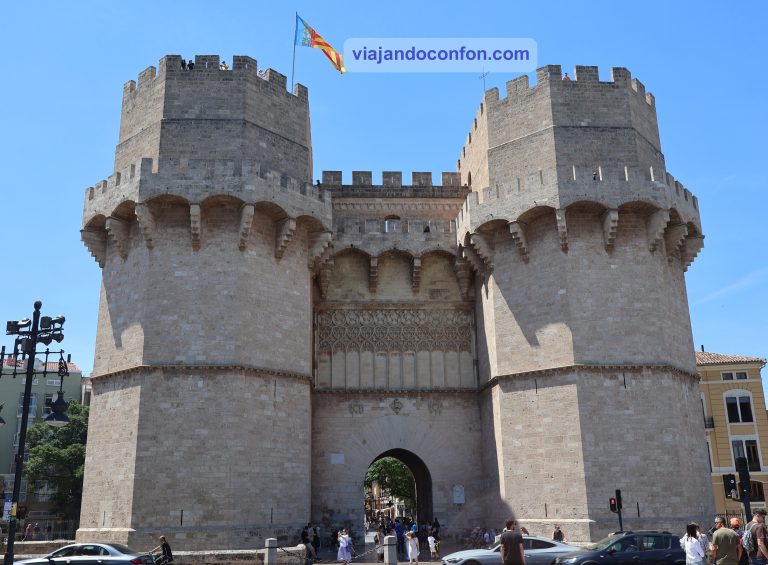
Se inauguró en 1910 y funcionó tan sólo dos años, ya que estaba situado en una zona de umbría, en la que no da el sol en ningún momento del día y con la humedad del río, que lo hacía húmedo y frío para los clientes, incómodo de pelotas vaya. De ahí el nombre extraoficial de Hotel Reuma.

La verdad es que es una visión un tanto fantasmagórica que a mi me encanta.

Granada
Hotel Reuma y Torre de Comares.
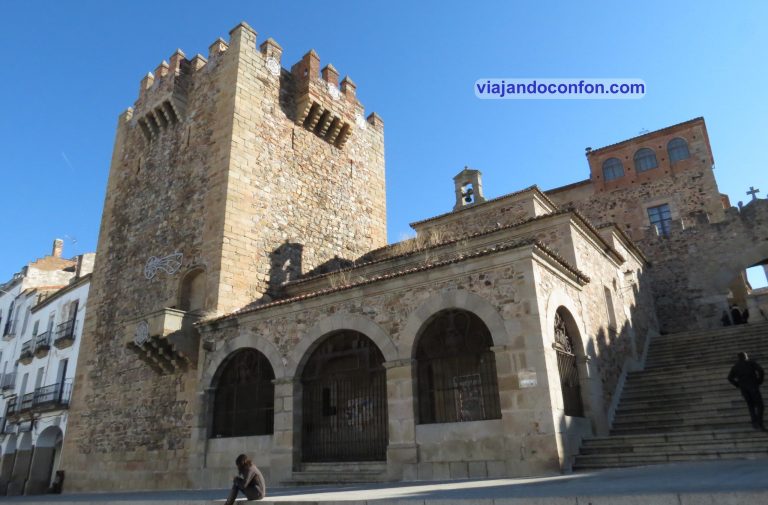
En el centro del paseo encontramos la Fuente del Paseo de los Tristes, de estilo barroco y construida en el año 1609.

Nos desviamos un poco y subimos por la Calle Horno del Oro. Aquí nos encontramos con la Casa Horno de Oro. Se trata de una pequeña casa Nazarí.

Todo el edificio gira en torno a un patio cuadrilongo centrado por una pequeña alberca y enmarcado en sus laterales norte y sur por dos pórticos con columnas nazaríes tras los que se abren las habitaciones principales.

En inicios la casa constaba de una sola planta. En el siglo XVI se le añadió una segunda planta. Ésta pasó a ser la zona familiar principal donde se encontraban las estancias de las mujeres y de los niños.

Granada

Tras la expulsión de los moriscos la casa fue corral de vecinos hasta el siglo XX, siendo entonces adquirida por el estado y restaurada.

Ahora nos dirigimos al final del paseo. Allí tenemos dos opciones: la primera, cruzar el puente del Aljibillo o Qantarat Ibn Rasiq en árabe. Originalmente construido en el siglo XI por orden Zawi Ibn Ziri quedó completamente destruido en las riadas de 1861 y fue reconstruido sobre la marcha.

Desde el extremo del puente, antes de cruzarlo, tenemos unas vistas espectaculares de la Alhambra.

Granada

Cruzamos el puente y giramos al final del camino a la derecha, tomando el camino de la Fuente del Avellano. Es un apacible camino por el monte, que trascurre por el valle del Valparaiso, entre monolitos con leyendas clásicas, de aproximadamente 1km, que finaliza en la Fuente del Avellano.

Según los investigadores, la fuente era la famosa fuente de las Lágrimas de los poetas árabes, cuyo naciente brota en la ladera de la Silla del Moro.

La Fuente del Avellano cuenta con un sencillo pilar, realizado en mármol de sierra Elvira que está adosado al aljibe, realizado de mampostería y semienterrado en la ladera.

Su frontis tiene inscrita una leyenda, grabada sobre piedra del siglo XVII, en la que se puede leer, a duras penas:

“Reynando el Sr. Dn. Fernando septimo Q.D.G. siendo Capitán Gral. de esta Provincia el Exmo. Sr. Dn. José Ygnacio Albarez Campana y Corregidor de esta Cap. el Sr. Marques de Altamira, la Ciudad de Granada hizo esta Obra comisionando para ella a el veinte cuatro de su Ayuntamiento D. José Marin. Año de 1827”.

Volvemos sobre nuestros pasos y volvemos a cruzar el Puente del Aljibillo y seguimos de frente subiendo la casi nada empinada Cuesta del Chapiz.

Nada más empezar la cuesta, a mano derecha tenemos el recinto del Palacio de los Córdova. Fue construido entre 1530 y 1592 en la Placeta de las Descalzas, para Luis Fernández de Córdova, Alférez Mayor de Granada y Comendador de Villanueva de la Fuente.

En 1919, tras pasar a manos de Ricardo Martín Flores, es derribado para construir sobre su solar el Teatro Gran Capitán; conservándose los restos de valor histórico-artístico en la finca “Villa María”, en el camino de Pulianas.

En la década de los 60 y ante la posibilidad de que los restos fueran trasladados a Córdoba, el Alcalde Manuel Sola convence al Duque de Montellano, casado con Hilda Fernández de Córdova, para que reconstruya el palacio, en el emplazamiento actual.

En 1983 el Ayuntamiento de Granada adquiere el Palacio de los Córdova para instalar en él el Archivo Municipal , que abrió sus puertas al público a primeros de agosto de 1984.

Seguimos subiendo y subiendo hasta llegar a la Plaza del Salvador. Allí nos encontramos con el Aljibe del Salvador, que data de la época nazarí, que recoge las aguas de uno de los ramales de la acequia de Aynadamar, cuyo nacimiento está ubicado en Fuente Grande, en Alfacar.

También encontramos la Iglesia del Salvador, construida en estilo mudéjar entre 1565 y 1605 por el arquitecto Juan de Maeda, y se hizo sobre la antigua Mezquita Mayor de Granada.

Granada
Parroquia del Salvador.

Si continuamos andando, en el lateral derecho de la parroquia encontramos el callejón de la Botica, que va a dar a Plaza Larga, el centro neurálgico del Albayzín, con numerosas terrazas donde tomar algo.

Junto a la plaza se encuentra el Arco de las Pesas o Puerta Nueva, uno de los primeros puntos de acceso de la muralla zirí, que entonces se llamaba Bab Al Ziyada (puerta del ensanche). El nombre de Arco de las Pesas se debe a que, en el siglo XVI se exponían las pesas trucadas confiscadas a comerciantes estafadores de la zona.

El nombre de Puerta Nueva se cree que viene de una superstición musulmana, que decía que por esta puerta sería el lugar por el que entraría los cristianos a tomar la ciudad de Granada y se perdería para siempre el reino. Por esta razón, la puerta estuvo cerrada hasta 1573, ya en época cristiana.

Granada
Arco de las Pesas.
Granada
Arco de las Pesas.

Cruzamos la puerta y giramos a la izquierda. Tomamos el callejón de San Cecilio, que es el que llga directo al mirador de San Nicolás.

Lo primero que nos encontramos es la fachada trasera de la Iglesia de San Nicolás, construida en 1525 en estilo mudéjar, sobre las ruinas de la mezquita Azitini.

A un lado encontramos el Aljibe de San Nicolás, de época cristiana aunque se cree que se hizo sobre las ruinas de un aljibe musulmán del siglo XI, adosado a la mezquita Azitini.

Granada
Aljibe de San Nicolás.

Y ahora si que llegamos a la joya de la corona de la ciudad, con permiso de la Alhambra, el mirador de San Nicolás.

Situado en la parte más alta de la Alcazaba Qadima de la dinastía Zirí, junto a la antigua mezquita, de la que solo se conserva el aljibe, era en aquella época la plaza de armas. Realmente estaba rodeada de edificios que fueron despejándose hasta adquirir las dimensiones actuales hacia mediados del siglo XIX.

Desde aquí tenemos la estampa más clásica del turismo granadino: la imponente Alhambra y el Generalife con Sierra Nevada de fondo. El atardecer en un día despejado puede llegar a ser mágico.

Dijo el presidente de los E.E.U.U. Bill Clinton durante su visita a Granada en el año 1997, que era la puesta de sol más bonita que había visto en su vida. Y Granada aprovechó bien esas palabras para proyectar su turismo hacia el exterior.

La vista más popular desde el Albaicín
Alhambra y el Generalife desde el mirador.
La vista más popular desde el Albaicín
Alhambra y Generalife vestidos de blanco.

Junto al mirador de San Nicolás se encuentra la actual Mezquita Mayor de Granada. Se inauguró en el año 2003 siendo la primera mezquita en Granada desde 1492, tras más de 500 años.

Desde la mezquita podemos contemplar unas vistas similares a las del mirador de San Nicolás, desde sus preciosos jardines.

Granada
Granada
Granada
Alhambra desde la Mezquita Mayor.

Volvemos sobre nuestros pasos hasta el Arco de las Pesas pero, en vez de cruzarlo, tomamos la calle Aljibe de la Gitana, que va a parar al Aljibe del Rey, el mayor de los aljibes musulmanes de Granada, que data del Siglo XI y con 300 m3 de capacidad. Hoy en día se encuentra integrado dentro del Carmen del Rey, sede de la Fundación AguaGranada.

Granada
Aljibe del Rey.

Tomamos el callejón de las monjas donde nos encontramos y bordeamos el Palacio Dar al-Horra (Casa de la Honesta), que formó parte del gran palacio del rey zirí Badis, en la Alcazaba Cadima. Su nombre proviene de haber sido la residencia oficial de Aixa la-Horra, mujer de Muley Hacén y madre del último emir granadino, Boabdil.

Granada
Palacio Dar al-Horra.
Granada
Granada
Palacio Dar al-Horra desde el mirador de San Cristóbal.

Seguimos por el callejón Ladrón de Agua hasta la plaza de San Miguel Bajo. En ella se encuentra la Iglesia de San Miguel Bajo. Se construyó en dos etapas. La primera entre 1528 y 1539 en la que se construye la Capilla Mayor y un tramo de la nave. La segunda 1551 y 1557 en la que se construye el resto de la nave. La iglesia es de estilo mudéjar con algunos toques renacentista.

Granada
Iglesia de San Miguel Bajo.

Si bajamos por el extremo oeste de la plaza, bajando por el carril de la lona, llegamos hasta la Puerta Monaita o bab al-Unaydar originalmente. También conocida por Puerta de la Alhacaba, es uno de los accesos más antiguos y principales de la Alcazaba Cadima y data del siglo XI.

Granada
Puerta Monaita

Al terminar la calle, bajamos por la romperrodillas cuesta de la Alhacaba, hasta llegar a la plaza del Triunfo, en la que se encuentra la Puerta de Elvira, otra de las fotos clásicas de la ciudad.

La puerta de Elvira o bab-Ilvira en árabe, se construyó en el siglo XI durante el gobierno de la dinastía Zirí y era la principal puerta de acceso a la ciudad. Ha sufrido diversas remodelaciones, siendo la más importante durante el gobierno de de Yusuf I de la dinastía nazarí.

Durante el siglo XX experimentó diversas obras de restauración, aunque se nota la dejadez de las autoridades debido a las diversas pintadas y actos vandálicos sufridos a menudo, como casi toda la ciudad. Una verdadera pena.

Granada
Puerta de Elvira.

Atravesamos la puerta y entramos en calle Elvira. Como a unos 100 metros nos topamos con la Iglesia de San Andrés, construida en el año 1528 en el solar donde se encontraba la mezquita del barrio de Bâb Ilbîra. Destaca la preciosa portada renacentista de 1530.

La iglesia quedó prácticamente destruida durante un incendio en 1818 quedando en pie los muros perimetrales y la torre. En 1830 el arzobispo Álvarez de Palma mandó reconstruir, sin mucho éxito, los desperfectos ocasionados por el incendio.

Granada
Iglesia de San Andrés.

Continuamos por calle Elvira unos 400 metros hasta llegar a la perpendicular calle Calderería Nueva, conocida coloquialmente como calle de las Teterías, debido a los numerosos establecimientos árabes de té que encontramos aquí, además de numerosas tiendas de productos árabes de todo tipo. Toda la zona recuerda a un pequeño zoco árabe.

Síguenos en redes sociales para más fotos del Albaicín:

Subimos por la cuesta hasta llegar a la plaza de San Gregorio. En ella se encuentra la Iglesia de San Gregorio Bético, del siglo XVI, cuyo origen es una ermita que se construyó por orden de los Reyes Católicos, en honor a los monjes franciscanos Juan de Cetina y Pedro de Dueñas, martirizados en 1397. Éstos fueron dos monjes arrestados por predicar en la puerta de la mezquita de La Alhambra, y atados a la cola de caballos fueron llevados desde la Alhambra hasta las mazmorras que aquí existían.

Granada
Iglesia de San Gregorio.

Como a unos 150 metros, subiendo la cuesta de San Gregorio, giramos hacia la Placeta de Porras. Aquí se encuentra la Casa de Porras, una casa palacial con una bella portada renacentista, construida en el siglo XVI, siendo una delas primeras edificaciones tras la conquista de Granada en 1492. Hoy en día es uno de los tantos edificios que tiene en propiedad la universidad de Granada.

Granada
Casa de Porras.

Si seguimos recto desde la casa de porras, subiendo por la calle placeta de Santa Inés Alta, a unos 100 metros nos encontramos a mano izquierda con las escaleras que suben hacia la placeta de Carvajales.

Este es uno de los miradores más desconocidos por el turista, en el que encontramos otra preciosa estampa de la Alhambra, desde un punto inferior al famoso mirador de San Nicolás, estando (normalmente) más tranquila que la anterior.

Granada
Placeta de Carvajales.
Granada
Alhambra desde placeta de Carvajales.

Aquí damos por concluido este bonito itinerario por el Albayzín. Lo suyo es perderse (literalmente) por sus callejuelas. 19 años después, sigo descubriendo pintorescos rincones en este bonito (aunque demasiado descuidad por las autoridades) barrio.

Aquí dejamos un mapa con los puntos del Albaicín marcados de este itinerario:

Síguenos en redes sociales para más fotos del Albaicín:

Puedes encontrar multitud de tours y actividades en el Albaicín y Granada en la web de CIVITATIS:

tours en granada

*Nos ayuda a mantener el blog

ENTRADA SIGUIENTE

España 2021 (III) : visitando Zaragoza – Huesca – Pirineos

Seguimos nuestro viaje por España, pasando la noche en Zaragoza.

19 de julio

Nos levantamos tempranito, desayunamos en el hotel y nos vamos de paseo por Zaragoza.

Iati seguros

*Nos ayuda a mantener el blog

Zaragoza

Antes de la visita al Palacio de la Aljafería, que teníamos entrada para las 10.00, pasamos por edificio de Correos y Telégrafos del Paseo de la Independencia.

Se trata de un precioso edificio de estilo neomudéjar inaugurado en el año 1926. En él destaca toda su fachada por sus elementos mudéjares, como la cerámica vidriada. También por cómo se han integrado con otros elementos barrocos y renacentistas.

Zaragoza

El interior también es espectacular. Aunque da un poco de fatiga entrar a sacar fotos mientras la gente hace sus quehaceres.

Zaragoza
Zaragoza

Ahora si, nos ponemos en camino al palacio.

Palacio de la Aljafería

El Palacio de la Aljafería (قصر الجعفرية) es un palacio fortificado construido en la segunda mitad del siglo XI. Fue por orden del rey Abú Yaáfar al-Muqtádir. Se hizo como residencia de los reyes hudíes de Saraqusta.

Tras la reconquista de Zaragoza en 1118 pasó a ser residencia de los reyes cristianos de Aragón. Fue utilizada como residencia regia por Pedro IV el Ceremonioso (1319-1387). Más tarde, por los Reyes Católicos tras una reforma de la planta principal en 1492.

En 1593 se vuelve a reformar convirtiéndolo en fortaleza militar. Aún se conservan el foso y los jardines.

Durante el Sitio de Zaragoza en la Guerra de Independencia (1808-1814) sufre grandes desperfectos. A finales del siglo XX se termina de restaurar y hoy en día acogen las Cortes de Aragón.

Palacio de la Aljafería. Zaragoza.
Palacio de la Aljafería.

La verdad es que es el edificio es realmente espectacula. La verdad, no tenía ni idea se que existía hasta que empecé a organizar el viaje.

La entrada tiene un precio de 5€.

Palacio de la Aljafería

Para terminar con Zaragoza, volvimos hasta el río para contemplar el Puente de Piedra. Fue construido entre 1401 y 1441 por Gil de Menestral. Se sabe que anteriormente hubo un puente de la época romana, que fue destruido en el año 828. Más tarde fue reconstruido por Abderraman II en 839.

Fue remodelado en el siglo XX en varias ocasiones. En 1991 se añadieron cuatro leones de bronce, obra del escultor Francisco Rallo Lahoz.

Zaragoza
Puente de Piedra.
Zaragoza

Ahora si acabábamos con Zaragoza. Nos dirigimos al siguiente destino: Huesca, a unos 73 km de Zaragoza.

Allí nos esperaban unos familiares para enseñarnos la ciudad. Así que tocaba despreocuparnos de la organización.

Descubre las mejores actividades y tours en Zaragoza con Civitatis:

que hacer en zaragoza

*Nos ayuda a mantener el blog

Huesca

Empezamos al visita por la Catedral de Huesca. La Santa Iglesia Catedral de la Transfiguración del Señor o Catedral de Santa María de Huesca fue construida entre el año 1294 y principios del siglo XVI en estilo gótico.

La catedral se halla en el lugar más elevado del cerro sobre el que se asentó la primitiva ciudad de Huesca.

Catedral de Huesca
Catedral de Huesca

En la Plaza de la Catedral también encontramos el ayuntamiento de Huesca. Un palacio construido en el siglo XVI sobre el solar que, anteriormente, ocupó la sede del concejo.

En 1577 el maestro Miguel Altué realizó una serie de reformas debido al mal estado en el que se encontraba el edificio. Entre esas reformas se encuentran la construcción del Patio y el Salón de Sesiones. 40 años después se remodeló la fachada para que estuviera acorde a las nuevas reformas interiores del edificio.

El edificio histórico reúne en uno dos importantes monumentos oscenses. Las Casas de la Ciudad, en las que el Concejo ha gobernado Huesca desde el año 1461. Y el Colegio de Santiago, fundado en el siglo XVI, que perteneció a la antigua Universidad de Huesca.

Huesca
Huesca

Seguimos paseando por el casco antiguo de la ciudad. Pasamos por la Plaza de la Universidad, en donde se encuentra, entre otros edificios, el museo de Huesca.

Está compartido entre dos edificios. La Universidad Sertoriana de Huesca, construida por el arquitecto oscense Francisco Antonio de Artiga en 1690 en estilo barroco. Y el anejo Palacio de los Reyes de Aragón, construido en el siglo XII. En él se encuentran el Salón del Trono, la Sala de la Campana, donde se sitúa la leyenda de la Campana de Huesca, y la Sala de la reina Petronila. El museo de inauguró el 29 de junio de 1873.

Museo de Huesca
Museo de Huesca

A continuación bajamos hasta el monasterio de San Pedro el Viejo. Es un edificio de estilo románico construido en el siglo XII. Se trata de una de las iglesias más antiguas de España y de las pocas que conservan íntegras del tiempo de los godos.

Durante la ocupación musulmana, la iglesia fue cedida a los cristianos que quedaban en la ciudad como tributarios con la facultad de celebrar allí su culto.

En 1096, tras la conquista de la ciudad por los cristianos, en este lugar se encontraba un templo cristiano visigodo. Estaba dedicado a San Pedro. Este había sido utilizado durante el dominio árabe por los mozárabes de la ciudad (entonces llamada Wasqa). Fue entonces cuando fue apodado “el Viejo”.

Aquel templo fue donado a los benedictinos que lo renovaron y lo convirtieron al románico. Estilo acorde a los cánones estéticos de la época. Las obras comienzan en 1117 durante el reinado de Alfonso I el Batallador, justo antes de la conquista de Zaragoza.

En la antigua Sala Capitular, reconvertida en panteón, se encuentran los sepulcros los reyes de Aragón Alfonso I el Batallador y su hermano y sucesor, Ramiro II el Monje.

Es Monumento Nacional desde 1885. Su arquitectura y escultura lo convierten en uno de los conjuntos históricos más importantes del románico aragonés.

Huesca
Monasterio de San Pedro el Viejo.

Continuamos nuestro paseo oscense por la contigua Plaza López Allué. Es conocida popularmente como la plaza del mercado ya que, hasta 1976 era el lugar donde se realizaba este tipo de funciones.

Se trata de una plaza rectangular que se presenta con un aspecto muy compacto y unitario. Al estilo de las clásicas y tradicionales Plazas Mayores españolas.

La plaza queda delimitada por edificios que presentan cuatro pisos de altura al exterior. Siendo la planta baja de altas proporciones y abierta en altos soportales acabados en arcos de medio punto. Estos se apoyan sobre gruesas pilastras de sección rectangular.

huesca

Bajando hacia la Plaza de Navarra, pasamos por delante de un edificio que me llamó la atención. El Palacio de Villahermosa (o casa de los condes de Guara). Se construyó en estilo renacentista en el siglo XVII para los condes de Guara. Estos acompañaron a Pedro I en la famosa jornada de Alcoraz en la que Huesca se convirtió en la ciudad más importante de la Corona de Aragón.

En el siglo XIX, la Casa de Guara se unió a la de Villahermosa. Esta era la más antigua estirpe aragonesa después de los reyes.

En 1926 el palacio fue cedido al colegio San Viator de Huesca por la duquesa María Pilar Azlor de Aragón y Guillamas. Ejerció como tal hasta 1983.

En 1999, abandonado y en estado de ruina, es adquirido por Ibercaja. Entonces lo restaura y se convierte, en 2005, en centro cultural de la entidad bancaria en Huesca.

huesca
Palacio de Villahermosa.

Seguimos bajando y llegamos hasta la Plaza de Navarra. Aquí encontramos la preciosa Fuente de las Musas, una fuente con dos niveles construida en 1885. La planta inferior se encuentra decorada por un repertorio de mascarones, sirenas, conchas y elementos naturalistas. En superior un conjunto de figuras completas representan a la musas de las artes.

El edificio más destacado de la plaza es el Círculo Oscense, también conocido como el Casino de Huesca. Fue construido en 1904 por el arquitecto Ildefonso Bonells en estilo modernista.

que ver en huesca
Fuente de las Musas y Casino de Huesca.

A su espalda encontramos el enorme parque de Miguel Servet. Es el más grande y uno de los más antiguos de Huesca que se empezó a construir en 1928.

que hacer en huesca
turismo en huesca

Aquí tienes un enlace con actividades y tours muy interesantes para hacer en Huesca:

que hacer en Huesca

*Nos ayuda a mantener el blog

Aquí almorzamos algo en un kiosco del parque y emprendimos retirada al que sería nuestro campamento base los próximos días: Jaca.

Pero antes debíamos efectuar una parada turística: el impresionante Castillo de Loarre, a unos 35 km de huesca.

El Castillo de Loarre es un castillo románico construido en el siglo XI por orden del rey Sancho III para servir como avanzadilla fronteriza. Desde ella organizaron los ataques contra la localidad de Bolea, situada en la llanura que domina la construcción.

Se encuentra realmente bien conservado. Esto lo convierte en uno de los mejores ejemplos de arquitectura militar y civil del románico de España.

En 1071 se amplía a la forma que actualmente tienen y en 1287 se levantan las murallas. En el siglo XV, la población que vivía a los pies del castillo se traslada a la actual villa de Loarre. Reutilizan entonces materiales de la fortaleza.

Castillo de Loarre
Castillo de Loarre

La verdad es que el castillo nos encantó y pienso que es una visita imprescindible en todo viaje a Huesca. El coste de la entrada es de 6€ y de 8€ la visita guiada. He de decir que nosotros no pudimos hacer la visita guiada porque las plazas estaban agotadas, una pena. Pero si que tienes un código QR con audioguías detalladas.

Si lo prefieres puedes contratar una excursión guiada desde Huesca para más comodidad:

*Nos ayuda a mantener el blog

Desde aquí pusimos rumbo a Jaca.

Como a unos 26 km del castillo en dirección Jaca divisamos unas formaciones rocosas espectaculares llamadas los Mallos de Riglos. Son unas formaciones geológicas consistentes en unas peñas de paredes verticales, que alcanzan los 275 metros de altura.

Son todo un espectáculo.

Como hora y media después de salir del Castillo de Loarre llegamos por fin a Jaca, tras dejar atrás unos impresionantes paisajes.

Fuimos directamente al hotel. El elegido fue el Eurostars Reina Felicia. Un hotel de 4 estrellas que nos costó 80€. La habitación era bastante grande y muy cómoda. El personal, además, era realmente atento. Nos gustó mucho.

Si te interesa este hotel, puedes conseguirlo por muy buen precio en el siguiente enlace:

hoteles en huesca

*Nos ayuda a mantener el blog

Como se había hecho tarde, decidimos comprar algo para cenar en un supermercado cercano. Directamente nos fuimos a descansar para aprovechar el día siguiente.

20 de julio

Hoy toca primera excursión. Desayunamos algo rápido y nos ponemos en camino. Hoy vamos a hacer la ruta senderista de subida al ibón de Piedrafita.

Los ibones son pequeños lagos de montaña de origen glaciar. Están situados en los Pirineos aragoneses, desde la zona del valle de Ansó hasta el entorno de la Tuca del Aneto.

El ibón de Pedrafita se sitúa a los pies de la escarpada Peña Telera,. Es el segundo pico más alto de la Sierra de la Partacua, con 2.762 metros.

Para llegar desde Jaca debemos ir en dirección Biescas por la N-260. Allí desviarnos a la A-136 dirección Sallent de Gallego. Unos kilómetros más adelante tomamos el desvío hacia Piedrafita. Allí tomamos la pista de acceso al parque faunístico de Lacuniacha.

Si estuviera muy lleno y no hubiera aparcamiento, por 5€ podemos aparcar en el aparcamiento del parque faunístico. Fue lo que hicimos nosotros. Si compras entrada para el parque, el aparcamiento es gratuito.

El camino es sencillo, está muy cuidado y señalizado. Es ideal para subir toda la familia ya que transcurre por una pista forestal. Aunque tienes preciosos senderos más estrechos si quieres apartarte de la pista.

La longitud total es de 6 km y se hace en unas 2 horas ida y vuelta.

que hacer en Jaca
Subida al ibón.
que ver en Jaca
Subida al ibón.
subir al ibon de piiedrafita
subir al ibon de piedrafita

El ibón se encuentra situado en un entorno espectacular. En invierno, con nieve, tiene que ser realmente espectacular.

Ibón de Piedrafita
Ibón de Piedrafita

Desde aquí podemos volvernos o ir un poco más allá, hasta el arco de Piedrafita. Son unos 4 km más y unas 2 horas más ida y vuelta. El camino es algo más complicado, estrecho y, ya casi al final, con fuertes pendientes.

Arco de Piedrafita
Arco de Piedrafita.
Arco de Piedrafita
Arco de Piedrafita.

Se hace realmente duro, sobre todo en plena ola de calor como en la que nos encontrábamos. Pero el entorno merece la pena.

Para bajar, en vez de tomar el mismo camino, lo hicimos por el otro lado. Graso error. Era mucho más largo y tardamos la vida misma en llegar. Parecía que no se acababa nunca. Aún me duelen los pies.

Tras la ruta, nos volvimos a Jaca a comer, descansar un poco y darnos 14 ó 15 duchas cada uno.

Tras el descanso nos fuimos a conocer la ciudad de Jaca.

Jaca

Jaca​ es un municipio y ciudad de la provincia de Huesca. Es la capital de la comarca de la Jacetania, en la comunidad autónoma de Aragón.

Iaca o Iacca era antiguamente la capital de los iacetanos. Un pueblo prerromano del grupo aquitano cuyo territorio se extendían desde los Pirineos hasta Illerda (Lleida) y Osca (Huesca).

Entre los años 195 y 194 a.C. el cónsul romano Marco Porcio Catón conquista la ciudad. Integrada en el Imperio romano, Jaca constituyó un punto de vigilancia de los caminos del Pirineo. Desarrolló una próspera economía cuyo auge se mantuvo hasta el siglo III. En el siglo IV entró en decadencia por la amenaza de los bandidos que atacaban a las caravanas y a los mercaderes que transitaban los caminos pirenaicos.

Gracias al protectorado de carolingio establecido por Carlomagno en la llamada Marca Hispánica, algunos territorios cristianos se conservaron en las montañas pirenáicas tras la conquista de los musulmanes.

A comienzos del siglo XI, Jaca era un campamento militar fortificado perteneciente al Reino de Pamplona. A su alrededor se irían construyendo viviendas. Cobrando cada vez mayor importancia por su situación al pie del paso de Somport (uno de los más accesibles para acceder a Francia desde la Edad Antigua) y por su situación estratégica en el Camino de Santiago.

Tras la muerte del rey de Pamplona Sancho Garcés III, su hijo Ramiro, se convirtió en Ramiro I de Aragón. Establece en Jaca su residencia, y sitúa cerca del monasterio de San Pedro la sede del obispo de Aragón. Fue denominado así hasta que en 1077 Sancho Ramírez dotara a Jaca de su fuero. Entonces inicia, hacia 1082, la construcción de la sede catedralicia.

Pero el definitivo impulso a Jaca se lo da Sancho Ramírez en 1077. Fue cuando convierte a la villa en ciudad. La dotó de sede episcopal, en cuya catedral se asentaría el ahora obispo de Jaca. También le dio el estatus que la hacen ser considerada la primera capital del reino entre 1077 y 1096. Hasta la conquista de Huesca.

Las pestes y los incendios de finales de la Edad Media hundieron a Jaca en una profunda crisis. No saldría de ella hasta la intervención de Fernando el Católico para formar un gobierno local.

En la Guerra de Sucesión, Jaca se puso del lado de los Borbones. Por ello, en 1707 fue asediada por aliados del Archiduque Carlos y socorrida por el marqués de Salutcio. El rey Felipe V gratificó a la ciudad de Jaca con los títulos de «muy noble, muy leal, y muy vencedora», añadiendo la flor de lis al escudo de sus armas que ostentaba la Cruz de Sobrarbe y las cuatro cabezas, emblema de la batalla de Alcoraz.

Empezamos nuestra visita por la Ciudadela de Jaca. Compramos la entrada con visita guiada. Como faltaba un rato, entramos y empezamos a visitarla por nuestra cuenta.

Jaca

La ciudadela es una fortificación de planta pentagonal construida a finales del siglo XVI, y se encuentra en perfecto estado de conservación manteniendo intactas cada una de sus partes características: foso, baluartes, escarpas, cuarteles, polvorines, túneles…

Fue diseñada por el ingeniero militar italiano Tiburzio Spannocchi. Este se encontraba al servicio de Felipe II, que mandó a construir aquí el castillo de San Pedro.

Desde su construcción, el Castillo de San Pedro ha mantenido guarnición militar presente dentro de sus muros. Sin embargo, las vicisitudes bélicas que lo han acompañado son escasas, siendo la más destacada la ocurrida durante la guerra de la Independencia.

El 21 de marzo de 1809 fue tomado por las tropas francesas ante la capitulación de la ciudad y el escasísimo número de tropas que la defendían. Los soldados españoles, al mando del General Espoz y Mina recuperaron el castillo el 17 de febrero de 1814, tras varios meses de asedio. A partir de entonces, el castillo ha ido perdiendo importancia estratégica. Sus muros y edificios deteriorados fueron magníficamente restaurados en 1968, siendo merecedora del premio “Europa Nostra”.

En la actualidad, el Consorcio del Castillo de San Pedro está formado por el Ministerio de Defensa, la Diputación Provincial de Huesca y el Ayuntamiento de Jaca. Estos se encargan de potenciar el valor cultural del castillo y gestionar las actividades relativas a su conservación, restauración y revitalización.

jaca

Dentro de la ciudadela encontramos el museo de las miniaturas militares y una exposición de soldaditos de corcho. Están curiosas pero no son nada del otro mundo.

La visita guiada es muy interesante y por los 9€ que cuesta, está francamente bien.

Tras la visita a la ciudadela nos dimos un paseo por la ciudad. Primero visitamos la catedral, pero no entramos ya que se encontraba cerrada a esa hora. Tendría que ser otro día.

La Catedral de San Pedro de Jaca es uno de los edificios de estilo románico más importante de Aragón. La fecha de su construcción no está del todo clara pero se cree que fue en dos etapas. La primera entre los años 1077 y 1082 durante el reinado de Sancho Ramírez de Aragón, siendo obispo su hermano el infante García. La segunda etapa va desde los años 1104 y 1130 siendo rey Alfonso I el Batallador y Esteban de Huesca como obispo.

que ver en jaca
Catedral de San Pedro de Jaca.

Desde aquí nos acercamos a la Torre del Reloj o Torre de la Cárcel, construida en 1445 en estilo gótico civil como parte de una residencia particular sobre el mismo solar en el que se edificó el palacio del monarca aragonés, destruido por el fuego en 1395.

El Concejo de Jaca la compró en 1599 para colocar el reloj-campanario que marcaría la vida urbana y convertirla, en 1602, en sede de las cárceles de la ciudad, dejando así de depender del horario que dictaba el reloj de la Catedral.

Durante la Guerra Civil Española fue utilizada por los sublevados como cárcel y hoy en día la sede de la Comunidad de Trabajo de los Pirineos, organismo dependiente del Consejo de Europa.

que hacer en jaca
Torre del Reloj.

Como ya empezaba a haber hilorios, buscamos algo donde cenar. Estaba todo hasta la bandera. Después de mucho buscar encontramos un pequeño restaurante llamado Nadali, que fusiona comida española e iraní. Comimos un menú degustación que estaba realmente exquisito y nada caro. Recomendable 100%.

donde comer en jaca
donde comer en jaca
donde comer en jaca

Después de cenar dimos otro pequeño paseo visitando la Iglesia de Nuestra Señora del Carmen, una iglesia construida en el siglo XVII en estilo barroco, única construcción que se conserva del antiguo convento de Nuestra Señora del Carmen que los Carmelitas Descalzos fundaron en Jaca.

que hacer en jaca

Ahora si, nos fuimos a descansar al hotel. Había que descansar para tener fuerzas para el día siguiente, que sin saberlo bien, las íbamos a necesitar.

21 de julio

Hoy toca nueva ruta senderista. Vamos ha hacer la subida al ibón de Respumoso.

Desayunamos y salimos dirección al embalse de la Sarra, del que nos separaban 52 km. Para llegar volvemos a ir dirección Biescas como el día anterior. Llegamos hasta el desvío a Piedrafita pero, esta vez, seguimos por la carretera A-136 en dirección Sallent de Gállego. Allí donde tomamos el desvío y entramos en el pueblo.

Justo a la entrada del mismo tomamos a la izquierda la vieja carretera que sube a Formigal. La cual dejaremos tras 1,5 kilómetros cogiendo el desvió a la derecha hacia el Embalse de la Sarra. Unos 2 kilómetros más y nos encontraremos en el Embalse de la Sarra. Una carretera bastante peculiar, estrecha y llena de curvas. Cuesta creer que sea doble dirección.

En los alrededores del embalse aparcamos. Tras varios días de ola de calor, se agradecían los 13ºC que hacían al llegar. No imaginábamos el tremendísimo calor que íbamos a pasar ese día.

Bordeamos el embalse dejando atrás la central hidroeléctrica, el asador y el merendero y cruzamos el río por un pequeño puente. A partir de aquí empieza la ruta de subida, bien señalada.

Al principio la subida es muy suave, dejando atrás pequeñas cascadas en internándonos en un precioso bosque de hayas, donde poco a poco el río va quedándose cada vez más profundo en la espectacular garganta en la que se sitúa.

ibón de Respumoso

Alrededor de una hora después de haber empezado el sendero llegamos al Llano del Cheto, donde la pendiente se suaviza pero el calor empezaba a apretar.

ibón de Respumoso
ibón de Respumoso

Seguimos subiendo más y más, con más y más calor con unas impresionantes vistas de la espectacular cascada Barranco Arriel.

ibón de Respumoso

A partir de aquí empiezan los problemas. después de 3 horas de camino, la subida es cada vez más empinada y el calor empieza a ser cada vez más agobiante. Ya superamos los 40ºc, a pleno sol y en una fuerte pendiente de grandes piedras sueltas que dificultan terriblemente la subida.

Hasta que llegamos al punto de empezar a darme un golpe de calor. Nos sentamos en la primera sombra que vemos. Descansamos y nos hidratamos hasta el punto de casi acabar con toda el agua que llevábamos. Fue en este punto cuando decidimos abandonar la subida, faltando poco para terminar el ascenso, pero el que me conoce bien sabe que no soy de los que suelen abandonar nada.

Otro año tendrá que ser.

La longitud total es de 15 km ida y vuelta (no es circular) y se tarda unas 6 horas en ir y volver.

A la bajada, medio muertos de cansancio y de calor, decidimos comer en el asador que se encuentra junto al embalse. Se llama asador La Sarra y se come increíble y nada caro.

Tras llenar de manera considerable el estómago, nos pusimos en camino de la estación internacional de Canfranc, de la que nos separaban 70 km.

La estación internacional de Canfranc es una estación de ferrocarril situada en el municipio de Canfranc, junto a la frontera con Francia. Se construyó para unir Francia con España atravesando los Pirineos por Somport y, para ello, ambos países firmaron diversos convenios, el primero en 1904, y protocolos posteriores que marcaron las líneas de actuación.

Fue diseñada por el ingeniero Fernando Ramírez de Dampierre e inaugurada el 18 de julio de 1928, en presencia del rey de España Alfonso XIII y del presidente de la República Francesa Gaston Doumergue. El exterior del edificio sigue modelos de la arquitectura palacial francesa del siglo XIX.

En 1931 sufrió severos daños debido a un incendio que se inició en el vestíbulo y que luego se propagó a la biblioteca, destruyendo en su totalidad el restaurante de la estación y afectando a la techumbre de madera.

Durante la Guerra Civil Española es controlada por el bando nacional y se tapia el túnel. Fue reabierta en 1939 y durante la Segunda Guerra Mundial lo frecuentaban trenes que transportaban el wolframio que Alemania empleaba para reforzar el acero de sus tanques.

En 1941, las estaciones de la parte española pasan a ser propiedad de RENFE (Red Nacional de los Ferrocarriles Españoles) y las francesas de SNCF (Société Nationale des Chemins de Fer) y entre 1945 y 1949 el servicio internacional volvió a quedar interrumpido por desavenencias entre ambos gobiernos.

El 27 de marzo de 1970 se cerró el tráfico internacional tras el derrumbe del puente de L’Estanguet a consecuencia del descarrilamiento de un tren de mercancías francés. Esto generó una drástica reducción del tráfico ferroviario y marcó el inicio de su decadencia.

Hoy permanece cerrado casi en su totalidad ya que está siendo restaurado aunque si que se puede visitar el vestíbulo mediante una visita guiada.

estación de canfranc

Tras esta visita y reventaicos como estábamos, decidimos irnos al hotel a cenar y descansar un poco, que lo teníamos bien merecido.

22 de julio

Vuelta al madrugón. Hoy nos vamos de visitas culturales. El primer destino es el Real monasterio de San Juan de la Peña, a unos 25 km de Jaca.

El Real Monasterio de San Juan de la Peña está situado la localidad de Botaya, Huesca y fue el monasterio más importante de Aragón en la alta Edad Media. En su Panteón Real fueron enterrados muchos de los reyes de Aragón y forma parte del camino aragonés del Camino de Santiago.

El monasterio se divide en dos partes: el Monasterio viejo y el Monasterio nuevo. El aparcamiento se encuentra junto al monasterio nuevo, el que está más alto. Allí aparcamos y nos encaminamos hacia el edificio que es donde se encuentran las taquillas y una cafetería.

Visitar el Real Monasterio de San Juan de la Peña
Monasterio Nuevo.

La entrada cuesta 8.50€ (9.60$) e incluye un bus lanzadera que te lleva y te trae desde el aparcamiento al Monasterio Viejo. En taquilla nos recomendaron que visitáramos primero el Viejo, ya que era primera hora y habría poca gente y más tarde se petaría. Así lo hicimos.

Enclavado en su mayor parte en una cueva bajo la montaña, su principal construcción se empieza en el año 1026 por orden del rey Sancho de Navarra “el Mayor”, sobre los restos de una antigua ermita dedicada a San Juan Bautista.

Real Monasterio de San Juan de la Peña

Aquí destaca el espectacular claustro del siglo XII un maravilloso ejemplo del arte románico y cuenta con una valiosa galería de capiteles tallados con imágenes bíblicas desde Adán y Eva hasta el prendimiento de Jesús.

Real Monasterio de San Juan de la Peña
Claustro.

También podemos destacar el Panteón Real en el que descansan los restos de los primeros Reyes de Aragón. Es de estilo neoclásico y fue erigido en el último tercio del siglo XVIII.

Real Monasterio de San Juan de la Peña
Panteón Real.

La verdad es que es un lugar impresionante. Cuesta creer que fuera construido en este lugar tan aislado.

Tras la visita, esperamos la lanzadera y subimos a visitar el Monasterio Nuevo.

Se construyó a partir del año 1676 en estilo barroco para sustituir al Viejo ya que quedó muy dañado por un terrible incendio en 1675. Se llevó a cabo en el Llano de San Indalecio y en él los monjes contaron con el asesoramiento de numerosos profesionales, siendo fundamental la labor del arquitecto zaragozano Miguel Ximenez, diseñador del edificio.

Aquí encontramos la iglesia y el centro de interpretación, en el que podemos observar las ruinas interpretativas de como era la vida en el monasterio.

Real Monasterio de San Juan de la Peña

Tras la visita al monasterio nos pusimos en camino de Aínsa, catalogado oficialmente como uno de los pueblos más bonitos de España, del que nos separaban 94 km que incluían algunos tramos de carretera que tela marinera.

De camino decidimos pararnos a comer en un pueblo llamado Boltaña, muy cerca de Aínsa. Comimos en un sitio llamado el Parador de Boltaña, un asador en el que comimos de maravilla. Y vuelta a la carretera.

Dejamos el coche en un aparcamiento enorme que hay en la parte alta del pueblo y nos dispusimos a visitarlo.

La villa medieval de Ainsa es un pequeño pueblo de unos 2.000 habitantes situado en la comarca de Sobrarbe. Se encuentra situado en un promontorio sobre la confluencia de los ríos Cinca y Ara. Fue declarada Conjunto Histórico-Artístico en 1965.

Aunque se cree que ya hubieron en la zona asentamientos romanos, no hay documentación sobre la villa hasta el año 1124, cuando el rey Alfonso I de Aragón le otorga una Carta Puebla, con los mismos fueros que la ciudad de Jaca.

Aunque si que hay una leyenda del año 724 sobre la Cruz de Sobrarbe que dice:

Los cristianos que han huido del dominio musulmán se reúnen en Ainsa y acometen la reconquista. Las tropas cristianas, dirigidas por Garcí-Ximeno consiguen ganar la batalla gracias a la aparición, sobre una carrasca, de una cruz de fuego, que les dio coraje para recuperar la ciudad. La victoria es conmemorada todavía en nuestros días con la fiesta bianual de “La Morisma”. La cruz sobre la carrasca es el símbolo del Sobrarbe y aparece en uno de los cuarteles del escudo de Aragón.

Según termina el aparcamiento cruzamos un pequeño puente sobre el foso que da a las murallas del castillo.

Se construyó en el siglo XI aunque fue sufriendo varias modificaciones a lo largo de los siglos. La fortaleza que visitamos hoy en día corresponde a la ordenada por el rey Felipe II en el siglo XVII y sigue los mismos criterios que la Ciudadela de Jaca. La parte más antigua conservada del castillo es la torre del homenaje donde se encuentra hoy el Eco Museo Centro de Visitantes.

Aínsa
Torre del Homenaje del castillo.
Aínsa
Restos del Castillo.

En el extremo oeste podemos subir por unas escaleras y divisar desde lo alto de la muralla el precioso casco antiguo de Aínsa. Y también podemos encontrar (a pie de la torre) la oficina de información turística.

Aínsa
Aínsa.

Atravesamos las murallas y paseamos por la Plaza del Castillo, donde había montado un pequeño mercadillo de artesanía. Tras la plaza del Castillo de encuentra la Plaza Mayor.

La plaza data de entre los siglos XII y XIII, cuando Aínsa se encontraba en su mayor apogeo y se le considera una de las plazas medievales más bonitas de España. En ella encontramos numerosos restaurantes, tiendas de recuerdos y el ayuntamiento.

Aínsa
Plaza Mayor con el ayuntamiento al fondo y la torre de la iglesia de Santa María.

Tras el ayuntamiento nos internamos por la calle Mayor, una de las dos calles que atraviesan el casco a lo largo. Pasamos por la plaza de Santo Domingo, un rincón muy bucólico y cuidado, hasta llegar al Portal de Arriba, una de las puertas de la villa.

que ver en Aínsa
que hacer en Aínsa
Plaza de Santo Domingo.

Nos damos la vuelta y recorremos de vuelta la calle de Santa Cruz, que es la otra calle que atraviesa del casco antiguo a lo largo. Al final de la calle encontramos la iglesia de Santa María.

La iglesia de Santa María fue construida entre finales del siglo XI y mediados del XII y es uno de los mejores ejemplos de románico aragonés. En el siglo XIV se construye el actual claustro ya que hay registros de que el antiguo se encontraba en muy mal estado. El templo se amplió en el siglo XVI con las capillas del presbiterio y la bóveda de la nave y, en el XVII, se añadió la sacristía.

Entre 1972 y 1974 se le hizo una restauración integral.

Aínsa
Iglesia de Santa María.

En la fachada oeste de la iglesia encontramos un pequeño mirador con unas vistas increíbles de los pirineos y del valle del río Cinca.

Aínsa
Mirador de Aínsa.

Aquí termina nuestra visita a la preciosa villa medieval de Aínsa. Sobre la marcha nos ponemos rumbo a Jaca, esperando que nos de tiempo de llegar en hora al Mueso Diocesano a contemplar las famosas pinturas murales que allí se conservan.

Recorremos los 72 km que nos separan de Jaca y por suerte llegamos a tiempo de entrar al museo pero por los pelos.

El Museo Diocesano de Jaca se encuentra junto a la catedral y, de hecho, se entra atravesando la nave de ésta.

El museo se inauguró en 1970 y expone, entre otros objetos, murales completos de la Edad Media que se fueron encontrando en diferentes parroquias que se encontraban en estado de abandono, peligrando estas maravillosas obras de arte. La verdad es que, a mi parecer parece una oda al expolio pero, por otro lado, se encontraban destinadas a su desaparición por encontrarse en capillas abandonadas y en mal estado.

Aínsa

En el museo también encontramos una sala en la que muestra un video explicativo sobre como se consiguieron retirar de sus emplazamientos originales sin que sufrieran daños.

Aínsa
Claustro de la catedral de Jaca.

El precio de la entrada es de 6€ y la verdad es que es una visita muy interesante.

Después de la visita al museo y para terminar con la ciudad de Jaca, subimos hasta el Fuerte de Rapitán, situado en lo alto del monte de Rapitán, a 1142 metros de altura y empezado a construir a finales del siglo XIX como parte de la tupida red defensiva que se pretendía construir de forma paralela a la línea internacional de ferrocarril Oloron-Canfranc, aunque antes de terminar su construcción, ya se había quedado obsoleto por la aparición de la aviación

Aínsa

La verdad es que merece la pena la subida hasta aquí tan sólo para admirar las impresionantes vistas a la ciudad de Jaca desde aquí.

Aínsa

Con esto tocaba a su fin la visita a Jaca. Era hora de irse al hotel a cenar y descansar. Al día siguiente nos poníamos en camino al País Vasco a pasar unos días en casa de unos familiares pero, antes, de camino nos desviaríamos un poco para visitar Sos del Rey Católico, lugar de nacimiento del rey Fernando el Católico.

23 de julio

Nos levantamos tempranito, desayunamos y nos ponemos en camino a Sos del Rey Católico, a unos 90 km.

Sos del Rey Católico

Sos del Rey Católico es un pequeño pueblo de apenas 600 habitantes perteneciente a la comarca de las Cinco Villas, en la provincia de Zaragoza y es conocida por ser el lugar de origen del rey Fernando II de Aragón, más tarde rey de Castilla, conocido como Fernando el Católico.

Historia

Se conocen asentamientos en la zona de los Suessetanos, pueblo indoeuropeo de filiación céltica que se asensienta sobre el siglo VI a.C. en la zona alta de las Cinco Villas, aunque la primera noticia del pueblo data del año 211 a.C. cuando se aliaron a los cartagineses para enfrentarse a Publio Scipion y en el 206 a.C. con los romanos.

Tras la caída de los romanos en el siglo V llegan hasta aquí los visigodos. Hacia el 714 lo conquistan los musulmanes sin encontrar prácticamente resistencia, aunque realmente no formaron una ciudad, sino que montaron una fortificación para controlar al vecino Reino de Pamplona.

Durante el siglo X es reconquistado por los cristianos tomando una gran importancia como ciudad fronteriza. En el año 1044 el rey Ramiro I la incorpora al reino de Aragón, entonces llamada Sos a secas.

En 1452, debido a la Guerra Civil de Navarra, la reina Juana Enríquez de Navarra se traslada aquí donde, el 10 de marzo de ese mismo año da a luz al infante Fernando, de donde viene el actual nombre de Sos del Rey Católico.

Algo que nos sorprendió mucho fue que el pueblo está lleno de homenajes al clásico del cine español “La vaquilla”, de Luis García Berlanga, rodada aquí a mediados de los años 80.

Aparcamos junto al parador de turismo y nos echamos a andar. Entramos en el pueblo atravesando el Portal de Sangüesa, llamado así porque apunta a esa localidad navarra, aunque también se le conoce como Portal de Domínguez o Portal de Nador.

que ver en Sos del Rey Católico
Portal de Sangüesa.

Paseando por las estrechas callejuelas llegamos a la Plaza de la Villa, donde se encuentra el ayuntamiento o Casa de la Villa, de estilo renacentista y construida en el siglo XVI. Fue reformado en el siglo XIX y restaurado en los años 80 para adaptarlo a las funciones administrativas de hoy en día.

que hacer en Sos del Rey Católico
Casa de la Villa.

Destacan en su fachada unas inscripciones grabadas en el año 1681, que hacen alusión al Antiguo Testamento.

Empezamos la subida hacia el castillo y nos encontramos a mano derecha la antigua lonja medieval, que albergaba el mercado y donde se reunía el concejo de la villa en la Edad Media. Hoy en día alberga la biblioteca municipal.

Si seguimos subiendo y nos topamos de frente con la iglesia de San Esteban. Se empezó a construir en el siglo XI, siendo entonces la cripta Santa María del Perdón, en la que hoy en día se conservan sus magníficos murales góticos. En el siglo XII se construye la portada románica, a la que se le construye un pórtico en el siglo XVI para tratar de proteger las tallas. Lástima que no se podían contemplar cómodamente debido a unos andamios para su restauración.

Sos del Rey Católico
Iglesia de San Esteban.
Sos del Rey Católico
Iglesia de San Esteban.

Justo aquí encontramos el mirador de San Esteban, con unas espectaculares vistas del valle.

Desde aquí subimos al castillo. El castillo de la Peña Felizana se construye por el reino de Pamplona en el siglo X, tras la repoblación cristiana a partir del año 908 para fortificar la frontera con los musulmanes. Perteneció a la Corona de Navarra entre los años 1006 a 1054, durante el reinado de Sancho el Mayor y, más tarde el rey Ramiro I lo incorpora a la Corona de Aragón para defenderse del reino de Navarra.

A mediados del siglo XII se construye la torre por orden del rey Ramiro II el Monje.

En 1288 Alfonso II de Aragón tuvo que entregarla a los unionistas y en 1364 Carlos II de Navarra suscribió aquí los acuerdos de Binéfar.

Durante la Guerra de Sucesión tomó partido por el bando de Felipe de Borbón, por lo que, al acabar la guerra, este dio el privilegio a la villa de portar en su escudo la flor de lis.

Sos del Rey Católico
Torre del Castillo.

En el extremo sur de la explanada del castillo tenemos el mirador de los Rechelaos, desde el que tenemos unas magníficas vistas de los tejados de la villa.

Sos del Rey Católico
Vistas desde el mirador de los Rechelaos.

A la bajada nos fuimos paseando hasta el Palacio de los Sada, lugar de nacimiento de Fernando el Católico y perteneció a la familia Sada hasta mediados del siglo XIX constituyendo uno de los mejores y más significativos ejemplos de arquitectura civil de la villa.

Las estancias más antiguas del Palacio datan del siglo XIII, y a partir de ese momento se van sumando y añadiendo otras nuevas, hasta que a finales del siglo XVI encontramos la planta completa.

Actualmente se encuentra aquí el centro de interpretación de la figura de Fernando II de Aragón y la oficina de turismo.

Sos del Rey Católico
Palacio de los Sada.

De aquí nos vamos paseando por la preciosa judería medieval donde, a partir del siglo XII se establece su comunidad. Estaba compuesto de unas treinta casas y hoy es conocido como el barrio alto.

Sos del Rey Católico

La verdad es que la villa es preciosa y he de decir que mereció la pena desviarnos esos 40 km.

Aquí termina nuestro periplo por tierras aragonesas aunque no el viaje. Tras la visita a los familiares vascos, tocaba volver a Granada pero pararíamos a visitar la preciosa ciudad de Ávila de camino, pero eso será ya en otra entrada.

ENTRADA SIGUIENTE

España 2021 (II): recorremos Albarracín – Peracense – Zaragoza

Seguimos por nuestro viaje por España, hoy salimos de camino a Albarracín.

18 de julio

Nos levantamos tempranito. Compramos algo para desayunar en una panadería enfrente del hotel. Y nos ponemos en camino a Albarracín, a 37km de Teruel.

Iati seguros

*Nos ayuda a mantener el blog

Albarracín

Albarracín es pequeño pueblo medieval de apenas 1.000 habitantes. Está situado en la provincia de Teruel, en Aragón.

La zona ya estuvo habitada en época prehistórica, como demuestran las pinturas rupestres encontradas en Rodeno. También habitaron aquí los celtas. Concretamente la tribu de los lobetanos y sobre su castro, se asentaron los romanos. Más tarde los visigodos.

Tras la invasión musulmana llegó aquí un grupo berberisco de la tribu de los Ibn-Racin, que son los que dieron nombre a la villa. Tras la disolución del Califato de Córdoba, en el siglo XI, el clan bereber de los Banu Razin se hace con el poder fundando la de Taifa de Albarracín, que dura 94 años hasta que el último rey Yahya Husam ad-Dawla, es derrocado por el gobernador almorávide de Valencia Abu Abū Abd Allāh Muhammad ibn Fātima en el año 1104.

Posteriormente, por cesión, pasa a manos de la familia cristiana de linaje navarro de los Azagra, que harán de esta ciudad un Señorío Independiente de Castilla y Aragón desde 1170, creando un obispado propio y haciendo prosperar su economía basada en la ganadería, el comercio y la industria de la lana.

Muralla de Albarracín
Muralla de Albarracín.

En 1285 Pedro III de Aragón “el grande” sitia la ciudad y la conquista. Esta pasa a formar parte de la corona de Aragón en 1300.

La localidad es Monumento Nacional desde 1961. Posee la Medalla de Oro al mérito en las Bellas Artes de 1996. Finalmente se encuentra propuesta por la Unesco para ser declarada Patrimonio de la Humanidad por la belleza e importancia de su patrimonio histórico.

Entrando al pueblo encontramos un parking gigantesco donde dejamos el coche. Es de pago (zona azul). Nosotros pagamos 2€ y nos dio tiempo de sobra de visitar el pueblo.

Empezamos a subir por la cuesta de Teruel. En primer lugar nos encontramos es el antiguo colegio de Escolapios, construido en 1742. Hoy reconvertido en hotel y es el edificio más grande de Albarracín. Junto al colegio se encuentra la iglesia. Es un buen ejemplo de la arquitectura que caracterizó las iglesias del siglo XVIII en la Sierra.

antiguo colegio de Escolapios
Convento de los Escolapios.

Un poco más arriba nos encontramos con un curioso edificio conocido como “la casa azul“, única en este color en toda la villa. Perteneció a la familia de los Navarro de Arzuriaga, una de las familias más influyentes desde el siglo XVIII.

Cuenta una leyenda sobre su color, que un día uno de los Navarro marchó a Andalucía por trabajo. Allí se enamoró locamente de una joven jienense que trajo consigo a vivir a Albarracín.

Como la muchacha echaba de menos su tierra, su amado decidió darle un toque andaluz a la casona pintándola de color azul al estilo de Andalucía.

Casa Azul de Albarracin

Descubre las mejores actividades y tours en Albarracín con Civitatis:

Que hacer en Albarracin

*Nos ayuda a mantener el blog

Seguimos paseando hasta llegar a la plaza Mayor. La plaza aparece ya documentada en el siglo XIV, aunque la forma actual se debe a una reforma del siglo XVI.

En la esquina sureste tiene un balcón abierto con unas preciosas vistas del pueblo. Tendrás que hacer cola para asomarte y sacar algunas fotos.

Vistas desde la Plaza Mayor de Albarracín
Vistas desde la plaza Mayor.

En la plaza Mayor encontramos el ayuntamiento, que también fue reformado al aspecto actual a mediados de siglo XVI.

Plaza Mayor de Albarracín
Plaza Mayor y ayuntamiento.

Desde la plaza, subimos por la calle Catedral. Esta es una de las calles más importantes de la villa. Fue la calle principal de la ciudad en el siglo X, y donde se encontraba la única puerta de la muralla.

En esta calle podemos destacar la Casa de los Monterde, la Catedral y el Palacio Episcopal.

Palacio Episcopal de Albarracín
Palacio Episcopal.

Justo enfrente de la parte trasera de la catedral, encontramos un mirador con unas vistas impresionantes del pueblo y de la hoz. Este mirador se construyó sobre las ruinas de varios edificios destruidos durante la Guerra Civil.

Albarracín
Vistas desde el mirador.

Desde aquí subimos unas estrechas escaleras que van a parar a la Plaza del Aseo, donde se encuentra la fachada principal de la catedral de Albarracín.

La catedral del Salvador de Albarracín se construyo entre 1572 y 1600. Fue por los arquitectos Martín de Castañeda y del francés Quinto Pierres Vedel sobre los restos de un templo románico del siglo XII.

Catedral de Albarracin

Justo enfrente encontramos la Casa de Santa María. Es una preciosa casa palacio construida en el siglo XVIII.

Desde aquí, tomamos un precioso paseo que recorre toda la parte oeste de la villa. Tiene unas magnificas vistas a una de las hoces del río Guadalaviar en la que encontramos el Mirador Del Guadalaviar.

Albarracín
Vistas desde el mirador del Guadalaviar.

El paseo termina en la pequeña ermita de San Juan, construida en el siglo XVIII.

Ermita de San Juan de Albarracín

Desde aquí nos volvemos callejeando hasta la Plaza Mayor. Allí nos tomamos algo en un bar llamado Taberna de Albarracín. Tenía unas tratas buenísimas y unos pincho con un pinta exagerá.

De esa manera ponemos fin a nuestra visita a Albarracín. Una visita que merece mucho la pena.

Encuentra tu hotel ideal al mejor precio en Albarracín con Agoda:

hoteles en Albarracin

*Nos ayuda a mantener el blog

Nos ponemos en camino hacia el castillo de Peracense.

Volviendo por la misma carretera, a unos pocos kilómetros de Albarracín, encontramos unas ruinas sobre un promontorio rocoso que nos llamaron la atención. Resultaron ser las ruinas del castillo medieval de Santa Croche.

Fue construido en el siglo XIV por los Heredia de Albarracín. Lo hicieron para controlar el acueducto romano de Albarracín cuando éste era un estado independiente cristiano, tras la caída del reino de taifa de Albarracín.

Fue asediado en 1469 por la Diputación del Reino General de Aragón. Se mantuvo intacto hasta la década de 1960. Cuando se quitó la madera de sus suelos empezó su destrucción (hay que ser descerebrado).

Albarracín
Castillo de Santa Croche.

Ahora si nos ponemos en camino del castillo de Peracense, del que nos separan unos 56 km, por unas carreteras… Creo que no debimos hacer mucho caso al gps ya que una de las carreteras parecía una pista forestal.

Alrededor de una hora después de salir de Albarracín llegamos al castillo de Peracense.

Castillo de Peracense

El castillo de Peracense es una fortaleza medieval situada en en la localidad aragonesa de Peracense, en la provincia de Teruel. Es uno de los castillos mejor conservados de Aragón. Uno de los monumentos de mayor interés patrimonial y paisajístico de Teruel, siendo uno de los más desconocidos por el público.

Castillo de Peracense

Puedes encontrar una entrada muy, muy completa sobre el castillo de Peracense en el siguiente enlace.

Compramos la entrada por 3.50€ que incluía a las 12.30 una visita guiada teatralizada. La visita estuvo muy entretenida, por un guía que estaba bien metido en su papel como habitante de la época medieval. Duró alrededor de una hora y fue muy divertida.

Castillo de peracense
Castillo de Peracense

Creo que es una visita realmente imprescindible en tierras aragonesas aunque está algo aislado. Y la carretera… tela marinera.

Justo encima del aparcamiento hay un pequeño mirador. Desde allí tenemos una magnífica vista del castillo.

Se había hecho la hora de comer así que bajamos al pueblo de Ródenas. Allí habíamos visto un restaurante y nos quedaba de camino. El restaurante estaba petao y había que esperar alrededor de una hora, así que decidimos irnos. Ya encontraríamos algo (o eso creíamos).

En la zona apenas habían pueblos. A unos 8 km de Ródenas atravesábamos una pequeña (muy pequeña) población llamada Villar del Salz. En él había un restaurante-casas rurales-tienda del pueblo y decidimos parar.

Comimos realmente bien y bastante barato. Mereció la pena.

Con la barriga igual demasiado llena, nos pusimos camino de Zaragoza. Nos separaban 141 km.

Según llegamos a la ciudad nos dirigimos directos al hotel. Elegimos el NH Ciudad de Zaragoza, de 4 estrellas y justo enfrente de las murallas romanas. Nos costó 66.60€.

Si quieres este hotel o buscas alguno en Zaragoza, aquí tienes una buena selección a los mejores al mejor precio:

Hoteles en Zaragoza

*Nos ayuda a mantener el blog

Hicimos el check-in y nos fuimos a aparcar ya que en los alrededores del hotel era imposible. Lo hicimos al otro lado del río Ebro, en zona residencial.

Cruzando el río por el puente de Santiago ya teníamos una preciosa vista de la Basílica del Pilar y el Puente de Piedra.

Basílica del pilar
Basílica del Pilar desde el puente de Santiago.

Llegamos de nuevo al hotel para darnos una ducha y salir corriendo que se hacía tarde. No había tiempo que perder.

Como antes decía, el hotel se encuentra enfrente de las Murallas Romanas y del Torreón de la Zuda. La ciudad romana de Caesaraugusta estaba rodeada de una muralla con un perímetro de 3km y 10 metros de altura, hasta 7 metros de anchura. Tenía 120 torres a lo largo de su recorrido.

Los restos actuales se remontan a los siglos II y III aunque se desconoce la fecha exacta de su construcción total. La muralla tenía cuatro puertas de acceso: la puerta de Toledo (Oeste) y la de Valencia (Este), la puerta del Ángel (Norte) y la del Arco Cinegio (Sur).

Siglos después fueron aprovechadas tanto por los visigodos como los musulmanes. De los 2 tramos que se conservan, el del Torreón de la Zuda es el más largo con 80 metros. El otro se encuentra en la parte baja del Convento del Santo Sepulcro, del que se aprovecharon las piedras para su construcción.

Murallas Romanas y Torreón de la Zuda
Murallas Romanas y Torreón de la Zuda.
Murallas Romanas

Junto al extremo sur se encuentra una escultura del emperador Augusto. Fue un regalo del gobierno italiano en el año 1940.

El torreón de la Zuda es la torre del homenaje del antiguo palacio de la Zuda, Azuda o Sudda. Era un alcázar musulmán situado dentro de Saraqusta y sede de los gobernadores musulmanes.

El palacio pasó a ser ser palacio real y sede de los Reyes de Aragón tras la conquista de la ciudad en 1118 por las tropas de Alfonso I el Batallador. Fue así hasta el siglo XIII, en el que se comenzó a usar el palacio de la Aljafería.

También se usó como prisión real. En ella estuvieron presos Jaime I el Conquistador y su esposa Leonor en 1224. Más tarde, sirvió de hospital en el que los caballeros de la Orden Hospitalaria de San Juan de Jerusalén acogían a pobres y enfermos.

El torreón que vemos hoy en día se debe a varias reformas realizadas en el siglo XVI y en el XX.

Hoy en día contiene la oficina de turismo y un mirador turístico.

Torreon de la Zuda Zaragoza
Torreón de la Zuda.

Salimos corriendo hacia el Palacio de la Aljafería para que nos diera tiempo a visitarlo. Error. Ya no quedaban entradas. Con el covid han reducido mucho el aforo y nos quedamos fuera. Decidimos retrasar los planes del día siguiente y sacar entrada para primera hora de la mañana.

Para no perder tiempo, nos pusimos en camino hacia el centro. Nos acercamos a la Puerta del Carmen. Fue construida a finales del siglo XVIII en estilo neoclásico para sustituir a la antigua Puerta Baltax (siglo XIII) y es la única puerta de las doce que tenía la muralla antigua de la ciudad que se conserva hoy en día. El nombre de Puerta del Carmen proviene del Convento de las Carmelitas que había cerca de ésta.

Durante la Primera Guerra Carlista, en el año 1838, fue la puerta por donde accedieron las tropas enemigas a la ciudad, que fueron repelidas por los habitantes de la ciudad, que salieron a las calles armados con cuchillos y otros utensilios de cocina para utilizarlos como armas improvisadas. Desde ese momento, la ciudad de Zaragoza recibió el título de “Siempre Heroica”, que luce en el escudo de la ciudad.

Puerta del Carmen Zaragoza
Puerta del Carmen.

Unas fotillos y nos pusimos en camino de nuevo hacia el río, acercándonos a la Plaza del Pilar. De camino pasamos ante majestuosos edificios, como el Palacio de los Luna, que hoy en día es la sede del Tribunal Superior de Justicia de Aragón. También conocido como el Palacio de los Condes de Morata, fue mandado construir en el siglo XVI por don Pedro Martínez de Luna, Virrey de Aragón y Conde de Morata.

Zaragoza
Palacio de los Luna.

Un poco más al norte encontramos el Mercado Central de Zaragoza. Fue diseñado en 1895 por el arquitecto aragonés Félix Navarro Pérez para sustituir al antiguo al aire libre que se encontraba en la plaza del mercado. Es monumento histórico nacional desde 1978 y Bien de Interés Cultural desde 1982.

Zaragoza
Mercado central.

Pasamos por un lado de las murallas y, de frente, nos encontramos la Iglesia de San Juan Bautista de los Panetes. Se empezó a construir en el siglo XVI y terminada en 1725, y sustituyó la destruida iglesia de la Orden de San Juan de Jerusalén. Está construida en estilo barroco para ir sustituyendo los decadentes estilos góticos y mudéjar.

La iglesia tiene una torre octogonal hecha con ladrillo, con una ligera inclinación hacia la Plaza del Pilar. Ligera pero se nota un huevo.

Zaragoza
Iglesia de San Juan Bautista de los Panetes.

Junto a la iglesia encontramos la grandiosa Plaza del Pilar.

Lo primero que nos encontramos es la Fuente de la Hispanidad. Se construyó como parte de las remodelaciones hechas a la plaza en 1991 y su figura dibuja el mapa de Hispanoamérica.

Disculpen mi opinión pero a mi me parece que no pega ni con cola con el resto de los edificios de la plaza.

Plaza del Pilar

En el siglo XIII en el lugar que ocupa la plaza se encontraba el cementerio de la ciudad. Desde el siglo XVI se conoce el lugar como plaza. Ya en 1647, la plaza era considerada un lugar de diversiones profanas en Zaragoza, según Juan de Arruego, ya que en ese año se solicitó a la Congregación de Ritos que no se ejecutará procesión alguna en dicho espacio, con excepción de la de Santa Ana, concedida por privilegio apostólico.

El edificio más importante que encontramos en la plaza es la impresionante Basílica de Nuestra Señora del Pilar.

Basilica del Pilar
Basílica del Pilar.

Se dice que la Basílica de Nuestra Señora del Pilar fue el primer templo mariano de la Cristiandad ya que en él se conserva y venera el Pilar. Éste fue ue puesto por la Virgen María quien, viviendo aún en Jerusalén, se habría aparecido en carne mortal al apóstol Santiago el 2 de enero del año 40. Aunque realmente no hay documentos que acrediten estos hechos.

Según la misma leyenda fue Santiago el Mayor el que construyó una primera capilla con la ayuda de los siete primeros convertidos, aunque no hay constatación arqueológica ni documental de la existencia de esta primera capilla. Pero si que se sabe de la existencia de una iglesia en Saraqusta dedicada a Santa María Virgen en el siglo IX, en en lugar en el que se ubica la Basílica.

Tras la conquista de Zaragoza en 1118 por Alfonso I de Aragón, el obispo Pedro de Librana acondiciona la iglesia para el culto ya que se encontraba en un estado ruinoso.

Entre 1293 y 1515 (casi nada) se construye una nueva iglesia en estilo románico. En 1670 el entonces Virrey de Aragón, Juan José de Austria, promueve la construcción de un nuevo templo barroco. En 1681 dan comienzo las obras, con el diseño los maestros de obras zaragozanos Felipe Busiñac y Felipe Sánchez. Las obras culminan en 1730 adquiriendo la basílica las dimensiones actuales.

En 1765, culmina la reforma con las aportaciones de Ventura Rodríguez, quien en 1750 había proyectado una nueva capilla de la Virgen por iniciativa de Fernando VI que comenzó a ejecutarse en 1754 una vez demolida la antigua.

Entre 1866 y 1872 se construyen las cúpulas centrales. Entre 1903 y 1907 se levanta la segunda torre y, entre 1950 y 1961 las torres norte.

Por dentro es espectacular. Gigantesca. Aunque a una parte no se podía acceder ya que estaba reservada para el culto.

Basílica del Pilar

Estuvimos dando vueltas y vueltas buscando a la virgen. Como no la veíamos, pensamos que estaría en la parte cerrada. Pero no. La imagen es tan pequeñita que se nos pasó por alto en la espectacular capilla en la que se encuentra.

Después de visitar el interior de la basílica volvimos a salir a la plaza para continuar con la visita.

Justo al lado de la basílica se encuentra el edificio del ayuntamiento, construido en 1946 por los arquitectos Alberto Acha, Mariano Nasarre y Ricardo Magdalena Gayán, intentando darle un estilo renacentista y mudéjar.

Zaragoza
Ayuntamiento de Zaragoza.

A su lado se encuentra La Lonja, construida entre entre 1541 y 1551 por encargo del Concejo de Zaragoza, es el primer edificio de la ciudad de estilo renacentista. Se construyó para habilitar un lugar para las relaciones de los comerciantes, que antes de esto se hacían en la plaza de la catedral y en diferentes iglesias. La desaparecida planta superior del edificio se empleaba como almacén de armas de la ciudad.

Hoy en día es una sala de exposiciones.

La Lonja de Zaragoza
La Lonja.

Aquí acaba la Plaza del Pilar y comienza la Plaza de la Seo. En ella la que destaca la Catedral o Seo del Salvador de Zaragoza. Se comenzó a construir en estilo románico en el siglo XII integrándose en la mezquita de Aljama, en el solar del antiguo foro romano de Caesaraugusta y de la mezquita mayor de Saraqusta, de cuyo minarete todavía perdura la impronta en la torre actual. Se ha ido modificando y ampliando en varias ocasiones hasta 1704, año en que se colocó el chapitel barroco rematando la torre. Aunque en 1788 se colocan sobre el cuerpo de la torre del reloj las 4 estatuas que representan a las virtudes cardinales.

El otro elemento a destacar en la Plaza de la Seo es el museo del Foro de Caesaraugusta que alberga vestigios arqueológicos de la época del emperador Augusto, de un área comercial y tuberías de agua potable, una cloaca y muros de tiendas.

Se su sucesor, Tiberio, se conservan restos del gran foro de la ciudad, con las cimentaciones de una parte del pórtico, sus locales anexos, una gran cloaca y los canales pluviales.

Zaragoza
Catedral o Seo del Salvador y museo del Foro Romano

Desde la plaza de la Seo nos fuimos dando un paseo hasta el cercano Teatro Romano de Caesaraugusta, construido en la primera mitad del siglo I d. C. durante los gobiernos de Tiberio y, más tarde, de Claudio. Tenía capacidad para unos seis mil espectadores y seguía el modelo del teatro Marcelo de Roma. Estuvo en uso hasta el siglo III en que sus materiales fueron reaprovechados para construir murallas y otras edificaciones.

En el año 1973 durante unas prospecciones arqueológica se descubrieron los restos. Hoy en día forma parte del museo del teatro romano de Caesaraugusta.

Lo bueno es que el teatro se encuentra en un recinto abierto y podemos verlo sin necesidad de entrar al museo.

Teatro Romano de Cesaraugusta
Teatro Romano de Caesaraugusta.

Tras visitar el museo nos volvimos hacia la plaza del Pilar, aunque con una pequeña parada en la iglesia de San Gil Abad. Anteriormente se encontraba una iglesia románica construida en el siglo IV y ampliada en el siglo XII tras la reconquista de Zaragoza.

La actual data del siglo XIV y está construida en estilo mudéjar con reformas barrocas realizadas en el siglo XVIII. Destaca su preciosa torre mudéjar.

Zaragoza
Iglesia de San Gil Abad.

De camino al hotel a descansar, pasamos por un supermercado donde compramos algo para cenar. Tras la cena, decidimos darnos un paseo nocturno por la plaza del Pilar disfrutando del “fresquito” tras el calor del día, y a la cama para poder madrugar y aprovechar el día siguiente al máximo.

Descubre las mejores actividades y tours en Zaragoza con Civitatis:

Que hacer en Zaragoza

*Nos ayuda a mantener el blog

ENTRADA SIGUIENTE